More on the City Council election: why two attack campaigns failed

After my posts last week, I don’t have too much more to say about the City Council election, but I do want to write about at the least one thing: the failure of attack advertising.

But first—there’s nothing wrong with negative campaigning. Candidates want to let voters know that their ideas, values and, yes, their characters are better than the ideas, etc., of their opponents. To do that it’s okay for candidates to say why they believe that the ideas, etc., of their opponents are not-so-good.

Negative campaigning can be untruthful or unfair, but that goes for positive campaigning, too. Civility is good, sure, but exaggeration is part of politics, and it would be a danger to democracy to elevate civility over robust debate. My purpose in this post is not to moralize about negative campaigning, but to analyze the effectiveness of attack campaigns in Santa Monica.

There were two significant attack campaigns in the November City Council election, both run by independent campaigns. (By campaigns I mean mail or phone campaigns, not just criticisms that candidates might make of each other at forums, etc.) The first, chronologically, was the campaign by the Santa Monica Coalition for a Livable City (SMCLC) against Pam O’Connor. The second was by the Miramar Hotel against Sue Himmelrich.

At my house we received five mailers from SMCLC and only one was positive about the three candidates (Kevin McKeown, Richard McKinnon and Himmelrich) that SMCLC supported. The other four were hits on O’Connor.

SMCLC’s hits on O’Connor were hard. The mailers had headlines like “Pam O’Connor has NEVER voted against a large development in 20 years on City Council,” “Pam O’Connor is funded by Developers,” “Pam O’Connor rewarded a developer with millions for destroying our homes” (words attributed to elderly and disabled residents of the Village Trailer Park), “O’Connor approved Expo line at street level in Santa Monica, which will worsen our already terrible traffic,” or “700 new pack-and-stack apartment units – APPROVED.”

When I received the mailers I thought they would be effective. They pushed a lot of buttons. As it happened, however, although we’ll never know if SMCLC’s attacks had marginal impact, they didn’t stop O’Connor from winning reelection. I have two theories why.

One is that the attacks were over-the-top. The mailers ranged from misleading to scurrilous to nutty. Blame O’Connor for “pack-and-stack” apartments? Putting aside that unflattering description, nearly all apartments built in Santa Monica for 20 years fall under zoning that was passed 20 years ago (I’m not even sure O’Connor was yet on the council) to satisfy a court judgment against the City requiring it to allow housing to be built; in response City Council enacted an ordinance that encouraged housing development in downtown instead of neighborhoods, and where it could replace traffic-generating commercial development. Blame O’Connor for Expo at ground level? That was a decision that the council made to avoid having a giant viaduct over downtown and a station at Fourth and Colorado 35 feet in the air. O’Connor takes money from developers? Attacks on a candidate’s campaign funding are rarely successful—voters know money is part of politics. O’Connor is personally responsible for evicting tenants from the Village Trailer Park? That’s where the campaign finally jumped the shark.

I doubt that SMCLC is looking for advice from me, but the attacks might have had more credibility if SMCLC had focused on one or two particular votes that they didn’t like. It’s better to pound on one point rather than take a scattershot approach; by the time I received the fourth mailer, the campaign looked kooky. Which leads to my second theory why the attacks didn’t work, namely that O’Connor did the smart thing: she ignored them.

Ignoring an attack would likewise have been a good policy for the Miramar Hotel, which overreacted to a brilliant piece of campaign mail that Himmelrich’s campaign sent out in late October. This was her four-page “Miramar ’Zilla” piece that attacked the Miramar’s plans for redevelopment, a mailer that put Himmelrich in the forefront of a crowded field of candidates running on anti-development platforms.

The Miramar responded with a massive counterattack in the last week of the campaign, accusing Himmelrich and her husband of multiple campaign indiscretions and various hypocrisies. If you’ve read my posts last week, you know that I don’t believe that everything Himmelrich did (or had done for her) to win the election was “transparent,” but like SMCLC’s charges about developer contributions to O’Connor’s campaign, these are the kinds of attacks that voters tune out. The Miramar people may have been righteously angry about the ’Zilla attack, but in retrospect the mailer warranted an indignant press release, not Armageddon.

In response to the attacks, Himmelrich did the exact opposite of O’Connor—she counterattacked in force, mostly with robo-calls from people defending her. In her case, however, a vehement response made sense. While there was some risk of amplifying the Miramar’s charges, Himmelrich by counterattacking was able to reiterate and reinforce her original attack on the Miramar’s project. By depicting herself as a victim of corporate attacks she further strengthened her anti-development credentials.

So what’s the takeaway? Probably not much. In hindsight, O’Connor with her long history in the community and Himmelrich with her SMRR endorsement seem destined to win. But Santa Monicans who like their politics to be civil can take satisfaction in the fact that two virulently negative independent campaigns didn’t work.

Thanks for reading.


SMRR: Founder’s syndrome and even bigger problems

In Tuesday’s post I tried to chronicle how it came to be that for the first time Santa Monicans for Renters’ Rights (SMRR) endorsed an all anti-development slate. I say “chronicle” because I focused on the chronology and drew my conclusions from the facts and circumstances. But frankly, I was looking at the trees, not the forest.

The important question is not whether Susan Himmelrich got the third endorsement because of a deal with the supporters of Andrew Walzer or because of nine hours Himmelrich spent charming Bruria Finkel. More important is the overall context. How could the leaders of SMRR make their decisions with no sense of accountability to the diverse membership of SMRR?

There’s a concept, or a malady, called “founder’s syndrome,” a/k/a “founderitis,” that is well known in the world of nonprofit organizations. There are many definitions for this, but the basic idea is that the founders of an organization, who are, after all, usually responsible or an organization’s success, tend to consider the organization their own, or an extension of themselves, and as a result come to believe that they can do whatever they want, even when the organization has outgrown their living rooms.

Thirty-five years after SMRR’s founding, a core group of founders and other leaders from early on still run the organization. Frankly, they don’t feel like they owe anyone anything, whether it’s members who want to read the bylaws for themselves, members who disagree with the leadership, or even longtime SMRR leaders like Maria Loya, who had been on the Steering Committee for nine years but was nonetheless dumped unceremoniously when the committee voted to endorse Walzer six weeks before the election.

I can’t sum up “founder’s syndrome” better than the quote SMRR Co-Chair Patricia Hoffman gave to the Daily Press after the Steering Committee endorsed Walzer against her fellow committee member: “Of course it’s a little bit awkward but when we weighed what our opportunities were, they tilted in favor of [Walzer].”

File that in the “this hurts me more than it hurts you” department. Forget about Loya—you have to sympathize with the Steering Committee and how awkward they felt!

But founderitis in SMRR maxed out in the collective obliviousness to the impropriety of allowing Steering Committee members Denny Zane and Roger Thornton to make money from a candidate. The most valuable asset SMRR has is its endorsements. That asset needs to be protected. There can’t be the slightest suggestion that endorsements can be bought. Now there’s a lot more than a suggestion.

Any organization operating under generally recognized standards of good governance will have a clear, written set of rules about conflict of interests that would prohibit board members from such blatant violations of their fiduciary duties. The same thing goes for other conflicting financial interests, some of which involve gray areas, and not all of which are defined in the law. Steering Committee member Linda Sullivan works for the College yet voted on the endorsements for College board; is that okay? Not everything is clear-cut, and it’s a challenge to draw lines, but there’s no evidence that in 35 years the SMRR leadership has done anything to articulate clearly and in writing what’s okay and what’s not.

Why? Because they’re running the organization like it belongs to them. I’m sure that if members of the SMRR leadership are reading this, most of them still don’t understand how any of this could be a problem. For them it’s still 1979 and they’re out on the barricades. All for one and one for all. Stick it to the man.

Which is sad.

SMRR is a great organization. It struck me during the campaign that I was the candidate, perhaps with the exception of Pam O’Connor, who, after all, was the mayor, who most defended the current state of government in Santa Monica and, at least by implication, the accomplishments of the past 35 years, which were mostly due to SMRR. (Turned out not to be such a great strategy, but what the hell.)

SMRR has major structural problems that go beyond founder’s syndrome. By trying to be a commendably open, grassroots, membership organization, it’s left itself open to manipulation by outside groups and—perhaps worse than that—paralysis. Hundreds of new members signed up (and were signed up) to vote at last summer’s convention. This should have been great for SMRR, a real shot in the arm, a source of volunteers and future leaders. But the result was the opposite. Because of factionalism and bullet voting, no candidate for City Council received even a simple majority of votes, let alone the 55% required for an endorsement. Then there was the fiasco when Hoffman declared that there wouldn’t be a third ballot for the City Council endorsement, kicking the decision to the Steering Committee. Many members left the convention bitter and disaffected, and more became so after the Steering Committee made its endorsements.

I don’t know how to solve all those problems, but I know where to start.

Start with the basics of good governance: organizational transparency and clarity. Publish the bylaws. Publish minutes of Steering Committee meetings—including meetings of the Executive Committee. Create written standards for conflicts of interests, and written procedures for dealing with those conflicts. If, as it appears will be the case, the Steering Committee is regularly going to be making endorsement decisions, establish and publish clear procedures for that, too, including deadlines and timetables that candidates can rely on.

I’m sure the founders of SMRR hope the organization will be around 35 years from now. They will have to live rather long to know if that happens, but they can take actions now to make SMRR’s continued success more likely.

Next installment: Negative campaigning doesn’t work in Santa Monica. (That’s the good news.)

Thanks for reading.

Circumstances, or how SMRR came to endorse Sue Himmelrich and a 100% anti-development slate

At the exciting conclusion of my post on Sunday, I asked why Santa Monicans for Renters Rights (SMRR) in 2014 had, for the first time, endorsed a 100% anti-development slate of candidates for City Council, a slate that included two candidates, Susan Himmelrich and Jennifer Kennedy, who, respectively, came in fourth and fifth when the membership voted at the SMRR convention in August. (Out of 452 votes cast in the first round at the convention, Himmelrich received 138 (31%) and Kennedy 113 (only 25%).)

Based on the chronology, it took some doing.

After no candidate received the membership’s endorsement at the convention, the SMRR Steering Committee had the power (under SMRR’s secret bylaws—we all have to take this on faith) to grant endorsements. The eleven-member Steering Committee was reduced to seven voting members because of conflicts of interest (only Patricia Hoffman, Roger Thornton, Bruria Finkel, Sonya Sultan, Michael Tarbet, Linda Sullivan, and Judy Abdo could vote). Because endorsements required a two-thirds approval, that meant that five of these seven had to agree on any candidates to endorse.

Meeting soon after the membership convention, the committee could agree to endorse only two candidates: incumbent Kevin McKeown, who had come in first at the membership convention (201 votes, 44.5%), and longtime SMRR favorite and former Rent Board member Kennedy. That left an open slot. While four members wanted to endorse Himmelrich, three members—Abdo, Finkel and Sullivan—were for keeping a seat open.

The holdouts came under considerable pressure to vote for Himmelrich. It took more than a month, but about six weeks before the election Finkel and Sullivan voted for Himmelrich (Abdo stood firm), and Voila! SMRR had endorsed its first 100% anti-development slate.

Did the reduced-size Steering Committee mean to mark a fundamental change in SMRR’s historical “big tent?” Everything the committee did was secret, but my analysis is no. The vote more likely reflected specific circumstances.

The first circumstance falls in the “follow the money” category. One necessary if not sufficient cause for Himmelrich, who had never been active in SMRR before two years ago, to get the endorsement was that she had hired SMRR co-founder and Steering Committee member Dennis Zane, the most influential leader in SMRR’s history, as her campaign consultant, and longtime SMRR treasurer Roger Thornton as her campaign treasurer. These hires gave Himmelrich instant credibility as a candidate within SMRR.

After the convention—according to Zane’s own comments to the press, and from other accounts—Zane lobbied the Steering Committee members on Himmelrich’s behalf, even though he had “recused” himself from the Steering Committee’s votes. Thornton didn’t even bother to recuse himself—must be something in those mysterious bylaws about how being a candidate’s paid treasurer doesn’t disqualify you when it comes to a vote to endorse the candidate.

Zane and Thornton, as members of SMRR, were entitled to support whomever, but they were also members of the Steering Committee. Under California law the committee is the organization’s governing body and that means that members of the committee have fiduciary duties to SMRR. It was a breach of Zane’s and Thornton’s fiduciary duties to gain financially from their positions of trust—in the real world that’s called self-dealing.

But as I said, having Zane and Thornton on the payroll was necessary but not sufficient. Zane didn’t deliver for Himmelrich at the membership convention and for a long time Abdo, Finkel and Sullivan held out. Himmelrich told the Daily Press that Zane pissed off Finkel and Sullivan so much that Himmelrich had to take over. I can believe that. Himmelrich told the paper that she spent eight or nine hours with Finkel to get her vote.

Rhetorical question: is this how to run a railroad? You have a membership convention that votes one way, you have a board vote another way, and then because one candidate spends nine hours with one board member you go yet another way?

But . . . I doubt it was the nine hours of bonding that made the difference, although maybe they were important for Finkel to feel good about her decision. The available facts point to more “circumstances.”

It didn’t garner as much attention, but when the Steering Committee endorsed Himmelrich it made another decision that was even more inexplicable based on internal SMRR dynamics, namely the decision to endorse Andrew Walzer for reelection to the Santa Monica College (SMC) Board of Trustees. To endorse Himmelrich, the committee had to ignore the fact that Richard McKinnon (170 votes, 38%) and I (188 votes, 42%) had received more votes than Himmelrich at the convention, but McKinnon and I had never been SMRR insiders and were, frankly, disposable. But to endorse Walzer, who had received minuscule support at the convention, the committee had to throw College Board candidate Maria Loya under the bus—even though Loya was herself a member of the Steering Committee, had almost received the membership’s endorsement at the convention, and had run with SMRR’s endorsement for City Council ten years ago! Over the years Loya had brought hundreds of dues-paying members into SMRR—dues that would now help Walzer defeat her.

The context was that SMC supporters wanted the Steering Committee to endorse Walzer to help him defeat two candidates (one being Loya) supported by the College’s faculty union. But how did the committee come to endorse Walzer over old SMRR hand Loya?

Steering Committee member Linda Sullivan, who changed her vote, works at the College. Bruria Finkel is married to David Finkel, a former SMC board member who had served with Walzer, and who is a strong supporter of the College. Zane, through his firm Urban Dimensions, has been a longtime paid “government relations” consultant to SMC.

These don’t seem like coincidences. It looks to me like the College folks were desperate to defeat the union candidates, and to get Steering Committee votes for Walzer they had to give votes for Himmelrich. (It’s been humbling to realize that some people felt it was more important to keep Andrew Walzer on the College board than to get me on the City Council, but so it goes.)

Next: SMRR and “founders syndrome.”

Thanks for reading.

Back to what I do better

Now where was I? Oh yeah, back in July I wrote my last post on this blog, a manifesto on why I was running for Santa Monica City Council, and then something happened called a campaign. I spent four months expressing myself as a politician not as a pundit.

My political self terminated, abruptly, November 4, when I lost, and since then I’ve been taking it easy. (One could say I’ve been licking my wounds and I wouldn’t argue the point.) Anyway, there’s life after politics. I hope I’m better at punditry.

As always Santa Monica provides a lot to write about, and I’ll start with the election. The most important vote was the landslide victory of LC and defeat of D, which removes the most significant local impediments to closing the airport and building a big park there.

But enough happy talk. I can’t help but write about the election for City Council even if, as a candidate who lost, I’m unlikely to be objective about it. But my observer self is fascinated by the election, especially since the results were so different from those of two years ago—at least when viewed through the lens of the development politics that have pushed all other issues to the side.

How different? In 2012 there were four winning candidates (Ted Winterer, Terry O’Day, Gleam Davis and Tony Vazquez). If you take them and add the runner-up (Shari Davis), only one of the top five candidates (Winterer) ran with the support of the anti-development side of Santa Monica politics. In 2014 there were three winning candidates (Kevin McKeown, Susan Himmelrich and Pam O’Connor). If you take them and add the runner-up (Phil Brock) only one of the four top candidates (O’Connor) ran without the support of the anti-development side. (I came in fifth.)

In 2012 only one of four winners ran with anti-development support; in 2014 two of three winners did. That’s a big change, and the anti-development folks are claiming victory. I don’t argue the fact that they won, but has there been a seismic shift in the electorate—as they claim?

There are two explanations going around for the success of the anti-development candidates, one from each side. I don’t buy either.

The opponents of the anti-development side argue that the electorate in 2014 was more conservative and anti-development than usual because turnout was much lower. True, 47,945 Santa Monicans voted in 2012 and only 28,333 in 2014, but I don’t see how a larger turnout would have changed the results, except perhaps at the margins.

The anti-development side argues that in the aftermath of the controversy over the Hines project and the formation of Residocracy the electorate has become more focused on (and angry about) development, and better organized to vote for anti-development candidates. There is no question that development seems to be the only issue that anyone talks about these days, in part because the Hines project was the first large development that the City Council had approved in a long time, but I’m skeptical that this indicates anything meaningful about a long-term trend. There has been plenty of anti-development agitation going back 30 years and the success of anti-development candidates has always ebbed and flowed.

So what do I believe happened between 2012 and 2014?

I’m of the “the more things change, the more they remain the same” school, and I suspect that the results in 2012 and 2014 reflected two constants of Santa Monica politics, namely the power of incumbency and the power of Santa Monicans for Renters’ Rights (SMRR).

The victory in 2014 of then-Mayor O’Connor illustrated the power of incumbency, as she won notwithstanding vicious and well-financed attacks against her. (The other incumbent, McKeown, won easily.) Incumbency was also significant in 2012 when incumbents O’Day and Davis, and former council member Vazquez, all won easily.

As for the power of SMRR, nothing illustrated it more than the victory of newcomer Himmelrich in 2014. Himmelrich defied conventional wisdom and showed that a first-time candidate could win—with the SMRR endorsement. But beyond Himmelrich’s victory, there was also the fact that Jennifer Kennedy, who ran little of a campaign other than by way of her SMRR endorsement, and who had no other significant organizational endorsements, finished a strong sixth.

The SMRR brand is by far the strongest in Santa Monica, but it’s especially important for anyone running as an anti-development candidate. Since SMRR ran its first candidates 35 years ago no candidate running as an anti-development candidate has won election to the Santa Monica City Council without SMRR’s endorsement. (Funny how anti-development organizations and activists rail against SMRR’s control over local politics when they wouldn’t have any power but for that control—but that’s another story.)

The most reasonable explanation for the 2014 results is the most obvious one. “Follow the SMRR endorsements.” In all previous elections going back more than 30 years SMRR has endorsed candidates from both its anti-development and progressive, housing-and-services factions. In 2014, the anti-development victory, winning two out of three seats, happened because for the first time SMRR endorsed only anti-development candidates.

It wasn’t easy for SMRR to get there. Readers will recall that the original SMRR slate left an open slot, which the SMRR Steering Committee filled in a special meeting less than six weeks before the election with its endorsement of Himmelrich.

Why did SMRR go 100% anti-development in 2014? I’ll get into that question in my next post.

Thanks for reading. It’s good to be back. Happy New Year.

Why I’m running for City Council: Four Pillars of Progressive Government

I’m pleased to announce that I’m running for a seat on the Santa Monica City Council.

I’m making the announcement today, July 9, because this afternoon UNITE HERE Local 11, the union that fights for the rights of hotel and other service workers in Santa Monica, began its endorsement process for the November election, and I threw my hat in their ring. As a supporter of the union’s organizing efforts since the ’90s, I am seeking the endorsement of the local’s hardworking members.

It’s fitting that I am making my announcement to run on the day that Local 11 begins its endorsement process. I base my politics on the classic four pillars of progressive policies: Jobs, Housing, Education, and the Environment. When it comes to jobs, Local 11, along with its community supporters, has been at the forefront of the fight to bring Santa Monica’s service workers into the middle class. (It’s exciting to see that a movement, for a living wage, that had its start almost 20 years in Santa Monica and a few other places, is now sweeping the nation.)

What about the other three progressive pillars?

As for Housing, there is no greater need at this time in Santa Monica, the Westside, and the region, than for housing that is affordable not only for working and retired people at all income levels, but also for those who have extremely low incomes, including the disabled and others who are homeless or who might find themselves homeless. For the 20 years I have been involved in Santa Monica politics, one of my primary goals has been to get residential development built on commercially zoned land. Not only because we need housing, but also because new residents do not materially add to traffic congestion, especially when compared to commercial development. More homes can even make our traffic situation better, because more employees can live near their jobs.

What about Education? The City of Santa Monica has a proud history of supporting our local schools and providing for early childhood education. I have always been not only a fervent supporter of these policies, but also a grateful recipient, as my son went K-12 through our local public schools. Like so many Santa Monicans, I’ve taken courses at Santa Monica College. In times of economic uncertainty it’s important that Santa Monica maintain its financial strength to continue to support our schools.

Education, however, does not begin or end at the schoolhouse door. It begins at home and continues throughout life. That’s why I support programs like Cradle to Career, Lifelong Learning, and other programs the City supports that enrich the lives of all children so that everyday when they attend school, they are ready to learn, and when they finish their educations, they can and will lead productive lives.

“Environment” is a word that encompasses so much. Not only the big picture physical environment, and issues like Global Warming, water quality in the Bay, or California’s water crisis, but also the smaller environments we live in – our houses and apartments, our sidewalks and streets, our parks and our plazas, our neighborhoods and historical landmarks. Our quality of life.

City services are crucial for quality of life. While it’s easy to attack small failures that come out of City Hall, our city government, and the people who work for the city, deliver services at the highest level in the region. Not only basic services we all depend on, like police and fire, paramedics, sanitation, and the like, but also a great bus system, libraries, and human services that are a credit to them and to all of us. City workers can do this because of the support we in the community give them. We need to make sure that these services, and our quality of life, continue to receive the funding that is required.

The biggest single environmental issue in Santa Monica is the fate of Santa Monica Airport. Sitting in the middle of neighborhoods, the airport is a huge source of pollution and noise. It’s also dangerous. I’m proud to have been one of the leaders of the movement to turn the airport into a great park for the benefit of everyone.

In Santa Monica, one cannot separate environmental issues from issues about development. Santa Monica has a 40-year history, going back to the defeat of plans to build an island in the Bay, of managing development for the public good by balancing economic and social needs. Mistakes have sometimes been made over those decades, but overall Santa Monica stands apart from the rest of Southern California, where development has been much less controlled.

One mistake Santa Monica made was to approve, back in the ’80s, too much office development without getting housing built for the new employees and their families. This mistake was compounded in the new Land Use and Circulation Elements (LUCE) adopted in 2010. I argued then, almost alone, that the LUCE called for too much office development and not enough housing in the old industrial areas near Bergamot Station. These policies add to our rush hour traffic jams, caused by commuters into Santa Monica. Santa Monicans find they can’t leave the city in the afternoon. One plank of my platform will be to amend the LUCE to radically reduce new office development.

I’ve lived in Santa Monica since 1983. I love the place. I’m running for City Council to ensure that Santa Monica’s best days are still to come.

I hope I will have your support. Thanks.

Logo July 8 2014 green and blue

Dissecting a Press Release

Tuesday evening the Santa Monica City Council gave direction to City Attorney Marsha Moutrie to prepare a measure for the November ballot. The measure would be an alternative to the initiative that the Aircraft Owners and Pilots Association (AOPA) has put forward to (in Ms. Moutrie’s words) “protect vested interests at the Santa Monica Airport” and “lock in the status quo at the Airport.”

Before the council hearing Tuesday the AOPA, through its local front organization, “Santa Monicans for Open and Honest Development Decisions” (SMOHDD), issued a press release. I’ve decided to reprint the release here in its entirety, into which I’ll insert my comments. Here it is.

FOR IMMEDIATE RELEASE

June 24, 2014

CONTACT: John Jerabek
(310) xxx-xxxx

Santa Monica City Council Plans Competing Airport Ballot Initiative to Confuse Voters

Last April, Santa Monica voters launched* one of the largest petition drives in the City’s history in an effort to end 40 years of political and legal wrangling over Santa Monica Airport and place the final authority for redeveloping** this valuable land where it should be — in the hands of the voters. This effort culminated with an unprecedented 15,734 signatures*** being submitted to the City Clerk in early June to pass the “Voters Decide” Charter Amendment on the November ballot.

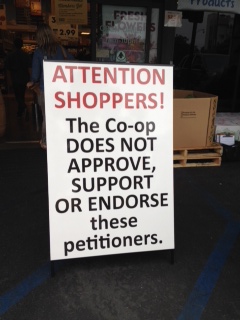
* “Santa Monica voters launched . . .” Well, no. According to the Fair Political Practices Commission (FPPC) filings for SMOHDD, the petition drive was entirely organized and paid for by the AOPA, a Washington, D.C.-based lobbying organization. The AOPA hired Arno Political Consultants and other political operatives to import into Santa Monica an army of signature gatherers — you probably met some of them if you bought groceries during May and early June. (To access the SMOHDD FPPC filings, go to the City’s Clerk’s webpage for Disclosure Statements, click on “Public Access Portal,” and then “search by name” for “Santa Monicans for Open and Honest Development Decisions.”)

** “the final authority for redeveloping . . . ” Also false. The AOPA initiative is silent about the redevelopment of the airport land — I hope this doesn’t shock anyone, but the AOPA is only interested in whether the airport stays in operation as an airport, and the right to vote in its measure is limited to the decision to close the airport. Should voters vote to do so, then, so far as the AOPA is concerned, see you later — the City can do whatever it wants with the land without any vote.

*** “15,734 signatures” is not a victory for the AOPA, but an admission that they expect a huge number of their signatures to be rejected as not valid, since they only need somewhat more than 9,000 good ones. If their signature quality had been better, they would surely have submitted their signatures a week earlier when they would have been assured that the County Registrar of Voters would have enough time to review them. (I’ve previously written about the signatures in detail here and here.)

Alarmed at the prospects of requiring voter approval of any effort to redevelop 227 acres of Santa Monica Airport land, the City Council this evening directed staff to draft the City’s own “voter initiative” to compete with the Voters Decide plan.

Anyone who watched the City Council hearing knows that the council was not “alarmed” about giving voters approval of redevelopment at the airport, since the council members repeatedly instructed the City Attorney to come back with a measure that would give voters the right to vote on future development. What is driving the council to consider a competing measure is the fact that Section 2(b) of the AOPA initiative seeks to prevent the City Council from managing the airport and the buildings and other property the City owns there in any way different from the status quo.

“This latest scheme is designed to mislead voters into thinking that they will be consulted before* politicians and developers achieve their goals of forcing out 175 businesses** and redeveloping airport land, at a loss of up to 1,500 jobs and $247 million in business activity,” said John Jerabek, a board member of Santa Monicans for Open and Honest Development Decisions, the sponsor of the real “Voters Decide” initiative. “This new tactic is a charade, just the latest attempt by City politicians to achieve their development plans*** while keeping voters out of it,” Jerabek continued.

* “consulted before . . . ” False. As discussed already, the council members told the City Attorney to include a right to vote on future development of the airport land, a right the AOPA initiative doesn’t have.

** “175 businesses . . . ” Of all the garbage the AOPA has dumped on Santa Monica in this campaign, one false claim they can’t let go of is that by closing the airport the City would be putting 1,500 people out of work and causing a big hit to the city’s economy. This claim goes back to a study the City commissioned in 2011 from the HR&A consulting firm about the airport’s economic impact. Indeed, as HR&A found, the airport is the site of economic activity, but the amount of that activity turned out to be trivial in context of the whole of the city’s economy — the equivalent, the study said, of a 300,000 square foot office building, which if you follow development in Santa Monica you know isn’t much.

But beyond that, most of the airport’s economic impact is from non-aviation businesses. Yes, there are more than 1,500 jobs at the airport, but according to the study, only 178 of them are in aviation. For instance, Volkswagen has its West Coast design center in offices it subleases from an aviation business that has a master lease from the City — a lease that terminates July 1, 2015, at which point, if the AOPA initiative doesn’t interfere, the City will be able to take over the building and collect rents from Volkswagen — rents that we at Airport2Park hope one day will pay for the operating expenses of a big park. These non-aviation jobs aren’t going anywhere if the airport closes and, given the demands for office space in Santa Monica, the City will have no trouble leasing space now occupied by aviation businesses to new businesses.

*** “their development plans.” Another big lie. There are no development plans for the airport. This is fear-mongering pure and simple.

The Voters Decide initiative is simple:
– There can be no change in land use at Santa Monica Airport without voter approval.
– Unless change is approved by voters, the land will remain in low-density airport use.
– The City’s land-use authority is not constrained; the City can do what they think best, but not on behalf of special interests or self-interested activists and only following a citywide approval vote.

Again, if you read the AOPA initiative you’ll see that it only requires a vote on closing the airport. Once voters vote to close the airport, that’s it.

“Our message for City politicians is clear,” Jerabek continued. “If the City has a plan for 227 acres of the most valuable land on the Westside, let them get it approved by Santa Monica voters. It’s that simple!“

The message is clear, all right: we are nervous that the FAA can’t keep the airport open and we’re pulling out all the stops to get this deceptive measure passed so that we can continue to use all that publicly-owned land for ourselves.

About Santa Monicans for Open and Honest Development Decisions
The Santa Monica Voters Decide Initiative is being led by Santa Monicans for Open and Honest Development Decisions. The committee believes the City and airport opponents have not been forthcoming with voters and taxpayers about redevelopment and land-use plans for the valuable airport property. The committee is supported by local residents, businesses and the Aircraft Owners and Pilots Association.

Now this is amusing. This “committee” was formed by the AOPA using the political law firm of Reed and Davidson; which even supplied one of its partners, Flora Yin, as one of the three Santa Monica residents who filed the initiative. According to its most recent FPPC statement, through June 4, the SMOHDD has spent $144,577 and taken in $59,977 in contributions. (The organization has outstanding debts of $90,993 — most of it to Arno and to Reed & Davidson.)

Of the $59,977 in contributions, $56,000 had come from the AOPA (in cash; the AOPA contributed another $1,000 in services). About $3,000 had come in through 18 individual contributions of at least $100, but of those 18 contributors, only three have Santa Monica addresses, and their contributions total only $300. (A small amount, $670, has also been contributed in contributions less than $100, and granted, these contributors could include some Santa Monicans, too.)

But get that — just three contributors who have given at least $100 to SMOHDD are Santa Monicans. Of about $60,000 so far contributed, only $300 have come from them — half of one percent.

So — who has not been forthcoming? Is there any evidence that the SMOHDD is a genuine local organization that is supported by any residents and local businesses who don’t have an personal or financial interest in the airport?

Thanks for reading.

A page from the most recent FPPC fiing for SMOHDD

A page from the most recent FPPC fiing for SMOHDD

When 15,704 signatures are not 15,704 signatures

If you read my blog yesterday, where I wrote about what a struggle the Aircraft Owners and Pilots Association (AOPA) and their consultants, Arno Political Consulting, had to obtain signatures for their preserve-the-airport initiative, and then read the news reports that they had turned in 15,704 signatures, when they need about 9,150, you’re probably thinking that I was blowing smoke.

I wasn’t. The 15,704 number is a gross figure, including all the signatures that are not from registered Santa Monica voters, that are duplicates, or that are otherwise defective. These will be rejected when the Registrar of Voters reviews the petitions. Typically when a company (like Arno) uses paid-by-the-signature signature gatherers the rejection rate is high.

How high? One of the CASMAT volunteers who was counter-leafleting against signature gatherers over the weekend had, in a lull in the action, a civil conversation with an Arno representative who told him that Arno’s average rejection rate is 36 percent, and that in addition to that, with this petition they were finding a high rate, 6 percent, of duplicate signatures.

Now this information is secondhand, and who knows if the volunteer was getting played, but the numbers check out when you’re trying to explain why the AOPA waited so long to submit their signatures. If the 15,704 meant something, clearly the AOPA would have had enough signatures to submit them last week, to be sure they would be validated in time for the City Council to put the measure on the ballot.

Look at the numbers. Let’s say the volunteer got good information and the total of rejections and duplicates is 42 percent. In that case, the 15,704 “gross” signatures would equal 9,108 good ones. The AOPA says it needs about 9,100 good signatures – a coincidence? (And this 9,100 figure may be low; according the Santa Monica Daily Press, in the final tally of the Hines referendum Residocracy needed 6,525 signatures, representing 10 percent of registered voters. The AOPA needs, for its charter amendment, more — 15 percent; if 6,525 does equal 10 percent, then the AOPA needs 9,788.

What makes this even more interesting is that according to the City Clerk’s office, 102 voters filed notices rescinding their signatures – clearly enough to make a difference if it’s as close as it easily could be.

Delivering 15,704 signatures was no triumph for the AOPA. They may not even make it to the ballot.

* * *

There were many ironies surrounding the delivery of the signatures – the whole thing was a masquerade where a big national lobbyist firm was trying to pass itself off as a grassroots movement – but one irony stood out.

According to The Lookout, one resident the AOPA put forward to represent their astro-turf movement, Flora Yin, stated that, “‘Voters like me are tired of the insider political game that has gone on too long.’” Yin didn’t mention that she is a partner in the law firm that the AOPA hired to draft the initiative and run the legal side of the campaign. The firm, Reed & Davidson, and Yin herself, specialize in political law, including ballot initiatives – in other words, in playing the insider political game that so fatigues Yin. (FYI, the firm’s URL is www.politicallaw.com.)

Dear Ms. Yin: I know you’re tired, but voters like me are tired of operatives like you foisting phony populist initiatives on the rest of us.

Thanks for reading.

A sign of the recent times.

A sign of the recent times.

Battling the Airport Initiative

So what’s the story about the aviation industry’s initiative to preserve the status quo at the Santa Monica Airport (SMO)? Yesterday, Daniel Larios reported in The Lookout that initiative proponents had informed the City Clerk that they would file their signatures yesterday. This was almost a week after the submission had originally been expected, but still nothing happened. While it is now likely that the AOPA will file its signatures today, is it possible that the AOPA won’t file enough signatures to put the measure on the November ballot?

The accepted wisdom in California politics is that if you can hire enough signature gatherers you can get anything on the ballot. Signature-gathering firms, like Arno Political Consultants, the firm hired by the AOPA to run the SMO campaign, typically operate on that basis – guaranteeing to their clients that if paid enough, by hook or crook they will get enough signatures in time. Even now I wouldn’t bet against Arno when it comes to the SMO initiative, but then again, it’s possible that they have already failed.

Why? Because of the calendar. Charter amendments (like the SMO initiative) can only appear on statewide elections – either general elections in November or primaries in June. The AOPA needs to get this initiative on November’s ballot or the next time it can be voted on will be in June 2016. That’s too late for them, because the leases to aviation businesses at the airport expire July 1, 2015, and by June 2016 the City Council will have had time to develop a plan for the airport that will dispel fears about overdevelopment.

To get on the November ballot, when should the signatures be submitted? According to the Santa Monica City Clerk, the suggested date for submitting signatures to get a measure on the November ballot “is approximately 172 days prior to the election, i.e., mid-May of the election year.”

Why so early? Because the City Council needs to put the initiative on the ballot at least 88 days before the election (this year that’s August 8), and can only do so at a regularly scheduled council meeting. The last regularly scheduled meeting before August 8 is July 22. The date the clerk needs to be able to put the matter on the agenda for the meeting is the Friday before that, July 18, but the clerk can only agendize it once the County Registrar of Voters has reviewed the signatures and informed the clerk that there are enough good, non-duplicative signatures from registered voters.

The City Clerk and the Registrar have under state law 30 business days to review the signatures. Last Tuesday, June 3, was 30 business days before July 18 – that’s why Larios in The Lookout reported that June 3 was the “deadline” to get the measure on the November ballot. (The City Clerk’s mid-May cut-off seems to be a conservative date to encourage petitioners to submit signatures early in case there are snafus with the validation process or other delays.)

Given that June 3 was the “safe harbor” for submitting, obviously as of yesterday Arno and the AOPA didn’t believe they had enough signatures to submit, because every day they delay increases the possibility that the Registrar of Voters won’t be able to validate the signatures before July 18. The AOPA is now counting on the Registrar to be able to process the signatures fast and not use up all the time the Registrar has by law.

What’s more, the delay in submitting the signatures shows that the AOPA has no hesitancy about lying to the media. Weeks ago the AOPA was telling reporters from The Lookout and the Daily Press that it already had 12,000 signatures. (They need about 9,200.)

How is that the AOPA finds itself in this predicament of counting on the Registrar’s office to process the signatures faster than they need to? The answer is the community’s response to the signature-gathering campaign.

Community Against Santa Monica Airport Traffic (CASMAT), Concerned Residents Against Airport Pollution (CRAAP), and Airport2Park (A2P), along with community organizations such as Friends of Sunset Park, mounted a tenacious campaign to counter Arno’s signature gatherers. This campaign involved sending volunteers all over Santa Monica, and even to grocery stores in neighboring Venice, to counter the signature gatherers, wherever they appeared, with leaflets exposing the deceptions contained in the AOPA’s initiative. Nearly all community groups in Santa Monica advised their members not to sign the initiative. (I was proud to be a part of the campaign.)

The volunteer counter-campaign was effective. By the last few weeks, it became routine for signature gatherers to abandon their posts in grocery store parking lots as soon as an anti-airport volunteer appeared with leaflets. The price paid for signatures soared, from around $4 in the beginning to $20 yesterday, according to what signature gatherers told the volunteers blocking them. Apparently Arno was desperate to fulfill its contract with the AOPA. Many new signature gatherers appeared over the weekend, attracted by the money.

A signature gatherer outside the Von's on Lincoln Boulevard

A signature gatherer outside the Von’s on Lincoln Boulevard

No one on the pro-park, anti-initiative side is declaring victory. The AOPA may well have enough signatures, and the Registrar may validate them in time. But if the initiative is on the ballot in November, no one here is rolling over.

Thanks for reading.

Negatives (and proving and disproving them) about Santa Monica Airport

The campaign to collect signatures for the aviation industry’s initiative to perpetuate Santa Monica Airport (SMO) is coming to a head. If the initiative’s sponsor, the Aircraft Owners and Pilots Association (AOPA), through its phony grass roots organization “Santa Monicans for Open and Honest Development Decisions,” doesn’t turn in enough signatures soon for county election officials to review, the initiative won’t make the November ballot. That would postpone a vote on the initiative until June 2016 because charter amendments, such as the AOPA initiative, need to be voted on at statewide primary or general elections.

The would be a disaster for the AOPA because by 2016 the Santa Monica City Council will have been able to create a real plan for voters to consider as an alternative to the airport. Until then the AOPA has the advantage because it can promote its initiative as an alternative to whatever parade of horribles it can conjure up for the future of the airport land.

Those Santa Monicans who want to close SMO, including those of us who want to turn the mile-long runway and adjacent areas into a great park, don’t fear a vote. We’ve always expected there would be a vote, because we expect that if the City Council votes to close the airport, the AOPA would mount a referendum campaign to put the council’s decision on the ballot.

That, however, would be a fair vote because the voters would have two concrete alternatives — keep the airport or do something specifically different. (I hope that something is a big park, in which case I’ll have to come up with a different adjective than “concrete” to describe the alternative.) Assuming the alternative makes sense, we believe we’d win that vote. (Putting massive development on the site, as AOPA signature gatherers say will happen, is not an alternative that makes sense.)

While the AOPA and its allies like to call us pro-park folks dreamers, the AOPA initiative is based on nightmares. The proponents of the initiative and other supporters of SMO don’t have to prove their claims while we opponents are left having to prove (or disprove!) negatives. Not only that, but besides requiring a vote on any airport plans the initiative also has provisions that would stymie any planning for a non-aviation future for the airport land or even managing the city-owned properties at SMO, without the city being overwhelmed with litigation.

I’ll tell you one thing — the truth doesn’t work for the signature gatherers. I’ve been part of the crew of residents trying to block the AOPA’s paid signature gatherers in grocery store parking lots all over town, and it’s been interesting to hear them make their pitch. The one truthful pitch, namely, to sign the initiative to “save Santa Monica Airport,” is a clunker. I’ve watched signature gatherers say that hundreds of times to passersby, and almost zero have responded.

There have been many unfounded arguments that the signature gatherers make, but none is more pernicious than one that if SMO doesn’t exist, flight patterns will change, and air traffic using LAX will fly low over Santa Monica. As is typical, I’ve never seen any evidence to back this up. Instead, the airport’s boosters leave it to airport opponents to prove the negative that air traffic patterns won’t change.

Neither I nor anyone else can tell you exactly what will happen to flying around here if the airport closes, but I can point out what looks like craziness when I see it. And it is crazy to think that LAX air traffic will change significantly.

Why? Flights landing at LAX descend gradually from the east. They take off over the ocean, then climb and turn if they are heading east, north or south. These are the most important patterns affecting flights in the area.

For instance, if you’ve flown from northern California, you know that flights from the north already fly over the Santa Monica Mountains and northern Santa Monica, but they fly fairly high. These commercial jets coming in from the north typically fly at altitudes between 6,000 and 9,000 feet. They need to be up high enough to fly east over downtown L.A. before making U-turns to descend into LAX. It’s absurd to think that if SMO isn’t there they are going to fly low over Santa Monica, Venice, Marina del Rey, and Playa del Rey to land at LAX from the northwest.

Similarly, if you fly out of LAX, you know that you sometimes turn and fly back over Santa Monica, but from the ground you know that those planes are already high enough not to be a nuisance.

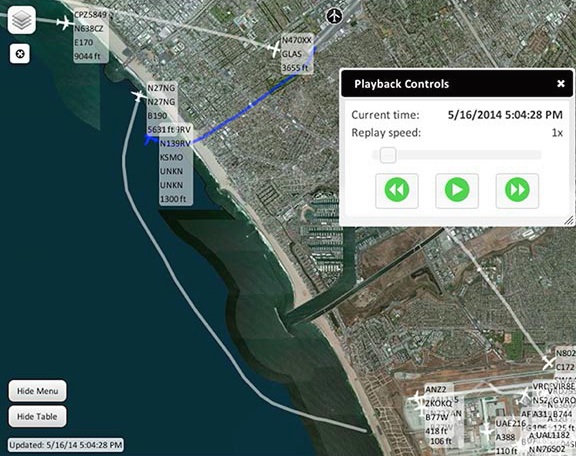
Another reason that commercial flights will continue to fly high over Santa Monica and the Westside is that regardless of the presence of SMO, the sky up to about 7,000 feet is full of private aircraft. The best way to see this is to spend some time looking a flights over Santa Monica through the lens of the airport’s PublicVue website.

PublicVue Screen Shot showing flights around Santa Monica

PublicVue Screen Shot showing flights around Santa Monica

If you monitor PublicVue, you’ll see that there are flight paths along the coast for general aviation (i.e., non-commercial) flights, with connections to inland airports such as Van Nuys, Burbank, and Long Beach, that at altitudes around 4,000 to 6,000 feet are below commercial flight and above the LAX landing paths. The takeoffs and landings to and from Santa Monica Airport are, obviously, below these altitudes — it’s not the planes taking off from SMO and climbing to 1,000 feet or so that keep the big jets up high, above 7,000 feet, it’s all the other private planes passing through.

If you signed the AOPA initiative because a signature gatherer persuaded you that you needed to sign to keep LAX air traffic from swooping down low over your neighborhood, you can rescind your signature by filling out and signing a simple form, and sending to the City Clerk. You can get a copy of the form through the CASMAT website.

Thanks for reading.

Dear Hines: Please sell. Sincerely, Santa Monica

As I watched the City Council rescind its approval of the Hines Paper Mate site project what became overwhelmingly apparent was that by the end of the road, after seven years, Hines and its project were alone. Friendless. From the public, only the indefatigable Jerry Rubin spoke in favor of the project. All those supporters from before, vanished.

From the dais, there wasn’t much more support. Terry O’Day voted for the project again, but he acknowledged it was not the best it could be. Risk-averse, he voted for it because he feared the worst. Gleam Davis defended the project, but, conflict-averse, she voted to rescind. Bob Holbrook spoke little about the project, instead lamenting how nasty politics had become, and noting that change was inevitable. Pam O’Connor didn’t have to say anything.

The most profound silence came, however, from the developer. Ever since Hines got the four votes its execs thought were all they needed, the company has done nothing, at least in public, to defend its project. There was no campaign contra the signature gathering, and there were no offers to revise the project in the face of the opposition against it. Was this ambivalence or fatalism? Or arrogance?

Through my column (and occasionally over breakfast) I have been telling Hines for five years that to be approved Paper Mate had to be a residential project because adding even one car trip to the intersection of 26th and Olympic would drive people crazy. I’ve talked to brick walls that listen better.

In fairness to Hines, they thought they had a deal, because the City, in the aftermath of the Great Recession in 2008, wanted more commercial office space in the Bergamot area, and that’s what the LUCE called for. The council approved the LUCE on a 7-0 vote, and Hines had grounds to believe that that was the deal. Times change, however, and ultimately it is the developer’s responsibility to call an audible when they do. Hines should have asked to amend the LUCE so that it could develop a residential project.

The crucial moment took place in February when Hines got its four votes. Hines could have had six, which would have changed the political dynamic entirely, if someone from the company had jumped up that night to accept the offer that Ted Winterer made to approve the deal if 150,000 square feet of commercial development was shifted to residential. (Winterer had other concerns as well, notably about architecture, but one assumes they could have been resolved.)

Winterer’s proposal would have entailed more environmental review, because the scope of the environmental review had remarkably not included more residential development, and that would have created some uncertainty. But it would have created a better plan. If Hines had said that night that it could make the revised plan work, it could easily have had at least six votes to approve, since Tony Vazquez voted for Winterer’s motion, too.

Memo to developers: if you have a big project in Santa Monica, you need to count higher than four.

What now? I know that Terry O’Day hopes more than anything that his fears are proven wrong and Hines does not start the process to reoccupy the existing building, but it’s hard to dismiss his fears. If I ran Hines, that’s what I would do, because they no longer have friends to support them here during a new process.

But I have hope. There’s an alternative. My hope is that Hines sells the property to a new developer, one that specializes in urban residential development. There are good residential developers working in Santa Monica already, and there are others working in the region. Perhaps the fundamental problem with the project was that Hines is a commercial developer, and never seemed comfortable with building a place for people to live.

By the way, it’s a good time to sell, or at least to bring in a residential developer partner to take over. According to an article in today’s L.A. Times, the multi-family residential market is booming. Dear Hines: You’ll get your money back.

A new developer would not have to start from scratch. A lot of good planning has been done, such the new streets and pathways. Bring in new architects and planners, however. Let them reconfigure the open space to make it better suit a residential development. That wouldn’t mean there couldn’t be good public spaces connecting the station with the area to the north. There are many urban plazas around the world that are framed with residences.

According to the EIR, nearly all the new car trips the project would have generated would have come from the commercial development. Eliminate the offices, and the impacts of the project will be entirely different.

These seven acres across the street from the Bergamot stop on the Expo line need to be redeveloped to replace the hulking mass of the old factory. It’s time to get someone new to do it.

Thanks for reading.

The Paper Mate factory

The Paper Mate factory