It’s the zeitgeist, stupid

There has always been a dance between local and national politics, a dance that can appear to take place in a maze of funhouse mirrors. That’s how Santa Monica politics in 2024 look to me. The electorate here is much different from that of the nation, but to a great extent I can’t differentiate between what I’m seeing on the local candidate mailers and the political commercials interrupting the baseball playoffs and the analysis that the national commentariat is producing.

Let’s begin with realignment. Nationally realignment of the political parties has been underway since the “Reagan Democrats,” but it accelerated when Donald Trump came down the escalator. In Santa Monica, realignment came abruptly with the 2020 City Council election, picked up steam in 2022, and this year was fully realized.

Realignment in Santa Monica means that the anti-development side, epitomized by Santa Monica Coalition for a Livable City (SMCLC), is no longer allied with its previous great benefactor, Santa Monicans for Renters Rights (SMRR). SMRR enabled candidates supported by SMCLC, such as Kevin McKeown and Sue Himmelrich, to get elected to City Council. But now after realignment, SMCLC has joined with business groups supporting candidates under the “Safer Santa Monica” banner (namely, incumbents Phil Brock and Oscar de la Torre, and newcomers John Putnam and Vivian Roknian) against the SMRR-backed candidates.

As a longtime participant in and observer of Santa Monica politics, the most, may I say, amusing manifestation of this break between SMRR and the anti-development crowd has been the dispute between McKeown, still a SMRR-loyalist, and SMCLC over the question about who is responsible for the housing development that’s coming to Santa Monica after the Change Slate-controlled City Council failed to file a compliant Housing Element. After McKeown wrote a letter to the Lookout blaming Changer Slaters Brock and De la Torre, Diana Gordon responded with one slamming McKeown. Breaking up is hard to do.

Meanwhile SMRR has formed an alliance with traditional liberal/progressive groups (the Santa Monica Democratic Club, Santa Monica Forward, Unite HERE Local 11, and Community for Excellent Public Schools) to support a “United Slate” of Dan Hall, Ellis Raskin, Barry Snell, and Natalya Zernitskaya.

Much of the national realignment – the part where working-class whites joined with hedge fund billionaires and military-adventurist neocons – never made sense to me, but there is a logic to the realignment in Santa Monica. Fundamentally, local politics changed when California largely took over planning for housing from cities. The development wars, which defined most of Santa Monica politics for 35 years, are over, or at least no longer have any reason for being (regardless of any residual rhetoric). There is nothing SMCLC can do now to stop housing development in Santa Monica, and they know it.

It is logical that a realignment occurs after fundamental issues change. What is uncanny to me is how Santa Monica’s quintessentially local, fine-grained, often personality-based politics reflect, even through a funhouse mirror, the national zeitgeist. I want to be clear that I am not saying that anyone running for City Council this year is a Trump supporter; so far as I can tell, all the candidates are Democrats who stress their Democratic credentials and support Kamala Harris. But consider these parallels when it comes to the rhetoric, if not the issues, of this election.

Crime and crisis. From the very name of the slate Brock and De la Torre put together after their former Change Slate running mate Christine Parra decided not to run for reelection, the “Safer Santa Monica” slate, you know that they are simultaneously feeding on and stoking the public’s fear of crime and disorder. In Santa Monica this includes feeding frustration about homelessness and stoking anxiety that Santa Monica is a failed city — much as Donald Trump describes every city north of Richmond or west of Ft. Worth.

(Side note: since the Change Slate has more or less had majority control of the City Council since McKeown quit the council in 2021, to be replaced by Change Slate-adjacent Lana Negrete, Brock and De la Torre might have thought that continuing with “Change Slate” would have caused confusion. Better to play the crime card and blame someone else. “Safer Santa Monica” indeed. Meanwhile, you can’t live in today’s zeitgeist without someone invoking “take back the city” rhetoric.)

Yes, there is crime in Santa Monica. There always has been crime – Santa Monica has every characteristic, good and bad, of American cities. Crime is significantly less frequent now than it was in 2019, but has steadily (but slightly) increased since the pandemic. Coincidentally that increase occurred during the years the Change Slate has been in control, but I am not blaming them. Honestly, the City Council has little to do with how much crime there is Santa Monica. Fortunately crime is rare enough here that when there is a violent act, it is still newsworthy, which of course is what sticks in one’s mind. Think of how Trump reduces the complex issue of immigration to isolated cases of violence perpetrated by immigrants.

But is Santa Monica a hellscape like the Safer Santa Monica candidates and their supporters would have us believe? I don’t think so.

Folks enjoying themselves on the Promenade on a recent night.

In at least one important respect Santa Monica is safer now. It wasn’t that long ago – I wonder if Oscar de la Torre ever reflects on this – that there were gang shootings here every year. In those days De la Torre believed in using social services, as opposed to heavy-handed policing, to end gang violence. He and the police union were foes. I remember that time well: I almost didn’t receive the union’s endorsement when I ran for City Council in 2014 because of a column I’d written in support of De la Torre when the police were investigating him in 2010. Now – talk about realignment – the police union has endorsed De la Torre and he is running on a law and order platform.

Homelessness is the shame of California, of our “civilization.” However, is it worse in Santa Monica because Santa Monica has been a leader in creating programs and, to some extent, in building supportive housing, to address homelessness? Absolutely not. Do the Safer Santa Monica people ever cross the border into Los Angeles? Where encampments are all over the place? We don’t have them in Santa Monica. Why? Because as I understand it, the Grants Pass Ninth Circuit case did not affect us, because we could offer shelter to unhoused people who would try to camp on our streets.

Does tougher policing reduce homelessness? The police in Santa Monica arrested twice as many unhoused people in 2023 (1840) as they did in 2021 (981); have you noticed any impact? Both crime and homelessness are societal problems that can only be solved with social change. Reactionary sloganeering will not generate beneficial change.
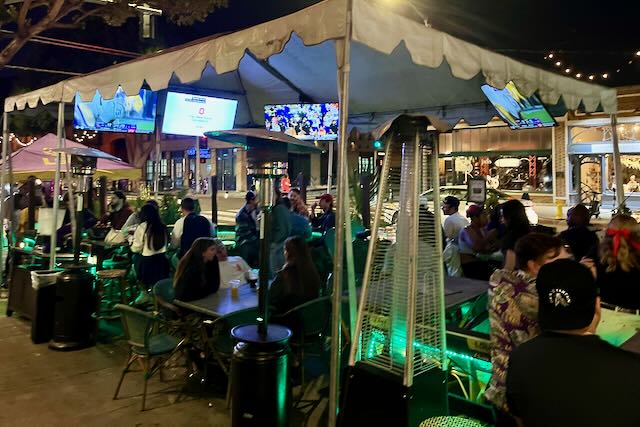
Young people on a recent night enjoying life on Main Street

As for the economy, sure, there are empty storefronts on the Promenade. Much of Santa Monica’s economy is based on hospitality and retail, sectors that the pandemic hit hard. Retail here and around the country is reeling from the disruption of e-commerce.

However, today Santa Monica is a magnet for hundreds of millions of dollars of investment. Look at all the cranes around town, with more on the way. Large apartment buildings, now permitted under state law, are planned or under construction. Google is bringing one of its first brick and mortar stores, and the first in the L.A. area, to the Promenade.

One of the first Google stores in the world coming to the corner of Broadway and the Promenade.

One of our major Ocean Avenue hotels has been undergoing a huge upgrade, and another, the Miramar, received its final approval for its complete upgrade Monday night at the Landmarks Commission.
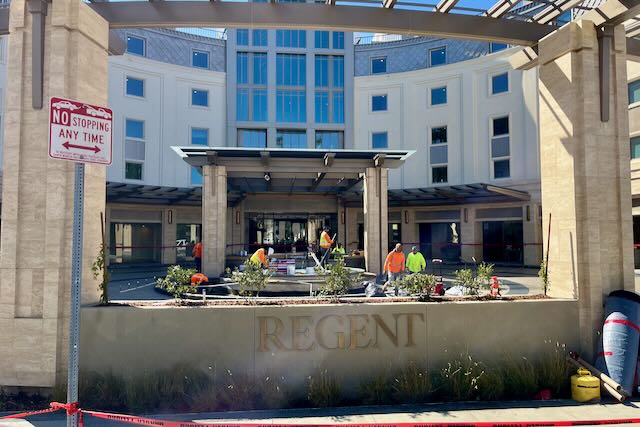
Workers putting finishing touches on the renovations at what will now be the Regent Hotel on Ocean Avenue.

Failed cities don’t attract investments like these.

And Cirque du Soleil is coming back to the beach.

Governmental competency. Switching over to an argument from the other side, the “United Slate” candidates charge that Brock and De la Torre, and their “Change Slate” colleague from 2020, Christine Parra, are not serious when it comes to governing; that they come to council meetings unprepared, not having read the staff reports, and waste everyone’s time in meetings that go on to the wee hours. Unfortunately, this is true. City Council meetings have become a mess. Instead of legislating, the Change Slate councilmembers like to grandstand, bringing to the vote hot button issues that the council has no power to act on, like distribution of clean needles. The obvious parallel is to the current Republican-controlled (meaning “controlled-chaos”) and unproductive House of Representatives.

The ”Deep State”/the “Establishment.” The MAGA universe uses the “Deep State” the same way it attacks journalism as “fake news.” There is a parallel in Santa Monica when the Change Slate candidates, now running under Safer Santa Monica, and their supporters like SMCLC refer to the United Slate candidates as the “Establishment.” This is consistent with decades of attacks on city staff from the anti-development side of Santa Monica politics. Experts are to be distrusted; only the wisdom of an imaginary consensus of “residents” counts (even if real residents consistently vote contrary to how the imaginary residents are supposed to vote).

I get it that since SMRR-endorsed candidates have usually had a majority on City Council for the past 45 years, and since during that time these majorities have molded City government to reflect a set of (liberal) values, that it is tempting to call SMRR and anyone it supports, or even other groups representing local institutions, like the School District, as the establishment. Sure, go ahead.

But using “establishment” as a political pejorative in 2024 in Santa Monica misses the point; doing so ignores who the candidates are. The candidates running this year with the endorsement of SMRR – Hall, Raskin, Snell and Zernitskaya – are insurgents within SMRR. They don’t consider themselves part of any establishment.

Other than Snell, who has served as an elected School Board and College official for years, the three other candidates are all a generation (or two?) younger than the leadership of SMRR. The four candidates could only get the SMRR endorsement after the collapse of the SMRR alliance with SMCLC and other anti-housing types, which effectively controlled the City Council for most years since the early 1990s. (The collapse was complete two years ago, when SMRR endorsed Jesse Zwick, Caroline Torosis, and Raskin.)

As younger Santa Monicans, the 2022 SMRR candidates and the candidates this year are running “post-development wars.” They take the need for more housing as a given, since they and their generational cohort need more housing options. They are in sync with the national zeitgeist on that, too: Kamala Harris has made building three million homes a major plank in her platform. These candidates represent a new generation of liberals, with high ideals about making Santa Monica work better for everyone.

I guess you know for whom I am voting: Hall, Raskin, Snell and Zernitskaya.

However, let me conclude on a less confrontational note. Sure, there is overheated rhetoric in this election – again, matching the national zeitgeist. But as Kamala Harris might say if she lived in Santa Monica rather than in Brentwood, we Santa Monicans have more in common with each other than we have differences. Santa Monica voters are going to vote overwhelmingly for Kamala Harris and Tim Walz. There is a lot of “narcissism of small differences” going around. As someone who has been involved for more than a decade in turning Santa Monica Airport into a great park, it is good to know that all the candidates running in the two slates support closing the airport and building the park. If you haven’t done so already, be sure to complete the current survey on the future of the airport land. It’s accessible here, and needs to be completed by Sunday the 20th. Be advised that the survey is a little complicated, but give yourself 15 or 20 minutes and you will be able to get through it.

Thanks for reading.


Time to settle this thing?

About a year ago, after seven years of litigation, the California Supreme Court issued a landmark decision in the case the Pico Neighborhood Association and Maria Loya brought under the California Voting Rights Act (CVRA) to challenge Santa Monica’s at-large voting for City Council. This was the first time the state’s highest court had ruled on the CVRA, and the decision clarified the meaning of certain significant undefined terms in the law.

I discussed the case and the court’s decision in detail in three blogs last summer. (Here and here and here.) To summarize, the court made it more difficult for a plaintiff to prove discrimination (i) when it held that plaintiffs must show that a current situation was discriminatory not in the abstract, but in comparison to alternatives, and (ii) because the court was skeptical about the use of new or revised voting districts to remedy discrimination where the population of the protected class is dispersed. The court, however, expanded the potential remedies available to plaintiffs to include remedies not as extreme as districts, so as to give plaintiffs reasonable alternatives against which to judge an existing system.

The court sent the case back, not to be retried, but to the California Court of Appeal for more action. That is where I thought the case would be adjudicated, and hopefully quickly, but the Court of Appeal sent the case back to a trial judge for more fact-gathering. The case’s original judge has since retired, and recently the new judge, Daniel M. Crowley, presided over his first hearing in the litigation.

According to press reports, Judge Crowley urged the parties to settle, predicting that if they don’t, the case will continue for another five to seven years. A sticking point in reaching a settlement is that if the City is found to have been in violation of the CVRA, the City will be obligated to pay the plaintiffs’ legal fees and costs, which according to papers filed in the case already totaled more than $20 million years ago. The City has not disclosed how many millions of dollars it has spent fighting the case, but the legal costs for both sides increase with every motion, every brief, and every hearing.

Given that I believe, as I have discussed in my blogs, that the plaintiffs cannot prove a crucial element in their case, namely that Santa Monica suffers from “racially polarized voting,” and that breaking Santa Monica into districts will not increase Latino voting and political power in Santa Monica), I have always supported the City’s defending the at-large system in court.

My views in favor of the City’s position have been reinforced by the fact that the plaintiffs have demanded, and apparently continue to demand, that the remedy must be to break Santa Monica up into voting districts. Plaintiffs stick to this position even though the California Supreme Court ruled that districts would not be an appropriate remedy in Santa Monica. Districts would not increase Latino voting power, but would mean that every voter here would lose the right to vote for all seven councilmembers over two years. Instead, voters would only get to vote for one councilmember every four years.

Nevertheless, it could be time to reach a settlement. The court decision opened up possibilities for settlement, provided that both sides would be willing to give something up. The court ruled that alternative remedies can be considered in CVRA cases where districts are not an appropriate remedy. These include ranked choice voting (RCV).

What makes sense is for the City to investigate how RCV would work in conjunction with citywide at-large elections. I want to give a shout-out to former mayor Michael Feinstein, a longtime proponent of RCV, for alerting me to an RCV variant called “Proportional Ranked Choice Voting” that has been used in at-large elections, including in voting rights cases. A public process to analyze how RCV would work would allow the public, including the plaintiffs or their supporters, to be informed and to weigh-in. The analysis would necessarily include what would be required legally to institute RCV: for instance would the change require a charter amendment, or could a judge order it? If RCV is workable and popular, then the City, for purposes of settlement and without admitting liability under the CVRA, could include it in a settlement proposal.

Such a settlement would require that the plaintiffs drop their demand for districts, but I hope that they would, given the Supreme Court’s ruling.

The parties would still need to work out a financial settlement over the legal fees. As a taxpayer in Santa Monica, what I would propose is that the City estimate what it would spend on its attorneys over another five to seven years of litigation and offer that amount as a settlement. If I were the plaintiffs’ attorneys, and considering the obstacles they face in the case after the California Supreme Court’s ruling, I would accept it.

Of course, a settlement and what it contains will depend on who is on City Council. The politics of the CVRA case have always been intriguing, particularly after Oscar de la Torre, husband of plaintiff Maria Loya, was elected to the council in 2020 as part of the Change Slate. De la Torre, of course, has always wanted the City to throw in the towel and agree to districts.

One recent news item that caught my eye was that, according to an article in the Lookout, at a Sept. 8 candidate forum all four Change Slate candidates (incumbents De la Torre and Phil Brock, and newcomers Vivian Roknian and John Putnam) indicated that they support changing from at-large elections to district elections. Wow; frankly, given the Supreme Court’s decision on districts, this would be a classic example of snatching defeat from the jaws of victory.

Voters have a lot of reasons for the choices they make when they vote; everyone has their issues and it’s probably usually a mistake to be a single-issue voter. But for me it will be hard to vote for anyone who wants to take away my right to vote for all seven councilmembers, which is what I have under at-large voting, given than my right to do so is not discriminatory. If district elections come to Santa Monica, my right and your right to vote for City Council will be reduced to one vote every four years.

Thanks for reading.

Approving a compliant housing element, post-Kevin?

Planning staff has released the first draft of Santa Monica’s Housing Element for 2021-2029, and tomorrow night the Planning Commission will have a hearing on the draft. The draft reflects input staff received from the Planning and Housing Commissions and the Rent Control Board, but primarily direction staff received from City Council at the council’s March 30 meeting. Even though the draft follows what the council said to do, people are speculating whether the council will ultimately approve the Housing Element in something like its current form.

That is because council’s direction to staff was approved on a 4-3 vote, and one of the 4 yes votes came from Kevin McKeown. Last week McKeown announced that he was quitting the council. He will be gone long before October 15, the date by which the council needs to approve a housing element and send it to the California Department of Housing and Community Development (HCD) for HCD’s review and, one hopes, its acceptance. If, as it looks now, we are headed to a special election to fill McKeown’s vacancy, the council will likely have only six members at that time. Even if the council appoints a replacement, it is, of course, unclear how the new council member would vote.  

Regarding the council’s direction to staff, the primary directive was to draft a “compliant” housing element. “Compliant” meaning a document that complies with, among other things, the City’s “Regional Housing Needs Allocation” (RHNA). The RHNA number is how many new housing units Santa Monica must find room for and allow to be built. For this housing element, the number is 8,895 residences of which 6,168 are to be affordable. As I discussed in a previous post, achieving this increase in housing units would entail an approximately 2% increase each year in the city’s housing stock. While the RHNA numbers have alarmed those in Santa Monica politics opposed to development, the draft Housing Element shows that this level of housing growth is something Santa Monica could handle easily. Financing the housing, particularly the affordable housing, is more problematic.

The RHNA numbers themselves, however, were not the reason that three council members voted against the motion directing staff to prepare a compliant housing element. Those three members, Phil Brock, Oscar de la Torre, and Christine Parra, seemed to be ready to vote for the motion (indeed de la Torre had already voted in favor of a slightly different prior motion that had failed), but they changed their minds at the last minute. That was when they realized that one part of the motion, an “affordable housing overlay,” would have allowed the construction of four-story deed-restricted affordable housing apartment buildings in single-family, “R1” zones.

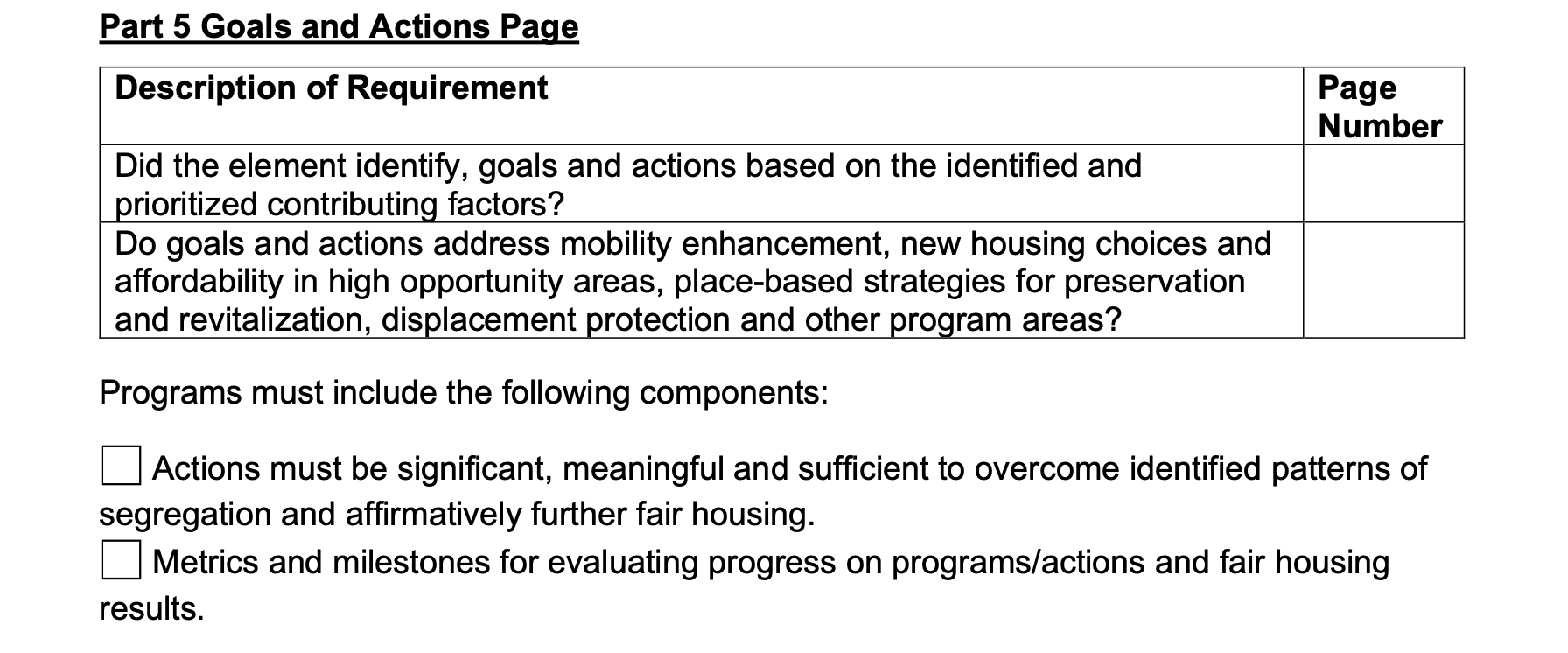
The opposition of the three to the affordable housing overlay could ultimately be a problem for approval of a compliant housing element. The overlay is part of a strategy to comply with a new requirement for housing elements. As of this year, housing elements must specify actions a city will take for “affirmatively furthering fair housing” (AFFH). In the context of Santa Monica, this means allowing for housing development, particularly affordable housing development, in districts where there are few people of color, which include the R1 districts. Thirty-five percent of Santa Monica’s area is zoned R1. That’s a lot of the city, and HCD is not likely to approve the housing element if it directs housing growth, especially affordable housing, everywhere but the R1.

Language from HCD’s checklist for preparation of housing elements relating to requirement for AFFH requirements, including providing “new housing choices” in “high opportunity areas” to “overcome identified patterns of segregation.”

After Mayor Sue Himmelrich made a motion with direction to staff that failed, Council Member McKeown made the motion, seconded by Himmelrich, that was ultimately successful. The motion included the overlay. Although McKeown said that he expected, because of the high cost of land in single-family zones, that it would be unlikely that affordable housing developers would build in the R1, when it came to the final vote on the motion, Council Members Brock, de la Torre, and Parra voted no. In the end it seemed that the image of a four-story affordable apartment next to a single-family house was something they could not stomach.

I will not try to predict how the Housing Element will ultimately deal with the AFFH issue and R1 zoning. However, and maybe this is surprising, I am optimistic that even a shorthanded council will approve something like the current overall proposal. Brock, de la Torre and Parra were elected last November on the “Change” slate. Although the slate did not run primarily on the issue of development, the slate’s candidates had (and still have) support from the most stringent anti-development factions in Santa Monica politics. Many in this faction still want to scrap the whole thing, RHNA numbers and all, and fight HCD. Nonetheless, based on what the three council members said March 30, they do not appear to want to challenge HCD with a noncompliant housing element. I hope not. Santa Monica passed an inadequate Housing Element in the early ’90s that was challenged in court. The City lost and ended up having to pay about $700,000 in the plaintiffs’ legal fees. No one should want to repeat that experience.

* * *

If someone had told me ten years ago that I would be unhappy if Kevin McKeown quit the council, I would have laughed. Now, however, I am sorry to see him go. As most liberals and people of good will who are elected to the Santa Monica City Council as no-growthers sooner or later do, McKeown ultimately found that his progressive values were inconsistent with the demands of increasingly shrill supporters who fear every change that might befall Santa Monica (other than the increases in their home values that come with limiting the housing supply). While McKeown never supported pro-housing zoning as much as I would have liked, in the last five or ten years he has opposed the worst of what the no-growthers proposed. Somewhat valiantly, against their opposition, he has supported efforts to expand the housing supply for the needs of today and the future. For this they have vilified him.

Still, I cannot resist a bit of schadenfreude. For his first 15 or 20 years in Santa Monica politics McKeown was among the crowd that besmirched anyone who believed in building more housing—people like me—as being “in the pocket of developers.” What should have been serious discussions about housing policy devolved into dime-store leftist tirades against “greedy developers.” Yet today McKeown is under attack from those same Santa Monicans Fearful of Change for whom he has carried so much water. And sorry, but I have to smile now to see the leadership of Santa Monicans for Renters Rights (SMRR), whose darling he was, whose Steering Committee he dominated, turn against McKeown. Who knows, but the last straw leading to McKeown’s resignation from the council might have been his motion to apply the affordable housing overlay to R1 districts. Apparently, at a meeting of the SMRR Housing Committee last Monday, the night before McKeown announced he was quitting the council, SMRR leadership rejected upzoning R1 to build affordable apartments.

Still, the last adjective I ever thought would apply to Kevin McKeown was “quitter,” and I’m unhappy he’s quit. Kevin McKeown as a council member was nothing if not conscientious. He showed up. The City Council, in dealing not only with the Housing Element but also with everything else post-pandemic and post-May 31, 2020, needs all the seriousness it can get. So does the city.

Thanks for reading.

To district or not to district

The three Santa Monica City Council incumbents who were defeated in the recent election opposed district elections for the council and supported the City’s defense against the lawsuit to bring district elections to Santa Monica. According to an article in the Lookout, their replacements, who include Oscar de la Torre, one of the original plaintiffs in the lawsuit, support district elections. That raises the question whether there might now be four votes on the council to abandon the defense against the lawsuit and agree to a settlement that would include district elections.

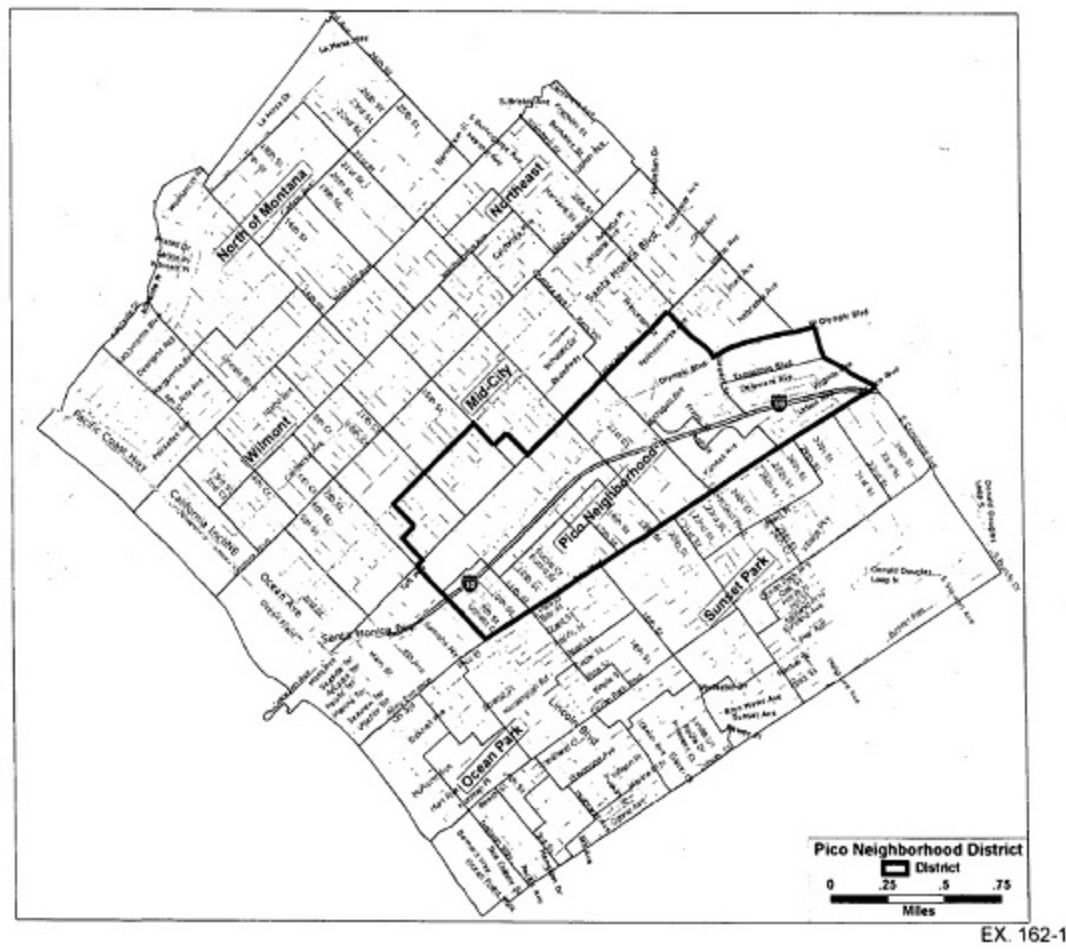
To give a brief procedural history, the plaintiffs, who brought their suit under the California Voting Rights Act (CVRA) in early 2018, won in trial court, and the judge ordered district elections that included a Pico Neighborhood district (see map). The City appealed, and the decision was overturned. The plaintiffs have now appealed to the California Supreme Court and briefs are scheduled to be filed in December.

The Pico district ordered by the trial judge.

I hope the City Council does not settle, as I don’t believe district elections would increase the political power of Latinx residents and other historical minorities in Santa Monica.

As I wrote in 2018 not long after the litigation had begun, “usually I’m in favor of district voting, so long as there isn’t gerrymandering, not only because it can diversify who is elected, but also because it’s easier for candidates to run in smaller districts.” But what I wrote then to explain why I didn’t believe districts would be a good idea in Santa Monica still holds:

“Why [not]? Because those same council members who get elected over and over are so paranoid about not being reelected, that they try to please anyone who votes, and that includes, for all of them, residents of the Pico Neighborhood. In that sense, the neighborhood is well represented. And, if you include the school board and the college board along with the council, we have a good record of electing minorities. As a result, I don’t see the logic for the lawsuit, although if districting comes, it would make it less expensive and easier for new candidates to run, which would be a good thing in and of itself.”

Moreover, since I wrote that, in the course of the litigation, it has become apparent that because of the demographics and housing patterns of Santa Monica districting here won’t, or can’t, solve the problems that the CVRA was enacted to solve. It has also become apparent, ironically, that the current system does not prevent members of historic minorities from winning election. Not only did De la Torre win election, but Christine Parra, who is Latina, did also. Meanwhile, Kristin McCowan, who is African-American, won in the election (albeit one that was uncontested) for the balance of former Council Member Greg Morena’s term. (McCowan had been appointed this summer to replace Morena).

Using districts to remedy voting discrimination against minority populations works in jurisdictions where residential segregation is extreme and where the majority population has used at-large elections, or other means, to dilute minority voting power. Santa Monica does have a history of residential segregation. As a result of that history, few African-American and Latinx residents live north of Santa Monica Boulevard (and to a lesser extent south of Pico Boulevard). However, reflecting the relatively low percentage of historic minority residents in Santa Monica (about 16% of Santa Monica residents are Latinx, 10% Asian, and 5% Black), a lot of Anglos also live south of Santa Monica Boulevard, including in the Pico Neighborhood.

As a result, in the course of the litigation it proved impossible to create a district map by which a majority of Latinx residents could be grouped in one or more districts that were even substantially Latinx. The best district the plaintiffs came up with would be about 30% Latinx, but a majority of the city’s Latinx residents would still live outside the district.

There was a lot of discussion in the Court of Appeal ruling about whether a non-majority Latinx district could be a suitable remedy under the CVRA for discrimination against minority voters, and the plaintiffs have appealed on the grounds that it should not be necessary under the CVRA to have a majority-minority district. To me, however, that discussion skips the primary question; namely, what happens to the voting power of the majority of Latinx residents not included in the “Latinx district”?

The plaintiff’s remedy, districts, would put a lot, but not a majority, of Latinx residents in a district where they theoretically would have more power and representation in one election every four years. Meanwhile a majority of Latinx residents (along with all other voters in the city) would lose the right every two years to vote for four or three council members. How would that increase Latinx voting power? A minority of Latinx voters would trade the right to vote for all council members for a somewhat better chance of electing a Latinx candidate in one district, but the majority of Latinx voters would lose the right to vote for all council members while getting nothing in return.

Meanwhile, five or six council members would be elected from districts with very few or nearly no Latinx or African-American voters. What would that do to the political power of historic minorities in Santa Monica? On a national level it has been recognized for some time that the creation in the South of districts that enabled the election of African-Americans, while necessary given the historic realities of Jim Crow and the post-Reconstruction denial of the right to vote, has also led to gerrymandering (“packing and cracking”) that has isolated Black political power and enabled right-wing dominance.

There are arguments in favor of districts that are unconnected to the voting rights of historic minorities. I have friends who believe that they would be better represented by having a representative from their own neighborhoods. They believe district representatives would be more accessible and responsive. As I wrote in 2018, it’s easier to run for office in a small district. Certainly, at some point jurisdictions get so big that the only viable structure is to have representatives from districts.

But there are downsides. Think of the City of Los Angeles, where each council member rules his or her fiefdom (each of which has nearly three times the population of Santa Monica), and any action at the City Council level, including every major development, requires horse trading among the council members. It’s been almost impossible to have citywide planning.

If a jurisdiction has districts, the public needs an elected strong executive so that someone represents everyone, as a whole. Perhaps Santa Monica is big enough for an elected mayor, and as I wrote recently, there is an accountability problem with the city manager system, but that’s a major political issue all by itself. (I want to mention in fairness to De la Torre that he himself has recognized this issue and the need for an elected mayor if we go to districts.)

I hope that before the new council members vote to settle the lawsuit, they reflect on whether they were elected to take away the right of all Santa Monicans, including a majority of Latinx residents, to vote for all seven seats on the City Council.

Thanks for reading.

Santa Monica in 2018: Are All Politics Still Local?

(Note: I haven’t written here about Santa Monica politics since my last blog last summer on the Downtown Community Plan, but I was invited to give a 20-minute talk to the Santa Monica Rotary International Club about the current state of politics here. I gave the talk last Friday, March 23. What appears below is a slightly edited version of my remarks to the Rotary. Much like the travelogues I wrote in the fall about my trips to Norway and Spain, my opinions about the current state of Santa Monica are illustrated—mostly with headlines, to prove to the Rotarians that what I was talking about truly happened.)

Greetings and thanks for inviting to share my thoughts about Santa Monica.

To review my credentials, I’m a former columnist, sometime blogger about Santa Monica, and twice-defeated candidate for City Council. Losing makes me, of course, an expert to talk about Santa Monica politics and issues. In fact, you’ll find during my talk today that losing city council election or two here is a basic qualification for anyone who think he knows how to make Santa Monica government better.

I’m going to start with an update on the development wars. Local governments in California have more control over land use that they have over most issues, and therefore it’s no surprise that development has often been the most contentious issue in local politics, especially in affluent communities where government otherwise does a good job delivering services. Santa Monica has been no exception.

02-Screen Shot 2018-03-21 at 10.17.08 AM

The most recent wave of anti-development activism crested in 2014 with the defeat of plans to redevelop the Paper Mate factory site. This came after a then new anti-development group, Residocracy, had gathered signatures to put the City Council’s narrow approval of the redevelopment plan on the ballot, and the Council revoked its approval rather than have the plan go to a popular vote.

Flush with that victory, Residocracy again gathered signatures, and put a restrictive development measure, Measure LV, on the ballot in 2016. The anti-development wave then, however, hit a seawall when Measure LV lost decisively.

03-Screen Shot 2018-03-21 at 10.21.54 AM

It shouldn’t have been a surprise that LV lost, given that a similar measure in 2008, the “Residents Initiative to Fight Traffic,” (“RIFT”), had also lost.

What the votes on both initiatives showed is that that while there is a large minority of Santa Monica voters who are motivated by the anti-development message—a bit less than 40 percent of all voters who show up at the polls—those voters are, nonetheless, a minority. It’s telling that no city council candidate running on an anti-development platform has ever won election on his or her own, meaning without an endorsement from Santa Monicans for Renters Rights (SMRR), the most powerful political group in the city.

04-Screen Shot 2018-03-21 at 10.24.44 AM

In fact, what we’ve seen in the past two elections is that if SMRR withdraws its support from an incumbent it previously endorsed because SMRR’s anti-development wing sees the incumbent as too friendly to development, the incumbent — Pam O’Connor in 2014 and Terry O’Day in 2016 — nevertheless wins reelection. Meaning that following the views of SMRR’s anti-development wing has cost SMRR two seats on the City Council. It used to be that O’Connor and O’Day owed their election to SMRR; now they don’t.

05-Screen Shot 2018-03-21 at 10.28.14 AM

Getting beyond the politics of development and into the substance of development decision-making, the 13-year process—I have called it “Santa Monica’s long municipal nightmare” —to update the City’s land-use plans finally climaxed in 2017 with passage of the Downtown Community Plan, the “DCP.” We can at least hope that the DCP is the final major plan to come out of the process that started in 2004 with the update to the City’s General Plan. That process was supposed to take two years but took six. Then it took another five years to pass a zoning ordinance to implement the General Plan, then another couple of years for the DCP. Thirteen years—kind of amazing when you think that the plans themselves are supposed to guide the City’s development for only about 20 years. Not to mention that with the defeat of the Paper Mate project, which was the key project for redeveloping the old industrial properties near Bergamot Station, the most important parts of the General Plan update, which focused on the industrial zone, are now irrelevant. We may as well start over now, but the idea of another 13 years is frightening.

The DCP itself was an uneasy compromise. Pro-housing activists did in certain contexts get the theoretical possibility of more development, but by a 4-3 vote the council included financial burdens that developers say as a practical matter will prevent new construction.

In the context of the state and regional housing crisis, which has put on the spot anti-development politicians, especially who those consider themselves to be progressive, the council members who voted to impose the burdens on developers agreed to revisit the plan if it didn’t result in housing being built.

This has led to a de facto truce while people wait and see.

06-IMG_2001

In that regard, three hotel projects in downtown, including this one designed by Frank Gehry, are coming back with plans that conform to the DCP; but there is always discretion, and we’ll see if they get approved.

07-IMG_3454

At the moment there is considerable apartment construction going on under the old standards — this photograph shows the groundbreaking for an affordable housing apartment building on Lincoln that was financed by the developer of a market-rate project — but it’s still an open question whether anyone will build under the requirements of the new zoning ordinance and the DCP. So — stay tuned.

Going beyond the development wars, Santa Monica has a lot of purely political news recently.

For one thing, we’re seeing something that has not been much of an issue in Santa Monica for a long time, perhaps not since the days when Raymond Chandler channeled Santa Monica into his crime novels as the corrupt “Bay City.” I’m talking about political corruption, alleged, possible, and real.

08-Screenshot 2018-03-20 14.55.02

One set of possible cases of malfeasance have been significant enough to garner coverage in the L.A. Times, not to mention investigations by the District Attorney, the California Fair Political Practices Commission (the FPPC), and the School Board. The allegations involve the Santa Monica power couple of City Council Member Tony Vazquez and his wife, School Board Member Maria Leon-Vazquez. While it’s been well known that Tony Vazquez has made his living as a political consultant and lobbyist, it was always assumed that he was careful enough to keep his day job out of Santa Monica. Well, it turned out that companies that he lobbied for to get school contracts applied for work in Santa Monica, and he at least neglected to tell his wife, the School Board member, so that she would recuse herself from voting on those matters, which she didn’t do.

09-Screenshot 2018-03-20 14.57.36

From there the investigation snowballed to include another school board member, and allegations of unreported income and gifts. It’s all being investigated now, so, again—stay tuned.

10-Screenshot 2018-03-20 16.14.56

Then there have been violations of the Oaks Initiative, a law the voters passed about 15 years ago that prevents public officials from benefiting from people or companies who received contracts or other benefits from the City while the official is in office. It’s like a retrospective, rearview mirror bribery law, and the law is complicated because it’s hard to keep track of who received benefits and the time frame for the restrictions. In the past few years the law has ensnared a couple of Council Members, Pam O’Connor and Terry O’Day, who received campaign contributions from disqualified contributors.

11-Screenshot 2018-03-20 16.05.24

But the most drastic impact of the Oaks Initiative was not on a politician, but on Santa Monica’s former City Manager, Rod Gould. After retiring from the City Gould accepted a job with a company that the City had hired while he was in City Hall, and Gould really paid a price for that. He was sued by the Santa Monica Transparency Project, a watchdog group that pays particular attention to the Oaks Initiative. Gould, saying he didn’t have the resources to fight the suit, settled the litigation by quitting his job and paying the Transparency Project $20,000 to cover their costs.

12-Screenshot 2018-03-20 16.22.50

The most manifestly illegal and corrupt political shenanigans, however, came from the Huntley Hotel, which sits on Second Street across from the Fairmont Miramar. The Huntley opposes the Miramar’s plans to rebuild and in 2012 the Huntley poured money into an extensive campaign to stop the Miramar project. Parts of the plan involved making illegal campaign contributions to City Council candidates and organizing and funding a fake grassroots residents group. It turns out that the FPPC was investigating, albeit slowly, and last year the FPPC hit the Huntley with penalties of more than $300,000: the second largest fine in the history of the FPPC. The Huntley’s scheme also involved the prominent law firm of Latham & Watkins as well as a former Santa Monica Malibu School Board member, Nimish Patel, who had his then law firm conceal illegal political contributions made by the Huntley. The FPPC fined Patel’s law firm $10,000, the maximum fine available to the agency.

I hate to say it, but from the Huntley’s perspective, the money, including the fine, was well spent. It’s six years later, and the Miramar has yet to get a rebuilding plan approved. The Huntley’s financing, organizing and energizing of the campaign against the Miramar revitalized the anti-development movement in Santa Monica, which, after the 2008 defeat of the RIFT initiative, had been relatively quiescent. The 2010 General Plan update had been approved by all the council members, including those from the anti-development side, and even the backers of RIFT generally accepted it. The plan update was the basis for the Paper Mate plan that Residocracy defeated in 2012, after the Huntley had fanned the flames over the Miramar plan.

Meanwhile, although it may seem like nothing ever changes in Santa Monica politics, two major changes to how Santa Monica chooses its elected officials are in the works. I’m referring to district elections and term limits.

13-Screen Shot 2018-03-21 at 10.34.33 AM

As for district elections, School Board member Oscar de la Torre has sued the City under the California Voting Rights Act saying that the City’s at large elections violate the voting rights of minorities, who, because of historical segregation, live predominantly in the Pico Neighborhood. (By the way, like me De la Torre has been a losing candidate for City Council.)

14-Screen Shot 2018-03-21 at 10.44.09 AM

Then this year activists from the Santa Monica Transparency Project—yes, the same group that sued Rod Gould over the Oaks Initiative—began a signature gathering campaign to put a term limits initiative on the ballot.

When it comes to these efforts to change the City Charter, I’m torn. Usually I’m in favor of district voting, so long as there isn’t gerrymandering, not only because it can diversify who is elected, but also because it’s easier for candidates to run in smaller districts. I usually oppose term limits, since in general I believe that anyone should have the right to run for office, and voters are better served by having more choices, not fewer. Also, as we saw was the impact of term limits on the California legislature, term limits can result in too much turnover, giving us legislators who lack experience and knowledge about how to govern.

So those are my usual positions. But as I said, I’m torn, because in Santa Monica the fact is that incumbents can stay on the council for as long as they want. This is not a one side or the other side issue: council members of all political persuasions have remained on the council term after term. So I’m thinking about term limits in a more positive way than usual, although I haven’t made up my mind.

But what about district elections? As I said, I usually favor districts, but I’m not sure we need them in Santa Monica. Why? Because those same council members who get elected over and over are so paranoid about not being reelected, that they try to please anyone who votes, and that includes, for all of them, residents of the Pico Neighborhood. In that sense, the neighborhood is well represented. And, if you include the school board and the college board along with the council, we have a good record of electing minorities. As a result, I don’t see the logic for the lawsuit, although if districting comes, it would make it less expensive and easier for new candidates to run, which would be a good thing in and of itself.

Now that there is, at least for a time, less of a political focus on development, what are the issues, more or less real, that face our community?

15-Screen Shot 2018-03-21 at 10.46.25 AM

How about crime? Rising crime is the issue that Residocracy and its leader, Armen Melkonians (also like me a two-time loser when running for City Council), are trying to use now to gain political power given that development didn’t work. Reported crime, particularly property crime, is up in Santa Monica over the past few years, and there have been some particularly violent crimes, including a murder and a home invasion, in normally low-crime, upscale neighborhoods that have people in those neighborhoods rattled.

16-Screenshot 2018-03-20 14.50.50

However, by historical standards, even with the uptick crime rates are down in Santa Monica. But the historical levels were quite high: I’m speaking as one whose homes have been burglarized twice. Yet I for one don’t sense that people are fearful as they move about the city, not as fearful as the cities I lived in before coming to Santa Monica, namely Philadelphia, Chicago and Boston. But maybe I’m missing something, and I don’t live in the Pico Neighborhood, where there has been gang violence going back decades. Significantly, however, gang violence has considerably decreased over the past four or five years, although in the past year or so there have been several shootings, including one murder, that have the hallmarks of gang violence although the victims are not necessarily gang members.

Let me make an aside here, which possibly ties local politics into national politics. Why is it that a political group that wants to gain power finds that it needs to focus on grievance? Residocracy is explicit that it’s looking for an issue that will motivate voters to vote based on fear. Yet by all measure, Santa Monica is a wonderful place to live — something the leaders of Residocracy will admit, given that they say they are trying to preserve Santa Monica the way it is. Let’s face it, the politics of fear and anger pervade our society, at all levels and, let me make this clear, all sides of every argument use the politics of fear, instead of promoting themselves on the basis of, dare I say it, hope and faith in the future.

17-Screen Shot 2018-03-21 at 10.13.29 AM

In any case, as for crime, the City has hired a new police chief, who was known to have reduced crime her previous job, in Folsom, and so stay tuned on that as well.

18-Screen Shot 2018-03-21 at 11.10.06 AM

Another issue is transit. In a certain sense, with the opening of the Expo line and its great success, this should be the new golden age of public transportation in Santa Monica. Those tens of thousands of Expo riders must mean that more people than ever are using transit in the city. However, those riders don’t count when the Big Blue Bus is tabulating its ridership, and that ridership is down.

19-IMG_2147

This is a regional issue, as the same thing is happening with Metro bus service, but I can’t help being annoyed still whenever I see Santa Monica’ artsy bus shelters (if you can call them that), one of which you can see in this picture. Whenever I see them, which is all the time, I’m reminded that one of our council members, when voting for this design, said it was more important for the bus shelter design to be creative and—quote—whimsical than utilitarian. If you want people to ride the bus, you have to treat them like customers.

Another big issue is the future of Santa Monica Airport.

20-Screen Shot 2018-03-21 at 11.23.06 AM

The City and FAA entered into an agreement a year ago to close the airport in 2029. This timetable disappointed many opponents of the airport, including many like myself who want to turn the land into a big park, especially because if previous agreements with the FAA had been written less ambiguously, the City could have closed the airport in 2015. But as a settlement of confused litigation the deal made sense.

21-Screen Shot 2018-03-17 at 4.49.53 PM

And because the agreement allowed the City to shorten the runway, jet traffic has been drastically reduced—down about 80% from a year ago.

And another 12 acres have been opened up to park expansion. Because the City has taken over leasing at the airport, the City is making a lot of money from rents that will pay for some park construction and ultimately operating costs for the big park.

22-Screen Shot 2018-03-21 at 11.26.20 AM

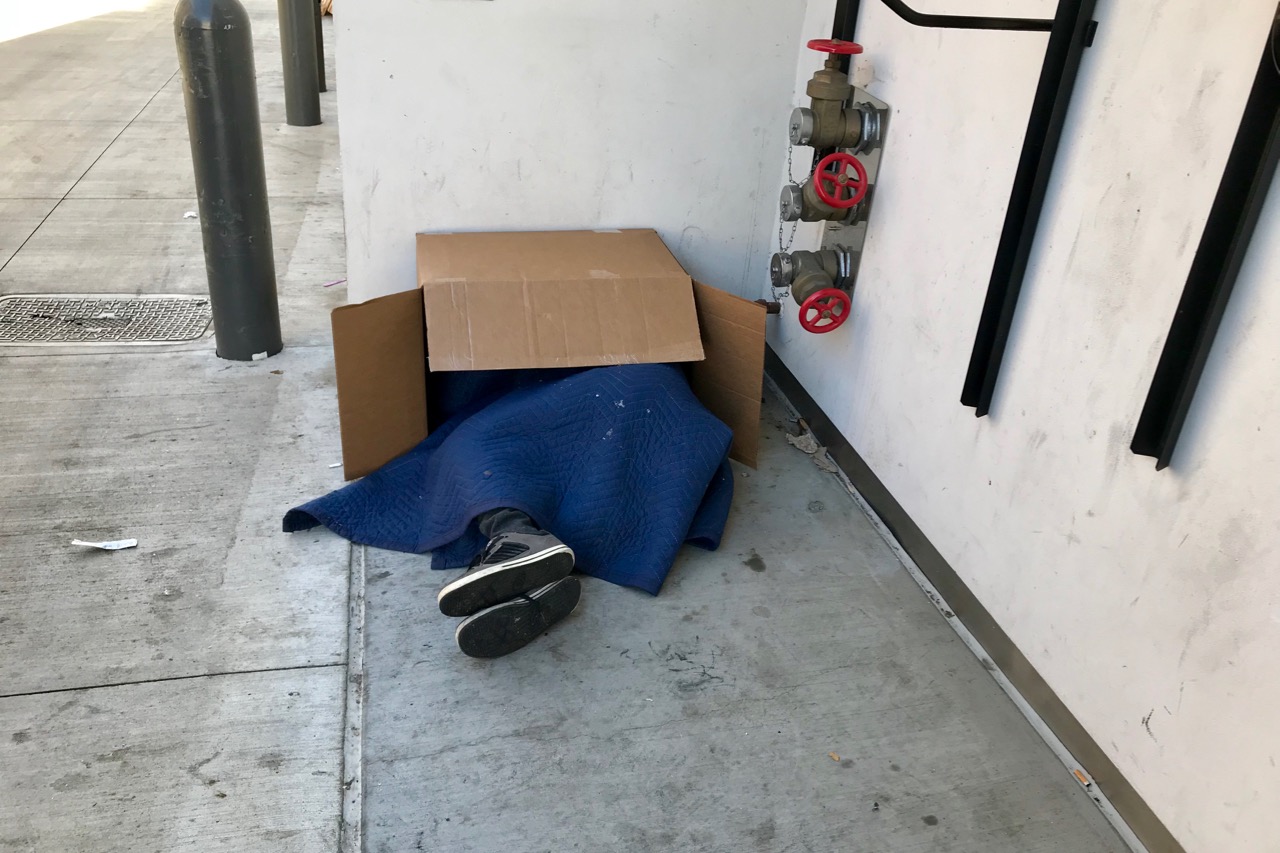
But let’s face it, the big issue confronting Santa Monica as well as the rest of the region is homelessness, and that’s not getting better.

The title of this talk includes the question whether, as the immortal Tip O’Neil once said, all politics are still local. There’s no question that with homelessness you finally get the answer, which is — yes and no. Yes, because the attitudes of most voters are still made up most of all with how they see their own daily reality. But no, because those realities, whether they are homeless people living on the streets of Santa Monica, or abandoned factories in the Midwest, are products of decisions beyond the purview of any particular local government.

23-IMG_1774

Homelessness, which not only is a moral disgrace but also costs the City of Santa Monica millions in direct and indirect costs each year, is the product of a statewide housing crisis, state and national policies on treatment of, and funding for, the mentally ill, a catastrophic national policy on drugs, and other forces beyond the purview or pay grade of Santa Monica’s elected officials and staff.

Yet, the lack of ultimate power to effect change does not diminish our responsibility as citizens to continue to seek change. We need to solve the homeless crisis, or risk failing as a society.

Thanks for reading.

Cosmic mysteries: the speed of light and young people

I am not sure why I took a little vacation from this blog, but it’s been almost three weeks since I last posted. It’s not that I haven’t been paying attention to things local, but I’ve found it hard to focus. For at least the first week or so of this malaise or funk, I’m going to blame the new version of Cosmos, the television series hosted by Neil Degrasse Tyson about the universe. The show is, to put it in scientific terms, blowing my mind.

I don’t have much physics or mathematical background, but I’m okay with concepts like antigravity. A few weeks ago astronomers released evidence supporting the “inflation” theory of the first moments after the Big Bang, when the universe expanded from a tiny speck to the size of a grapefruit (or a basketball – news reports were unclear about that), and I took it in stride, as in “sure, why not?”

But what got me was something that Tyson spoke about in one of the Cosmos programs, something he said almost in passing, namely that the speed of light was constant. I knew that light always traveled at 186,000 miles per second, but I never focused on a fact Tyson emphasized that always means always as in no time for acceleration. You turn on the light and the photons are immediately traveling at 186,000 miles per second.

Zero to 186,000 in zero seconds.

That threw me. I must have spent a week confused and I’m still perplexed. I mean, gravity — action at a distance – is crazy, but one has to accept it. It’s the law, right? But this no need for light to get up to speed seems like something that should defy the laws of . . . physics?

Maybe we are just stimulated neurons, like in The Matrix.

By the time I could focus once again on Santa Monica, the biggest story here was the controversy over science teacher and wrestling coach Mark Black and his takedown of a student in his classroom. That happened almost two weeks ago. At various times I was going to write about the incident and what it might mean, but then I’d think: since everyone is criticizing everyone else, particularly Superintendent Sandra Lyon, for commenting on what happened before knowing what happened, maybe this was a good time for me to do what everyone was saying to do and wait until I knew something.

Which is what I was going to do until I happened to read an editorial in the New York Times about “superpredators.” Remember them? About 20 years ago some criminologists and political scientists predicted that a tsunami of violent youths was about to wash over America. It goes without saying that these young monsters were assumed to be black and urban, thus tying into the three great traditional American loci for fear – young people, black people, and cities. (In one book promoting the theory, the authors wrote that the core problem was “that most inner-city children grow up surrounded by teenagers and adults who are themselves deviant, delinquent or criminal.” You have to forgive them, though: this was before “Breaking Bad.”)

It turned out that, beginning almost simultaneously with the promotion of the superpredator theory, the number of crimes committed by teenagers drastically declined and has continued to decline. The superpredator scare was one in an ongoing series of scares. You don’t have to sing “Gee, Officer Krupke,” or watch The Blackboard Jungle to know that when people say that kids today are rotten and schools are too lenient, they’re carrying on a tradition.

If anything, some of the problems we have today in schools are because schools are better. It used to be that troublesome kids were thrown out of school or dropped out after its being made clear to them that they were not welcome. Now we try to get them all to graduation, because there aren’t jobs for them in factories any more. It’s hard work, and yes, we should treat teachers and school administrators as heroes instead of blaming them for social problems that exist outside of school.

What was in the NYT editorial, however, that truly got my attention was a quote from a Supreme Court case about sentencing standards for juveniles. One result of the superpredator scare was that states passed laws that made it easier to try and punish juveniles as adults. Since 2005, however, the Supreme Court has been ruling that young people are “constitutionally different” from adults.

I never thought I’d look to nine black-robed lawyers for wisdom when it comes to understanding kids, but in a 2012 case (Miller vs. Alabama), the Court described the “hallmark features” of being young to include “immaturity, impetuosity, and failure to appreciate risks and consequences.” The Court has ruled that young people should not be sentenced the same as adults because – get this – young people can actually grow up. Sounds right to me.

Many Santa Monicans have rightfully rallied to the defense of Mr. Black, both because of his personal reputation and because they want to defend beleaguered teachers, and many of these Santa Monicans, and others, have rightfully rallied to the defense of Superintendent Lyon, also because of her personal reputation and because school administrators are beleaguered, too. But there’s been a lot of understanding for the students involved, too.

I like what School Board member Oscar de la Torre said at the rally for Mr. Black on Sunday, as reported in The Lookout. Speaking of Blair Moore, the Samohi senior now facing misdemeanor charges arising from the confrontation, De la Torre said, “[w]e’re a community that believes in redemption and young people make mistakes. While this young man might not be allowed to return to Samohi, he does deserve a second chance to be a part of our community in good standing.”

Thanks for reading.