There has always been a dance between local and national politics, a dance that can appear to take place in a maze of funhouse mirrors. That’s how Santa Monica politics in 2024 look to me. The electorate here is much different from that of the nation, but to a great extent I can’t differentiate between what I’m seeing on the local candidate mailers and the political commercials interrupting the baseball playoffs and the analysis that the national commentariat is producing.
Let’s begin with realignment. Nationally realignment of the political parties has been underway since the “Reagan Democrats,” but it accelerated when Donald Trump came down the escalator. In Santa Monica, realignment came abruptly with the 2020 City Council election, picked up steam in 2022, and this year was fully realized.
Realignment in Santa Monica means that the anti-development side, epitomized by Santa Monica Coalition for a Livable City (SMCLC), is no longer allied with its previous great benefactor, Santa Monicans for Renters Rights (SMRR). SMRR enabled candidates supported by SMCLC, such as Kevin McKeown and Sue Himmelrich, to get elected to City Council. But now after realignment, SMCLC has joined with business groups supporting candidates under the “Safer Santa Monica” banner (namely, incumbents Phil Brock and Oscar de la Torre, and newcomers John Putnam and Vivian Roknian) against the SMRR-backed candidates.
As a longtime participant in and observer of Santa Monica politics, the most, may I say, amusing manifestation of this break between SMRR and the anti-development crowd has been the dispute between McKeown, still a SMRR-loyalist, and SMCLC over the question about who is responsible for the housing development that’s coming to Santa Monica after the Change Slate-controlled City Council failed to file a compliant Housing Element. After McKeown wrote a letter to the Lookout blaming Changer Slaters Brock and De la Torre, Diana Gordon responded with one slamming McKeown. Breaking up is hard to do.
Meanwhile SMRR has formed an alliance with traditional liberal/progressive groups (the Santa Monica Democratic Club, Santa Monica Forward, Unite HERE Local 11, and Community for Excellent Public Schools) to support a “United Slate” of Dan Hall, Ellis Raskin, Barry Snell, and Natalya Zernitskaya.
Much of the national realignment – the part where working-class whites joined with hedge fund billionaires and military-adventurist neocons – never made sense to me, but there is a logic to the realignment in Santa Monica. Fundamentally, local politics changed when California largely took over planning for housing from cities. The development wars, which defined most of Santa Monica politics for 35 years, are over, or at least no longer have any reason for being (regardless of any residual rhetoric). There is nothing SMCLC can do now to stop housing development in Santa Monica, and they know it.
It is logical that a realignment occurs after fundamental issues change. What is uncanny to me is how Santa Monica’s quintessentially local, fine-grained, often personality-based politics reflect, even through a funhouse mirror, the national zeitgeist. I want to be clear that I am not saying that anyone running for City Council this year is a Trump supporter; so far as I can tell, all the candidates are Democrats who stress their Democratic credentials and support Kamala Harris. But consider these parallels when it comes to the rhetoric, if not the issues, of this election.
Crime and crisis. From the very name of the slate Brock and De la Torre put together after their former Change Slate running mate Christine Parra decided not to run for reelection, the “Safer Santa Monica” slate, you know that they are simultaneously feeding on and stoking the public’s fear of crime and disorder. In Santa Monica this includes feeding frustration about homelessness and stoking anxiety that Santa Monica is a failed city — much as Donald Trump describes every city north of Richmond or west of Ft. Worth.
(Side note: since the Change Slate has more or less had majority control of the City Council since McKeown quit the council in 2021, to be replaced by Change Slate-adjacent Lana Negrete, Brock and De la Torre might have thought that continuing with “Change Slate” would have caused confusion. Better to play the crime card and blame someone else. “Safer Santa Monica” indeed. Meanwhile, you can’t live in today’s zeitgeist without someone invoking “take back the city” rhetoric.)
Yes, there is crime in Santa Monica. There always has been crime – Santa Monica has every characteristic, good and bad, of American cities. Crime is significantly less frequent now than it was in 2019, but has steadily (but slightly) increased since the pandemic. Coincidentally that increase occurred during the years the Change Slate has been in control, but I am not blaming them. Honestly, the City Council has little to do with how much crime there is Santa Monica. Fortunately crime is rare enough here that when there is a violent act, it is still newsworthy, which of course is what sticks in one’s mind. Think of how Trump reduces the complex issue of immigration to isolated cases of violence perpetrated by immigrants.
But is Santa Monica a hellscape like the Safer Santa Monica candidates and their supporters would have us believe? I don’t think so.

In at least one important respect Santa Monica is safer now. It wasn’t that long ago – I wonder if Oscar de la Torre ever reflects on this – that there were gang shootings here every year. In those days De la Torre believed in using social services, as opposed to heavy-handed policing, to end gang violence. He and the police union were foes. I remember that time well: I almost didn’t receive the union’s endorsement when I ran for City Council in 2014 because of a column I’d written in support of De la Torre when the police were investigating him in 2010. Now – talk about realignment – the police union has endorsed De la Torre and he is running on a law and order platform.
Homelessness is the shame of California, of our “civilization.” However, is it worse in Santa Monica because Santa Monica has been a leader in creating programs and, to some extent, in building supportive housing, to address homelessness? Absolutely not. Do the Safer Santa Monica people ever cross the border into Los Angeles? Where encampments are all over the place? We don’t have them in Santa Monica. Why? Because as I understand it, the Grants Pass Ninth Circuit case did not affect us, because we could offer shelter to unhoused people who would try to camp on our streets.
Does tougher policing reduce homelessness? The police in Santa Monica arrested twice as many unhoused people in 2023 (1840) as they did in 2021 (981); have you noticed any impact? Both crime and homelessness are societal problems that can only be solved with social change. Reactionary sloganeering will not generate beneficial change.
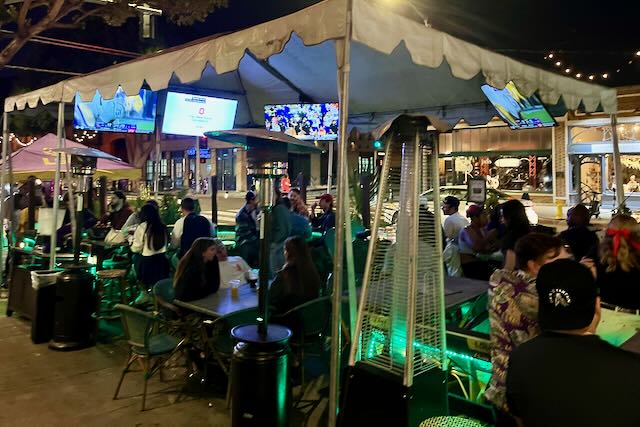
As for the economy, sure, there are empty storefronts on the Promenade. Much of Santa Monica’s economy is based on hospitality and retail, sectors that the pandemic hit hard. Retail here and around the country is reeling from the disruption of e-commerce.
However, today Santa Monica is a magnet for hundreds of millions of dollars of investment. Look at all the cranes around town, with more on the way. Large apartment buildings, now permitted under state law, are planned or under construction. Google is bringing one of its first brick and mortar stores, and the first in the L.A. area, to the Promenade.

One of our major Ocean Avenue hotels has been undergoing a huge upgrade, and another, the Miramar, received its final approval for its complete upgrade Monday night at the Landmarks Commission.
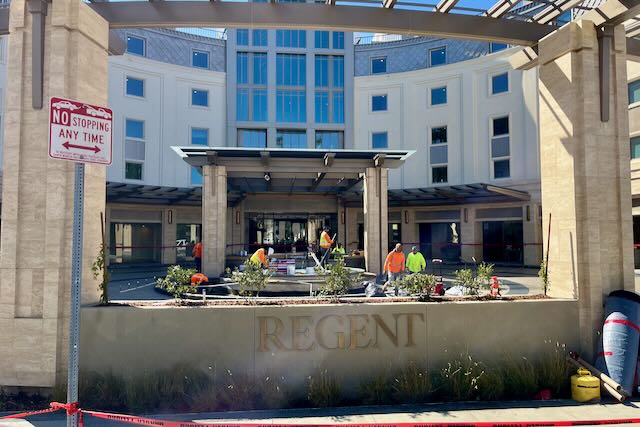
Failed cities don’t attract investments like these.

Governmental competency. Switching over to an argument from the other side, the “United Slate” candidates charge that Brock and De la Torre, and their “Change Slate” colleague from 2020, Christine Parra, are not serious when it comes to governing; that they come to council meetings unprepared, not having read the staff reports, and waste everyone’s time in meetings that go on to the wee hours. Unfortunately, this is true. City Council meetings have become a mess. Instead of legislating, the Change Slate councilmembers like to grandstand, bringing to the vote hot button issues that the council has no power to act on, like distribution of clean needles. The obvious parallel is to the current Republican-controlled (meaning “controlled-chaos”) and unproductive House of Representatives.
The ”Deep State”/the “Establishment.” The MAGA universe uses the “Deep State” the same way it attacks journalism as “fake news.” There is a parallel in Santa Monica when the Change Slate candidates, now running under Safer Santa Monica, and their supporters like SMCLC refer to the United Slate candidates as the “Establishment.” This is consistent with decades of attacks on city staff from the anti-development side of Santa Monica politics. Experts are to be distrusted; only the wisdom of an imaginary consensus of “residents” counts (even if real residents consistently vote contrary to how the imaginary residents are supposed to vote).
I get it that since SMRR-endorsed candidates have usually had a majority on City Council for the past 45 years, and since during that time these majorities have molded City government to reflect a set of (liberal) values, that it is tempting to call SMRR and anyone it supports, or even other groups representing local institutions, like the School District, as the establishment. Sure, go ahead.
But using “establishment” as a political pejorative in 2024 in Santa Monica misses the point; doing so ignores who the candidates are. The candidates running this year with the endorsement of SMRR – Hall, Raskin, Snell and Zernitskaya – are insurgents within SMRR. They don’t consider themselves part of any establishment.
Other than Snell, who has served as an elected School Board and College official for years, the three other candidates are all a generation (or two?) younger than the leadership of SMRR. The four candidates could only get the SMRR endorsement after the collapse of the SMRR alliance with SMCLC and other anti-housing types, which effectively controlled the City Council for most years since the early 1990s. (The collapse was complete two years ago, when SMRR endorsed Jesse Zwick, Caroline Torosis, and Raskin.)
As younger Santa Monicans, the 2022 SMRR candidates and the candidates this year are running “post-development wars.” They take the need for more housing as a given, since they and their generational cohort need more housing options. They are in sync with the national zeitgeist on that, too: Kamala Harris has made building three million homes a major plank in her platform. These candidates represent a new generation of liberals, with high ideals about making Santa Monica work better for everyone.
I guess you know for whom I am voting: Hall, Raskin, Snell and Zernitskaya.
However, let me conclude on a less confrontational note. Sure, there is overheated rhetoric in this election – again, matching the national zeitgeist. But as Kamala Harris might say if she lived in Santa Monica rather than in Brentwood, we Santa Monicans have more in common with each other than we have differences. Santa Monica voters are going to vote overwhelmingly for Kamala Harris and Tim Walz. There is a lot of “narcissism of small differences” going around. As someone who has been involved for more than a decade in turning Santa Monica Airport into a great park, it is good to know that all the candidates running in the two slates support closing the airport and building the park. If you haven’t done so already, be sure to complete the current survey on the future of the airport land. It’s accessible here, and needs to be completed by Sunday the 20th. Be advised that the survey is a little complicated, but give yourself 15 or 20 minutes and you will be able to get through it.
Thanks for reading.
 The Healthy City Local