To Study or Not to Study

Tuesday night’s City Council meeting is going to be the latest big meeting on development standards in Santa Monica. The topic will be the scope of the environmental review for the Downtown Specific Plan (DSP).

Planning staff, in the staff report, takes a conservative approach, recommending that the Environmental Impact Report (EIR) cover only small changes to existing standards for both building heights and the amount of permitted development. Nonetheless, by including in the report two alternative actions that the council could take, staff has invited the council to expand the scope of the EIR to study the impacts of taller heights proposed in current pending projects and possible density bonuses for uses that generate fewer car trips.

Because the purpose of environmental review under the California Environmental Quality Act (CEQA) is to give decision-makers more information, not less, to inform their decision-making, the council should accept this invitation and expand the scope of the EIR.

Having said that, my instinct is that much of the staff’s conservatism is warranted, at least for most of downtown.

Regarding density, staff analyzed the current levels of development downtown and found that because of the density bonus for housing adopted in the ’90s to encourage residential development in commercial zones downtown, development in downtown Santa Monica often exceeds an floor-area-ratio (FAR) of 3.0 (meaning that on the average a given parcel of land could be 100% covered with a three-story building) and can approach an FAR of 4.0. (Because of requirements for light and air, and sometimes for setbacks, buildings in real life always require more stories than the theoretical average number of stories allowed under a given FAR.)

In general, consistent with what the reality has been over the past nearly 20 years, staff recommends FARs of between 2.5 and 4.0, but recommends dropping most of the density bonus for housing, intending that housing can be incentivized by other means (some of which are required by state law).

While an FAR as high as 4.0 should be rare in downtown (an FAR over 3.0 is difficult to work with on the small parcels that characterize most of downtown Santa Monica), where higher densities (within the range) might make sense would be on the western (Ocean Avenue) and southern (freeway) edges, because the density that you would be putting in those locations would not be “reflected” by density “across the street.” I don’t mean that you could double the density, but there could be more — but that would require more height to get appropriate light and air for the building and avoid boxy massing.

Which brings up the height issue. Given how controversial the three hotel/condo towers proposed for west of Second Street have been, I can understand the staff’s reticence about studying heights that high in the EIR, but not to study them would be ignoring the elephant in the room. It’s not, however, only (or even primarily) the environmental impacts that need analysis; aesthetic impacts are even more important. For height, we need an “AIR” – “Aesthetics Impact Report.”

And a “Meaning Impact Report” — we also need to analyze how higher heights affect the “meaning” Santa Monica has or the meaning — or values — that we want Santa Monica to have. Santa Monica has never been only a resort — we were once equally famous for the aircraft built here — but the beach and its attractions (both natural and human-made) have been an important part of our identity as a world famous place. Unusual for resorts, for a long time we’ve also been the edge of a metropolis. But how urban do we want that edge to be?

That’s a debate worth having, and one we need to have before the City Council makes its final decision about heights. To have that debate, and to make that decision, the community and the council need to see appropriate visualizations and models.

It’s hard to resist dipping a toe into the substance of that debate. Planning staff claims that there is less support for taller buildings west of Second Street than east of it, but that’s not what I’ve heard. Admittedly, I don’t have a scientific sample (nor does staff), but what I’ve heard frequently is that given that there are already many tall buildings along Ocean Avenue, that’s where new towers (if any are to be allowed) should go. Also, skinny tall buildings overlooking Palisades Park (densities being equal) will block breezes and views less than squat short ones.

We should be more conservative with the 20 or so blocks east of Second Street and north of Colorado. There are few buildings above six stories there and tall buildings would stand out more. In this I am being influenced by what Stefanos Polyzoides said at the forum Mike Feinstein and I hosted June 22, namely that towers are best when they are clustered, rather than scattered about. The five- and six-story height limits have worked well on what have become primarily residential blocks on Fifth, Sixth, and Seventh.

See you Tuesday night — and thanks for reading.

Money Isn’t Everything

On Saturday I co-hosted with former Santa Monica Mayor Mike Feinstein a forum to discuss whether Santa Monica should relax the limitations on building height that it enacted in the ’80s. Because of limited seating at the venue (the restaurant Bizou Grill on Colorado Avenue, which deserves great praise) we couldn’t publicize the event widely, but about 70 interested community members turned out.

The discussion was good – serious talk about the pros and cons of building up. Frankly, it was hard to separate the issue of height from other issues relating to development and the future of downtown Santa Monica (at the moment, of course, there are three controversial tall hotel/condo developments pending), but as one participant told me later, there are benefits to isolating and focusing on one aspect of a complex problem.

I had many thoughts during the forum on what the issue of height is about, but also many on what height is not about, and in this post I’m going to write about some of the latter.

For one thing, height is not about density. As architect and urbanist Stefanos Polyzoides (who journeyed from Pasadena to give an outside-of-Santa-Monica perspective) pointed out, two of the densest cities in the world, Paris and Barcelona, have few buildings higher than six stories. More allowable height enables the shifting of development into different shapes (for good or ill), but how much development to allow is a separate decision.

Height is also not about money, and this works both ways.

Misti Kerns, the head of Santa Monica’s Convention and Visitors Bureau, reminded the group that more hotel development indisputably will aid our local economy and help the city balance its budget. It’s not indisputable, however, that hotel development depends on allowing taller buildings. More than a few hotels have been built here since the height restrictions were enacted 30 years ago, and the City Council has already voted to give priority in the planning process to hotel developments.

It’s true that the City faces deficits over the next few years, but none of the hotels now in the development pipeline could be opened in time to help with the current situation. Even if they could, does anyone believe that fundamental long-term planning decisions should be made one way or the other to solve an immediate budget issue?

But “money” arguments that the opponents of height make are also irrelevant. These take various forms, including (i) “the only reason to build is so that greedy developers can make money,” or (ii) “the only reason to build is so that rich people can live in luxury condos.”

As for developers’ profits, we live in a capitalistic society characterized by the profit motive and the importance of investment in assets, including real estate. If you want to see a city where developers stopped investing, take a look at Detroit, and unless you live in a building built by a nonprofit affordable housing developer, you either live on property that a developer subdivided and developed or in a building that one built.

Sure developers are out to make a buck, but then so are film producers and doctors and artists, but I don’t see anyone calling them greedy when they make a successful movie or build a good practice or sell a painting. Nor have I heard homeowners calling themselves greedy for feeling good when home values increase, or future retirees complaining when the investments in their 401k or pension plan increase in value.

As for the luxury condo argument, 31% of the land in Santa Monica is zoned single-family residential, and this being the Westside, we can assume that nearly every one of those houses is affordable to only the 10% (and a lot of it to only the 1%). We may not need social policies to get housing for rich people built, but don’t kid yourself that it isn’t part of what Santa Monica is. Besides that, it’s a good thing when rich people want to live in your downtown. It shows you’ve done something right.

And look: do you believe the opponents of the pending tall hotel/condo projects would like them any better if they had a mix of work-force and affordable family-oriented housing that perfectly meshed with Santa Monica’s needs? Or, heaven help us, what if someone wanted to build 120 affordable units at the Miramar instead of 120 condos? Would the Huntley Hotel accept 22 stories of that?

When we’re talking about height, let’s talk about height. I’m sure the aesthetic, communitarian, urbanism, and other real issues about it will give us plenty to argue over all by themselves.

Thanks for reading.

Elevated Thinking?

Last week I wrote a post about the political conflict over the issue of the height in downtown Santa Monica, focusing on the fight between the Miramar and Huntley Hotels and the motion three councilmembers brought forward to table consideration of projects taller than 84 feet until after the adoption of the Downtown Specific Plan.

But I didn’t say much about the issue itself. As I have written before, I am still making up my mind about height. I’d like to explain why I am still undecided.

Thirty years ago Santa Monica made a momentous decision to restrict heights. Since the days of the Arcadia Hotel Santa Monicans had built large buildings on the beach; today, when people profess nostalgia for an unchanging “sleepy beach town,” it’s important to recall that the decision to restrict heights represented big change.

I was not involved in politics then, but it’s a decision that I’ve always thought was a good one. The city made it in response to a series of towers, both downtown and in Ocean Park, that were built in the ’60s and ’70s. For the most part these towers were unattractive and projected an exclusionary gestalt offensive to many. The decision to lower heights also had the side benefit of spreading the demand for development around downtown Santa Monica to more properties, helping to create the more balanced downtown that we now have.

My own views in general about skyscrapers for a long time have been that other than in exceptional locations the best form for most urban centers was the form that cities took before elevators – capping out at five or six stories, with courtyards and good connections to the street. While I love modern architecture, I agree with the consensus that developed in the light of the writings of Jane Jacobs and Robert Venturi and Denise Scott Brown that the modernists’ concept of the “tower in a park” had been a failure.

Then a few years ago I took a trip to Vancouver (my wife had a conference there – it wasn’t as if I was looking for a new perspective) and saw how in that beautiful city on the water they were building “skinny” high-rises, mostly for residential purposes, that worked well with their streets. I began to reconsider my position about height. But for any given place, such as downtown Santa Monica, I haven’t made up my mind. Every place is different.

What Santa Monica needs and deserves is a robust community discussion about the issue. A generation has passed since Santa Monica restricted heights, and while the momentous decisions of the past have weight, they aren’t necessarily binding on the future. Change happens. Still, the burden of proof is on the proponents of more height – they need to explain why towers today won’t create the problems that towers in the ’60s and ’70s created. At the same time, the proponents of the status quo have to give reasons for opposing height that go beyond “we decided this back then,” or “developers are greedy.”

Personally, I want to hear all sides, but I also want to see models and graphics to give an idea of what tall buildings would look like from different angles, including from the beach. I haven’t seen those yet.

Having expressed all that angst, I will venture a few thoughts about the three specific hotel/condo projects that developers have proposed.

The Miramar was the first proposed project, and being first didn’t help them or anyone else. To be fair, let me remind everyone that the Miramar’s initial proposal did not include heights much above the height of their current 12-story tower (although the design presented other problems). It was only when the City Council at the float up hearing, ironically in response to ideas from an opponent of the project, suggested that the council would be open to a taller, skinnier tower (to help preserve the views of neighbors), that the Miramar devised a taller plan.

In my view the architecture for the proposed tower was uninspired, but in any case the Miramar has had a hard row to hoe because it has neighbors on two sides. Still, the amount of building proposed for the Miramar (a floor-to-area-ratio of less than three) is not so much as to preclude a good design. Even with lot coverage of only 50%, the average height of development will be only six stories. It seems to me that with a good architect and good urban design, the Miramar should be able to come up with a plan that its neighbors (at least those with open minds) wouldn’t object to.

I suspect that if the other two projects, the hotel designed by Frank Gehry and the new hotel proposed for the site of the old Holiday Inn, had come up before the Miramar did, there would be a lot less controversy about them. Both of those projects have top-flight design architects (and that shows in the proposals), neither is in a residential neighborhood, and both make use of land that adds little to the downtown now – respectively, the parking lot at Second and Santa Monica and the godforsaken wedge of land between Colorado and the freeway.

But still these projects need to pass a fundamental question: are Santa Monicans okay today with tall towers downtown?

Thanks for reading.


Running Around

One reason I love living in Santa Monica is that it’s convenient. Traffic is often congested, but if you’ve got errands to do, you can put together a list and get a lot done efficiently. Santa Monica is also the home of fantastic stores and businesses, that are fun to shop at in any case. Yesterday I had a long list of errands, and I also wanted to drop my dad’s apartment and spend some time with him. I decided to keep a log and take photos along the route.

I left my house, on Beverly Avenue in Ocean Park, at 11:08. My first stop was going to be my dad’s – he lives in one of the “new” apartments built in downtown Santa Monica after the City liberalized zoning in the mid-’90s to encourage residential development downtown by allowing double the square footage of development for housing in what as a commercial zone. My parents moved here (from Philadelphia) in 2003. My mother died in 2007 and now my dad, at 92, lives there alone – he manages with help from his housekeeper Blanca Gonzales, who comes in every morning and makes him breakfast.

OLYMPUS DIGITAL CAMERA

Entrance to my dad’s apartment building on Sixth Street

Downtown Santa Monica is a great place to grow (or be) old in. My dad never had or needed a car here, since there’s a supermarket (Von’s) he can walk to, all kinds of services, the library, movie theaters, etc. Most of his doctors are near St. John’s, just a short bus ride up Santa Monica Boulevard. When I hear homeowners in Santa Monica, many of them boomers like me, or even older, protest against development of apartments and condos in Santa Monica, I wonder where they expect to live once they can’t drive; do they want to go straight from their house to the nursing home?

As much as I look forward to the Expo line arriving in Santa Monica, it’s made it harder for me to reach my dad’s place, which is on Sixth Street just north of Colorado Avenue. I used to drive (or bike) up Fourth Street and turn right on Colorado, but Colorado is now permanently one-way westbound on the block between Fourth and Fifth. To reach Dad’s Now I need either to take Fourth up to Broadway and then Broadway to Sixth, or take Lincoln to Colorado, which is what I did yesterday.

It took me eight minutes – which was slower than the four or five minutes it used to take, but when I arrived there at 11:16 I immediately found a parking place — in front of Ninjin, a little Japanese neighborhood “trattoria” on Colorado where Dad and I are regulars.

OLYMPUS DIGITAL CAMERA

My car parked in front of Ninjin, around the corner from my dad’s apartment.

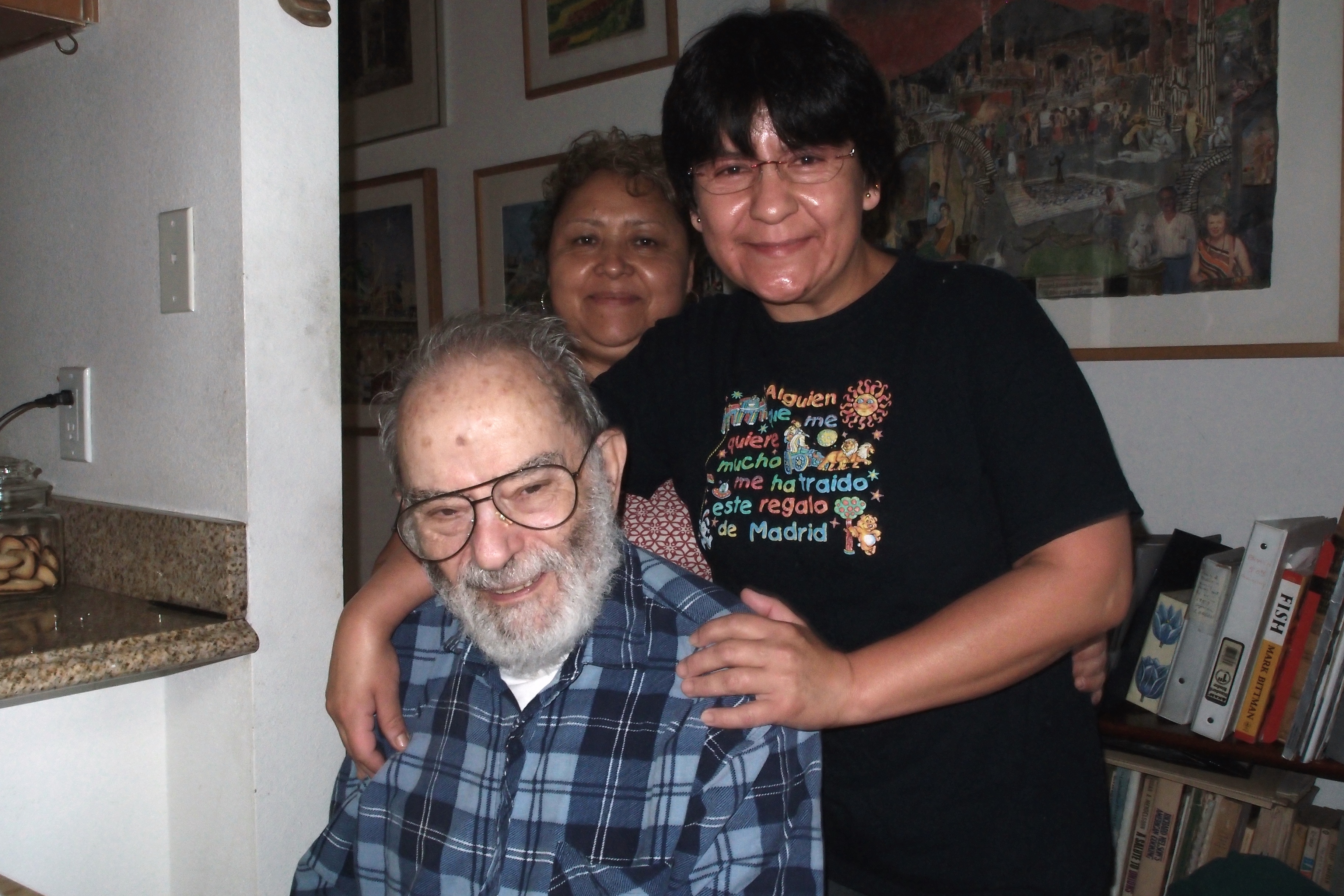
I spent about 45 minutes at my dad’s. Every other Saturday Blanca is there with her friend Letty for four hours to do a thorough cleaning of his apartment and this was one of those Saturdays. He was just finishing breakfast and I had a cup of coffee and half a bagel with some slices of the gravlax he still makes. Here he is with Blanca and Letty:

P6150908

My dad, Blanca and Letty.

I got back in my car at 12:02 – my next destination was the Bank of America at Fourth and Arizona. I needed to use the ATM to deposit a check and get some cash. The Saturday traffic in downtown Santa Monica was starting to build up, especially on Colorado, but I headed up Fifth, took Santa Monica Boulevard to Fourth and I arrived there at 12:06. Four minutes of travel time.

P6150915

The Bank of America in downtown Santa Monica. This property is due to be redeveloped as part of the City’s big plans for the parcels it’s assembled on Arizona Avenue between Fourth and Fifth.

It took me six minutes to do my banking, and I was back in the car at 12:12. My next stop was Fisher Hardware at Colorado and Lincoln, where I needed to buy a new garden hose. I took Arizona to Seventh, Seventh to Colorado, and arrived at Fisher at 12:18. Six minutes of driving.

OLYMPUS DIGITAL CAMERA

My car in the Fisher parking lot.

I love hardware stores. I enjoyed myself wandering around looking for garden hoses, which turned out to be  displayed right near the entrance. I found the hose I wanted and also a long-neck outdoor floodlight that I needed. I spent nine minutes there and left at 12:27.

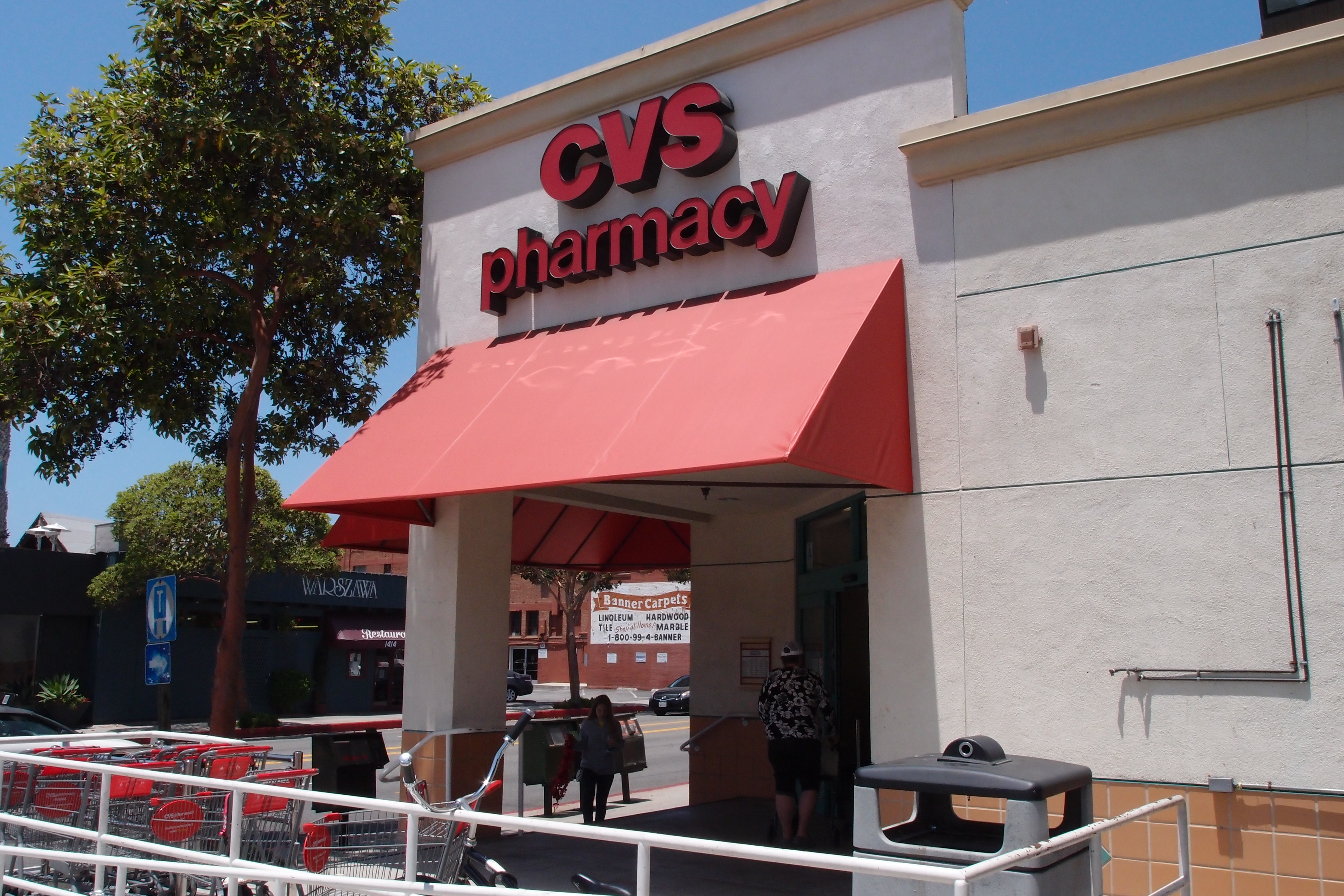
My next stop was the CVS on Lincoln just south of Santa Monica Boulevard, where I needed to pick up a prescription. From Fisher I took a left on Lincoln, drove up a few blocks, getting to CVS at 12:32 – five minutes.

OLYMPUS DIGITAL CAMERA

I had to wait in the prescription line, but I was only in CVS for eight minutes. I left at 12:40 and headed towards the 1100 block of Wilshire for the most fun part of my errands.

Between 10th and 15th, more or less from Santa Monica Seafood to Tehran Market, there are a great bunch of food shops on Wilshire, and I love to shop there. I found a parking spot near 12th Street and plunked a dollar in the meter for an hour of parking.

My first stop, however, wasn’t for food — it was at Elias Tailor Shop on 11th Street just south of Wilshire.

OLYMPUS DIGITAL CAMERA

You don’t find tailor shops like Elias in Anytown, U.S.A. Whenever we have a need for some sophisticated alterations, we go there. This time I had a jacket I’d purchased on a recent vacation, and I needed the sleeves shortened while keeping the cuffs. No problem for Elias. I dropped it off last week and yesterday I was there to pick it up.

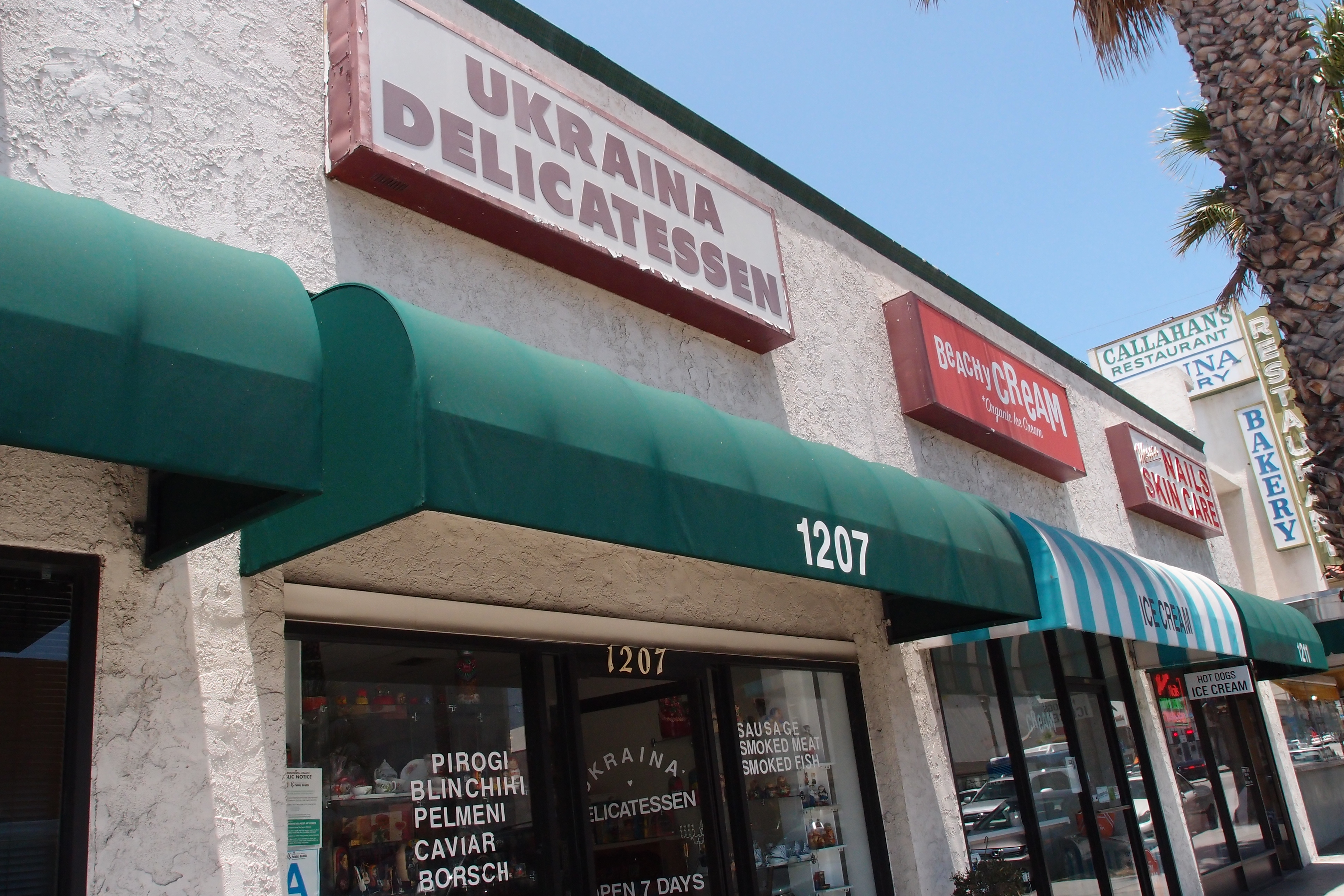
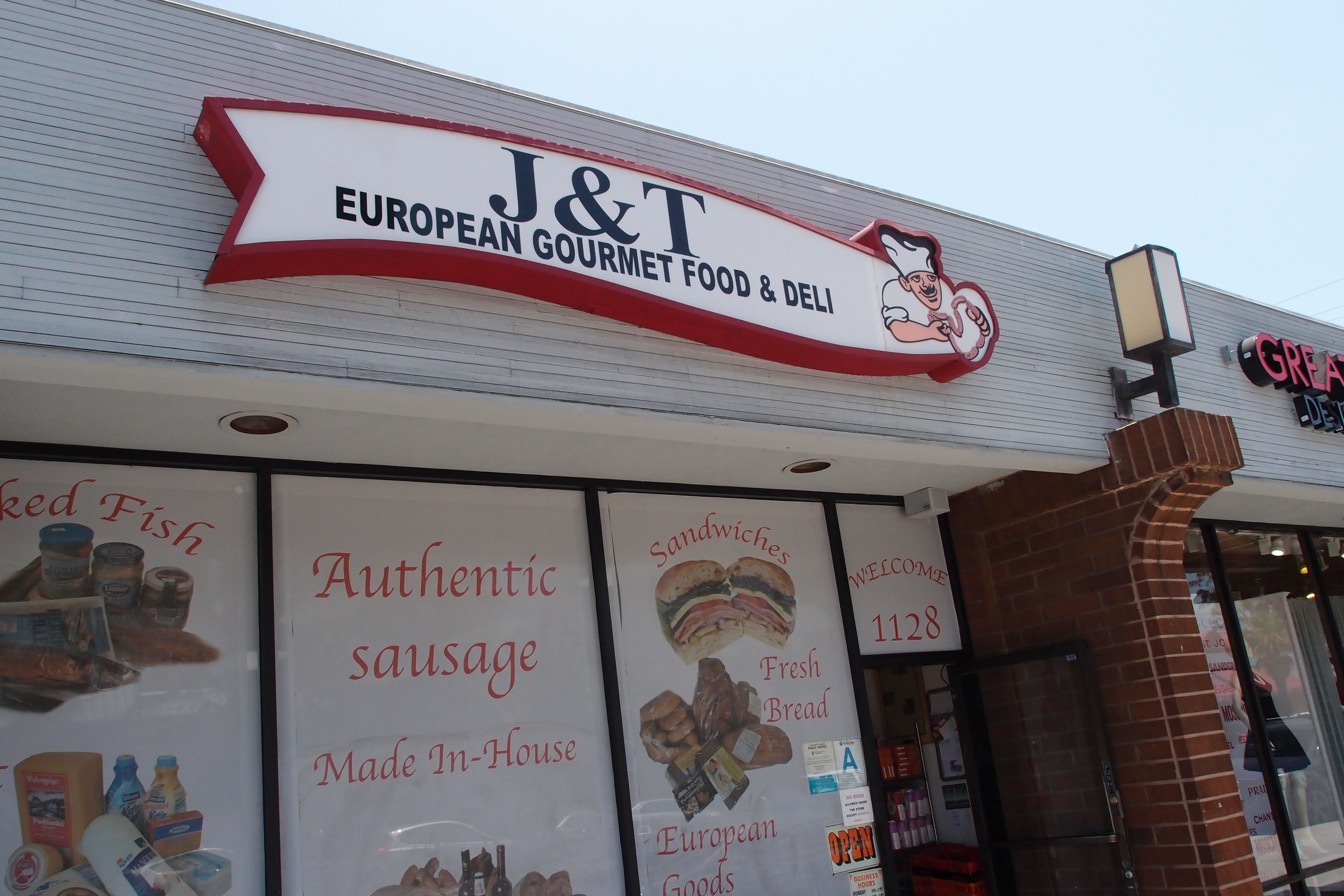
After putting my jacket in the car, I was heading to two of my favorite stores in Santa Monica – two outposts of Eastern European cuisine, the Ukraina Delicatessen on the northeast corner of 12th and Wilshire, which, notwithstanding the name, specializes in everything Russian (particularly smoked fish!), and J & T European Gourmet Food and Deli, which has everything Polish, most famously sausages and smoked meats made on the premises.

OLYMPUS DIGITAL CAMERA

The Ukraina – note a couple of other great food places nearby, Beachy Cream and Callahan’s

I was shopping for Father’s Day brunch, and I was in the market for smoked fish. At Ukraina they have all kinds – salmon (in various forms), sturgeon, trout, a couple of fishes that apparently only have Russian names, mackerel, and wonderful herring (again in many forms). I bought various kinds, as well as some salami for my dad and some interesting ham for me. The Russian woman behind the counter plied me with samples and that may be the exception to the rule that there is no free lunch.

Then I crossed the street to J & T. I’d been there the week before and at home we were still working through the sausage I’d bought then, but I was looking to restock up on their smoked bacon. I bought half-pounds of two different types.

OLYMPUS DIGITAL CAMERA

In all I spent 45 minutes in Elias and the two deli’s. My next stop was across town – Trader Joe’s on Pico. I left at 1:30, headed down 11th to Olympic, took 20th to Pico, and got to TJ’s at 1:42 – twelve minutes driving.

OLYMPUS DIGITAL CAMERA

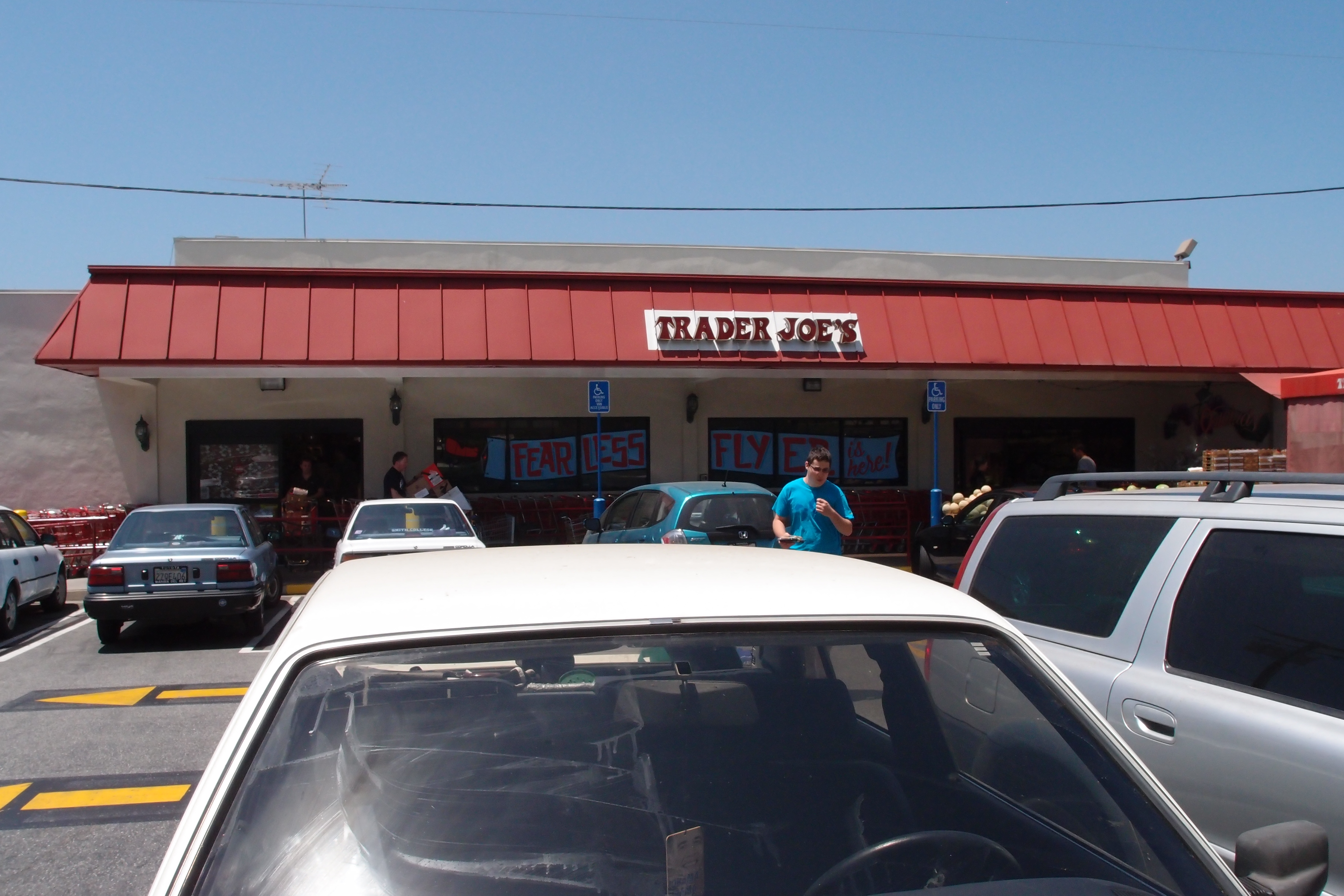
Trader Joe’s from — where else? — the parking lot.

I spent 15 minutes inside everyone’s favorite, “we-make-the-choices-for-you” grocery store – I only needed a few items. A few years ago, before the new store opened in West L.A., the store manager told me that this little store on Pico Boulevard was the second highest grossing Trader Joe’s west of the Mississippi. It’s always seemed to me that you could stand in the store and visualize mounds of food continuously entering from the back and flowing out past the cash registers.

My next stop – my last – was our cleaners in the mini-mall at Pico and Lincoln. I left TJ’s at 1:57 and arrived at the cleaners at 2:05 – eight minutes.

P6150934

I was five minutes dropping off and picking up laundry, back in my car at 2:10, and home at 2:13.

Whew. If you were keeping track, I was gone for three hours, five minutes, of which 50 minutes were spent driving. I made nine stops: my dad’s, the bank, Fisher Hardware, CVS, Elias, Ukraina, J&T, Trader Joe’s, and the cleaners.

You could look at my experience several ways. Probably someone is saying, “if traffic were better you wouldn’t have been in the car for 50 minutes.” Another person might say, “if you lived in the suburbs, you could have done most of this with one stop at the mall.”

But the way I look at it, only in a city could I have done all these things in this time frame – including visiting my elderly father (I live in a single-family house, and in most places in America, apartments like my dad’s don’t exist near single-family houses) and including finding shops like Fisher, Elias and the two delis. The traffic is part of the package, and you’re not going to find 20 types of Polish sausage at a mall.

Sure, 50 minutes is a lot of driving for what could only have been a few miles (next time I’ll track the odometer), but what I look at is how short the time was between the stops. (My cyclist friends are thinking that I should have been on my bike, but I don’t have a cargo cart!) My sister lives in the country and although there is no traffic congestion to speak of, it takes her 20 minutes just to get to a supermarket.

It would be great to reduce traffic congestion in Santa Monica, but in the meantime I’m going to enjoy the good things we have here.

Thanks for reading.

When Hotels Collide

I suppose I should be flattered that the owners of the Miramar Hotel felt that including a seven-year-old quote from me about the Annenberg Beach House might help them in their battle royale with the Huntley Hotel, but I’ll decline the honor.

It’s not that I don’t find it ironic that Latham & Watkins, known as the toughest real estate development law firm in Southern California, has been retained to scuttle a real estate development (I even joked about this in a blog post last month), but I wish the Miramar had left my name off what is one of the most unpleasant and misbegotten political mailers in Santa Monica history.

No thanks, but I’d rather not be associated with a piece that makes the owner of the Huntley look like the FBI’s most-wanted terrorist. And surely it’s counter-productive for one developer to accuse another of greed.

But I can understand if the Miramar people are feeling a bit frustrated, because the Huntley’s consultant, Sue Burnside, has been turning Miramar opponents out in droves to public meetings, the latest being the City Council meeting Tuesday night. That was on the motion by three councilmembers to table action on any project proposing a tall building until after the adoption of the Downtown Specific Plan (DSP).

Speaking of irony, this proposed measure, which was promoted as a means of calming the waters, caused another two or three hours of storm-tossed seas.

I was torn by the proposal. I agree with the three councilmembers proposing it (Kevin McKeown, Ted Winterer and Tony Vazquez) that in an ideal world it would be better to make intellectually pure decisions about issues like height before anybody proposed a project, but we don’t live in an ideal world, and in the real world, until and unless someone proposes a tall project, we probably wouldn’t even think about the issue.

Moreover, as someone who hasn’t made up his mind about whether we should relax our 30-year-old limitations on heights, I like the idea of seeing the proposed projects first, because they provide context for the decision-making. Ted Winterer had a good point that the process could create its own momentum towards approval, but I’d risk that for the chance to see what people have in mind.

In any case, no decisions will be made until council adopts the DSP.

Politically, the crux of the issue was summarized in Kevin McKeown’s comment, after agreeing to support Gleam Davis’ motion to poll residents on their views about height, that, “I will be supporting this motion, although I think it would have been better, faster, easier and cheaper to just listen to our constituents.”

What McKeown might have said, to be more accurate, was that the council should have listened to his constituents, because the proposal highlighted the fact that the councilmembers, even the six who owe their political success to their having been endorsed by Santa Monicans for Renters Rights (SMRR), do not share all the same constituencies.

Look at the election last November. The two leading candidates, Ted Winterer and Terry O’Day, each polled about the same number of votes (17,604 for Winterer and 17,042 for O’Day); although SMRR (and other organizations) endorsed them both and to a great extent their support overlapped, anyone who knows anything about politics here knows that Winterer probably received five or six thousand anti-development votes and O’Day probably received about the same number from voters opposed to anti-development policies.

If you look at the 2012 election at the margin between victory and defeat, which was all about who won the contested fourth seat, the issue of constituencies is even more complicated. Tony Vazquez won the seat and he ran outside of the development/anti-development issue. He wasn’t supported by the developers’ pop-up organization, Santa Monicans United for a Responsible Future, and the anti-development forces didn’t support him either – he wasn’t on the slate of Santa Monica Coalition for a Livable City and he didn’t receive financial support from the Huntley through their pop-up organization, Santa Monicans for Responsible Growth. Indeed, the anti-development faction so suspected him of being in favor of development that they prevented him from receiving an endorsement from the SMRR membership or the Santa Monica Democratic Club, two of his natural constituencies.

Instead, Vazquez won because he was known for having been a councilmember in the ’90s and he had endorsements from SMRR, the County Democratic Party, and, crucially, Unite-HERE, the hotel workers’ union, which walked precincts for him. While land-use politics garner most of the attention and generate most of the heat in Santa Monica, they’ve rarely been decisive with the voters.

I bring this up because it might lower the frustration and anger level if people acknowledge that just because they are willing to come late at night to a City Council meeting to protest, that doesn’t mean that the councilmembers, who know who elected them, will necessarily consider them as representing anyone other than themselves.

Call it once again the difference between the real world and someone’s ideal.

Thanks for reading.

It Happened Here

I haven’t written one of these blogs in a few weeks because my wife and I left town for a vacation. We returned last weekend, and then I didn’t write anything because there was so much going on here politically I couldn’t figure out what to write about.

Now all those political questions seem trivial in the face of real life tragedy. I’ve always thought of Santa Monica as the perfect place to write about if you’re interested in life lived locally because in our small city you can find every issue there is, but now that regrettably includes one of the defining issues of American life today – what happens when a mentally ill young man gets his hands on a military assault weapon.

I can only offer profound sympathy to the families of the victims, including to the mother of the perpetrator, admiration for those in the community who kept their heads in the midst of panic (such as those who had the presence of mind to find a place they could make safe in the college library), and thanks and kudos to our fearless public safety officers.

Think of those cops entering the library to face a man armed to the teeth and wearing bulletproof gear. Next time you hear those pathetic arguments coming from the gun lobby about how citizens need guns to protect themselves from an oppressive government, remember our local police and what we expected of them Friday.

Let’s just hope the Supreme Court doesn’t interpret the Second Amendment to let people buy hand grenades.

Finally let’s not forget that fundamentally this is all about mental illness and its treatment in our society. We don’t know enough at the moment about the mental health history of John Zawahri, and what might have been done to prevent what happened Friday, but when you’re making your charitable gifts this year, I recommend that you make one to the National Alliance on Mental Illness.

Thanks for reading.


Fact: for 20 Years There has been Little Development in Santa Monica

I’m still thinking about that big meeting a week ago Monday on downtown development.

When planning staffer Francie Stefan was describing, in remarks before the microphone was opened to the public, the process to write a specific plan for downtown she observed that there had been no office buildings constructed in downtown Santa Monica for 20 years.

When I heard that I thought to myself, it’s not only downtown, but there’s been little office development anywhere in Santa Monica since the Water Garden went up about 20 years ago. Since then the 194,000-square foot expansion of Lantana on Olympic Boulevard has been the only significant new office development. Yes, there have been rebuilds of existing buildings, such as with Agensys, but very little else.

Contrary to what everyone seems to believe, for 20 years there has been hardly any commercial development in Santa Monica and barely enough housing development to make a dent in the huge housing deficit on the entire Westside.

Sure, you see a lot of construction, but think about what it is — other than housing (with a little retail on the ground floors) the construction has been mostly to replace older buildings. There has been little net new commercial development.

The biggest private projects have been the new buildings for St. John’s and UCLA Santa Monica hospitals, but those mostly replaced buildings destroyed or damaged in the Northridge Earthquake. (In fact, when completed the new St. John’s will be smaller than what it was before the earthquake.) The re-do of Santa Monica Place was just that, a re-do. No large new hotels have been built since the Loew’s and Le Merigot — the new Shore Hotel on Ocean Avenue replaced (and expanded somewhat on) two old hotels. Apple replaced Borders. RAND replaced its old buildings with a new building of about the same size (300,000 square feet) — even though under the 1993 Civic Center Specific Plan the think tank could have built another 200,000.

There have also been public projects like the new public safety headquarters, and of course the biggest construction project in years is now underway — bringing the Expo line to Santa Monica.

To the extent that traffic congestion has increased at certain times and in certain directions over the past 10 years relates much more to economic growth over the entire 405 corridor than any purported “massive overdevelopment” in Santa Monica (although certainly the time and place of the congestion relates to the commuting pattern into the city).

City Council and planning staff have not sold the city to developers.

We all benefit from the overall thoughtful and careful approach to development that Santa Monica has had for 30 years. Sure, it could have been even more thoughtful and careful — if the 9 million square feet of office development approved in the ’80s had been split 50-50 between offices and housing, we’d all be better off. But we’re not going to fix that imbalance by preventing housing development now.

Fortunately, housing is where the development market is now in Santa Monica. The development agreement projects proposed not only for downtown but throughout the city are mainly for housing, including the condo developments associated with the hotel projects and the affordable housing tied to them. I know it is hard to persuade people of this, but new housing in Santa Monica has only a small impact, and possibly a net positive impact, on traffic congestion. Increasing the number of housing units by 10% (5,000 units) as the LUCE contemplates will not affect traffic significantly.

To solve transportation problems and make good use of our investments in transit, we need more housing near jobs. Council Member Kevin McKeown expressed this succinctly in yesterday’s Daily Press: “The number one antidote to the ‘commute and pollute’ problem is proximity. Putting worker-affordable housing near jobs makes the use of mass transit more likely, and in some cases can mean walking or biking to work.”

The housing market is a continuum that runs in Santa Monica from luxury condos to SROs for people who would otherwise be homeless: from Ocean Avenue condos to Step Up on Second, and everything in between.  We need housing at all income levels, because at every point along the continuum housing is fungible: a shortage of housing will turn middle-class housing into upper-class housing and working-class housing into middle-class housing, and so on.

Put another way, if we want Santa Monica’s empty-nesters to sell their houses to the next generation of families, and if we want those empty-nesters to stay in Santa Monica, we need to build condos for them to buy or apartments for them to rent. It’s easy to say that the high-end market for housing will take care of itself, and certainly no one will go homeless directly if there isn’t a condo to buy at the Miramar or in the Frank Gehry tower, but developers can’t build any kind of housing unless they have permission to do so.

Thanks for reading. (By the way, you may not hear from me for a while — I’ll be on vacation until the beginning of June.)

Downtown Development: The Train has Left the Station and is Arriving Soon

I left Monday night’s public meeting about downtown development standards around 9:00 and so I didn’t hear all the comments, but I’ve been thinking a lot about what I heard.

The open mic format provided a chance for people to vent, but that’s okay. No, I don’t believe that the people there who vented were particularly representative of Santa Monicans, but neither were they people who are naturally angry who can be dismissed as Tea Partiers. We’re talking normally calm and friendly folks. These are people who have good lives — they have jobs, or they’re retired, and houses or nice apartments, and they don’t usually have much to complain about.

It struck me how many of them bracketed their passionate complaints about change in Santa Monica with equally passionate declarations about how much they love it here. Many of the most emotional speakers seemed angry about being angry, as if it was infuriating to them to have to get angry in the first place.

Also, when you delve into what they were saying, you find that they’re more discerning than their blanket denunciations of development would have you expect. Since, as I discussed in my previous post, I’m in favor of more development downtown but I haven’t made up my mind about high-rises, I was pleased to hear many of the anti-development speakers say they would be okay with development up to 84 feet high so long as the same rules were applied to everyone.

And of course there were various speakers, such as Mike Feinstein and Phil Brock, who brought up important arguments that need to be made in the community discussion about whether to reverse the 30-year ban against tall towers.

Yet it’s hard to avoid a little cynicism. When I lined up to enter the meeting there was Huntley Hotel lobbyist Sue Burnside checking in those members of the “community” who she had mobilized. Ms. Burnside, who last year bragged online that on the Huntley’s behalf she had organized phony community groups, might want to try a little discretion. It’s the better part of something. (Later when the Huntley’s lawyer from Latham & Watkins spoke I wondered if her firm’s real estate department should charge double to oppose a project to compensate for the cognitive dissonance this must cause. I hope they don’t all need counseling when this is over.)

It was also hard not to be cynical about some of the homegrown commentary. There were the representatives of Santa Monica Coalition For Livable City (SMCLC) charging that city staff was in cahoots with developers to build tall towers in downtown Santa Monica. Back in 2005 SMCLC made the same claims with respect to the towers proposed for Santa Monica Place. SMCLC sued the City to get access to all the city’s emails and correspondence with the developers to show this conspiracy. They even got their legal fees paid. But SMCLC made not one email public. Evidently they found nothing to back up their allegations.

Now it’s the same thing. Staff, consultants, people who are educated and conscientious, and who are like flight attendants who have to keeping smiling no matter what their customers do or say, are nothing but pawns of developers. Staff bashing is repugnant because the staff can’t respond in kind, and unfortunately in Santa Monica they don’t get backed up by the politicians who hire them, or even by senior administrators.

Which brings me to that pounding refrain of “we need to take back our city!,” as if a few harried staff, or their devious consultants, or the venal city council members above them and even their greedy developer overlords, are responsible for bringing ten million people to Los Angeles and making them affluent enough to drive millions of cars.

I also sensed political desperation. The election in November showed that even with substantial funding (from the Huntley) an anti-development candidate cannot win without a SMRR endorsement, yet SMRR has many constituencies besides the anti-development faction, most of which support jobs and housing and other goals that require economic development.

The anti-development faction in Santa Monica politics knows that relatively few people in the city care about what happens downtown (as opposed to their neighborhoods). City Council Member Ted Winterer, a favorite of the anti-development side, recently told The Lookout that his wish list would include reversing the 2001 decision not to build a Target downtown, certainly a signal that he’s not going to let fears about traffic stop him from approving projects that are good for the city. Even Daily Press columnist Bill Bauer, usually a staunch supporter of the anti-development faction, has written in favor of both the Miramar and Gehry hotel/condo towers.

When it comes to development downtown, the anti-development speakers are trying to stop a train that has left the station (and is arriving at Fourth and Colorado in 2016).

Thanks for reading.

Density and Building Heights are Not the Same Thing

Between 2004 and 2010 Santa Monica updated the land use and circulation elements (LUCE) of its general plan, but the LUCE didn’t include downtown. Instead, downtown has been the subject of a separate, “specific plan” process.

As the same time, property owners on three important Ocean Avenue sites have announced or indicated plans to develop high-rise hotel and apartment/condominium projects. (The three projects are the Miramar Hotel renovation, the project Frank Gehry is designing for the corner of Ocean Avenue and Santa Monica Blvd., and the replacement of the Wyndham Hotel (formerly the Holiday Inn) at Ocean Avenue at Colorado.)

The three projects would not conform to current downtown zoning, but the downtown specific plan being developed anticipates eight “opportunity sites,” including these three sites, where various development standards, including heights, would be flexible.

These plans have been controversial. Opponents of the specific plan, as it has been developing, say that it would allow too much in the way of density and height. To allow for an airing of views, the Planning Department has scheduled a special “Town Hall” meeting of the Planning Commission, for tonight (Monday, May 6), from 6 to 9 PM at the Civic Auditorium’s east wing.

The two issues of density and height are often lumped together but are separate. The former should not be a problem downtown, while the latter deserves a robust community discussion.

Regarding density, the amount of new development, as well as the kind of development, proposed for downtown, even on the opportunity sites, is generally consistent with the direction downtown has taken quite successfully for almost 20 years, since the mid-’90s when the City Council adopted the last major revision of downtown zoning. If you look at the list of development projects that The Lookout published last week, you will see that they are all for hotels or housing, either apartments or condominiums (with ground floor stores).

For a long time the City has encouraged residential development downtown because there was a consensus, among even development skeptics like the late Ken Genser, that building housing instead of commercial development downtown helped with traffic, kept development pressures out of neighborhoods, and created a real community in Santa Monica’s core. Santa Monica also needs housing, particularly affordable and workforce housing, and nearly all of the housing downtown has been rental apartments, much of it deed-restricted affordable.

The City has also favored hotels, especially downtown, because they are consistent with Santa Monica’s character as a travel destination, they generate considerable revenue for the City and local businesses, and they, like housing, don’t generate as much traffic as other commercial uses.

The proposed amount of development in the list of projects, as measured by “floor-to-area-ratio”, also is generally consistent with the standards downtown.

The amount of net new development, after taking to account the existing development that will be replaced, is also significantly less than the total development. For instance, downtown apartment projects typically replace existing commercial uses, which likely generate as much or more traffic as the residential developments that replace them.

One also needs to keep the context in mind. Santa Monica already has about 50,000 housing units and more than 3,500 hotel rooms. Even cumulatively, and even if they all get built, the apartment and hotel rooms being proposed for downtown are not going to have significant impacts on traffic. Downtown, with all its transit resources, is the best place to locate development, and downtown traffic is not caused by the housing that’s been built there.

But height is different. Santa Monica needs to have a deep and wide-ranging public conversation before the City changes policies that were adopted 30 years ago to prohibit more high-rises.

For a long time I have opposed high-rise development here. For one, places that don’t have heavy rail transportation infrastructure can’t handle the transportation needs generated by large floor plate skyscrapers: without subways, you get the auto-sewers of Bunker Hill in downtown L.A. I also never liked the “tower in a park” modernist urban design philosophy that isolated so many high-rises from the public on the street. Unfortunately Santa Monica has a number of examples of that from the ’60 and ’70s.

In downtowns and other areas where there is sufficient demand, I have always liked the traditional urban design standards of five and six story buildings — the kind of cities that were built in the pre-elevator era. For this reason I opposed the 22-story towers proposed almost 10 years ago for Santa Monica Place.

But I have been rethinking this, at least in certain circumstances. The reason is that a few years ago I visited Vancouver, where they have created a format for urban development that relies a lot on skinny residential towers to provide the density they want while at the same time making the streets more open to air and sunlight and view corridors than what would be the case if development were concentrated in low-rise buildings. Vancouver solved the “tower in a park” problem by putting the towers above low-rise bases that connect with the street, while also providing for good quality public open spaces.

As I said, I have not yet decided whether to support breaking Santa Monica’s 30-year rule against high-rises to allow the three Ocean Avenue projects. The keys are keeping the amount of development (density) more or less the same, but also the quality of design. Urban planning is often about numbers, but aesthetics are important, too. These projects are going to change the skyline overlooking the beach, and they need to look good.

Like a lot of people in Santa Monica I started thinking more positively about the high-rises when I saw Frank Gehry’s preliminary models for the Ocean and Santa Monica Boulevard project. I was unimpressed by the work at the Miramar, but Gehry’s proposal reminded me that beauty can have value all on its own. I’m going to reserve my judgment until I see a better model that would show how all three projects would work (or not work) in concert.

See you tomorrow night, and thanks for reading.

Fear, and Fear Itself — More on the Santa Monica Airport

I don’t know Sunset Park resident Beverly Palmer, but she is my new hero. Ms. Palmer spoke at the City Council hearing Tuesday night on the airport, and she told the council that “fear should not govern [its] actions.”

This was in response to what might charitably be called “institutional cautiousness” in the staff report for the hearing, which discouraged any big ideas for the future reuse of the airport land by invoking fear of various “collateral consequences.” What these might be were “difficult to predict,” but nonetheless included “very likely increased density and traffic.” And if people might counter that by proposing a low density use, such as a park, then it was the fear that there wouldn’t be enough money to build it because Santa Monicans wouldn’t want to pay for a park near Los Angeles, and then that would mean development, and then that would mean . . . .  You get the idea.

It was Ms. Palmer’s remarks that prompted Mayor Pam O’Connor, when she concluded debate Tuesday night, to remind everyone that the airport land is owned and controlled by us, the residents of Santa Monica, and that we have the power to make good decisions (subject, of course, to the 800-pound gorilla known as the Federal Aviation Administration).

The FAA. I won’t make any predictions about what the FAA will or can do, but my knees aren’t shaking either. The staff report says that the “FAA condones no closures and allows or suffers them only on very rare occasions,” but this sentence came two lines after staff noted that the number of “public use landing facilities in the country” had declined from 7,192 in 1969 to 5,178 in 2009. Apparently “very rare occasions” for the FAA means more than 2000 times in 40 years.

But there were two kinds of fear on display Tuesday night: fake fear, or, as FDR might have called it, “fear itself,” and real fear, genuine fear, and I want to say something about the latter.

There were real people there Tuesday night fearful of losing their jobs and businesses, and it does not diminish my desire to turn the airport into a park to acknowledge their fears. Other than to say — call it a bromide but it’s true — that the individuals involved have high levels of skills and that they will be able to move on, I have nothing concrete to say to encourage them. I do want the airport to close and its aviation businesses to move elsewhere and it would be hypocritical for me to say anything different.

Call me heartless, but it’s important to put what they fear into historical and economic context. Fifty years ago Douglas Aircraft employed tens of thousands of workers at the airport, but the City declined to expand the airport and its runway, which would have meant people losing their homes. Douglas and thousands of jobs moved to Long Beach. Santa Monica lost its largest employer and the company that was in many ways crucial to the city’s identity for decades. The attempt now to close the airport is the continuation of a process that goes back more than half a century.

Moreover, and I hope I’m not being too History 101 about it, but in every modern society like ours, change happens and people’s lives get disrupted.

This is particularly true about business. A few years ago Broadway Deli closed after 20 years on the Promenade: the owners’ lease expired and they couldn’t pay the higher rents the property owner wanted. They lost their business — in fact they were victims of the success they themselves had helped foster downtown — and their workers lost their jobs.

But the success of the Promenade is a good thing, higher rents notwithstanding.

Just last week I heard from a young videogame designer friend who lives here that the company he worked for in Santa Monica, Sony, was moving to Playa Vista because they needed to expand and couldn’t find enough space here. My friend was looking at a much worse commute, and I felt sorry for him, but at the same time, does Santa Monica need more office parks?

The Clock Tower Building downtown just sold to an Italian firm that owns and operates historic buildings like the Flatiron Building in New York. According to the L.A. Times, the rents in the glamorous building are the highest in the region. It’s a great story of the value of historic renovation and the value of urban revival, but for me it was bittersweet. My office was in the building in less swanky days, from after the earthquake in 1994 until 2001. That’s when the property owners kicked all the tenants out so that they could start their historic rehab.

Back then it wasn’t so hard to find office space in Santa Monica, and I found a new place (but not one with an 11th-floor ocean view!). It worked out okay for me, but I keep thinking about this young couple from Ethiopia who ran an espresso bar on the ground floor. I wonder where they ended up.

Change is often bad and there are many reasons to fear it, but fear is not an emotion that’s helpful when you’re trying to think clearly and make change better.

Thanks for reading.