Airport2Park — the time is now

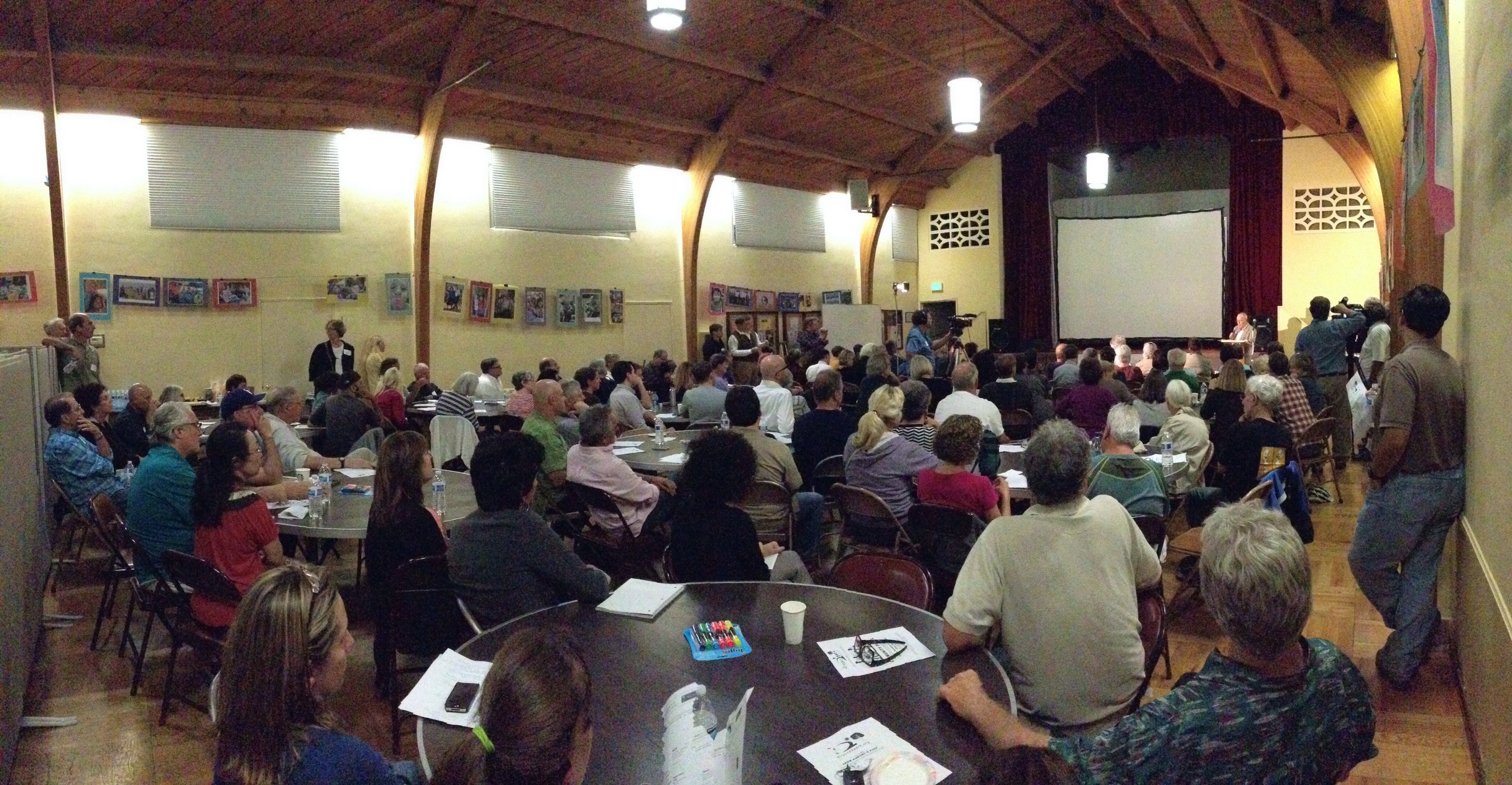
If you weren’t among the 150 or so who attended Airport2Park.org’s workshop Thursday evening about turning Santa Monica Airport into a great park, you missed an inspiring event. What was so exciting was how optimistic the gathering was. So much of local politics — I suppose all politics these days — is about fear of the future. This event was all about how good the future could be.

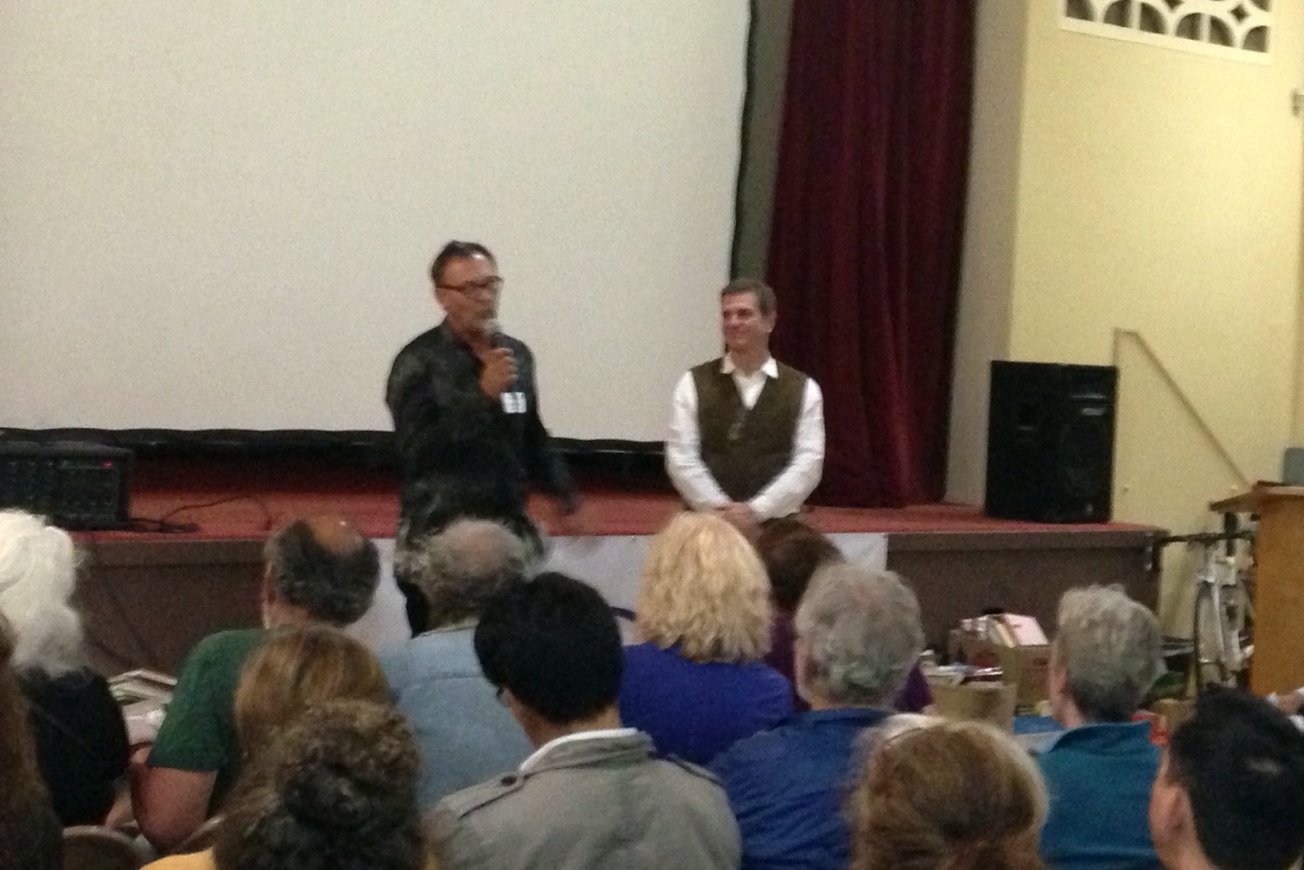
The key player in all that optimism was noted landscape architect Mark Rios, who gave what I can only call a moving talk, illustrated with slides, about how people around the world have turned godforsaken and human-forsaken landscapes leftover from the industrial revolution and turned them into beautiful, functional and beloved parks. His fundamental precepts: “Thing big; think green.”

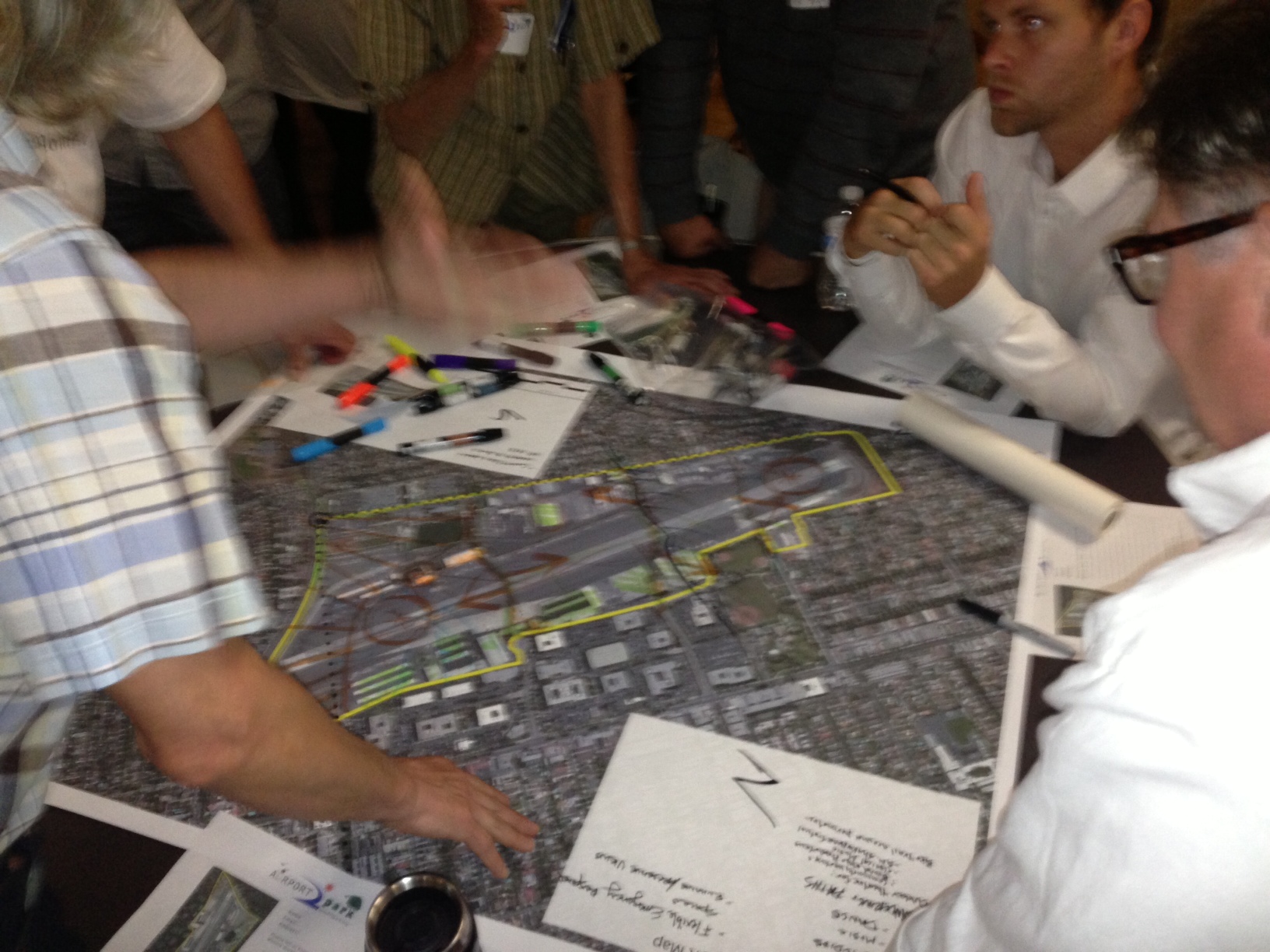
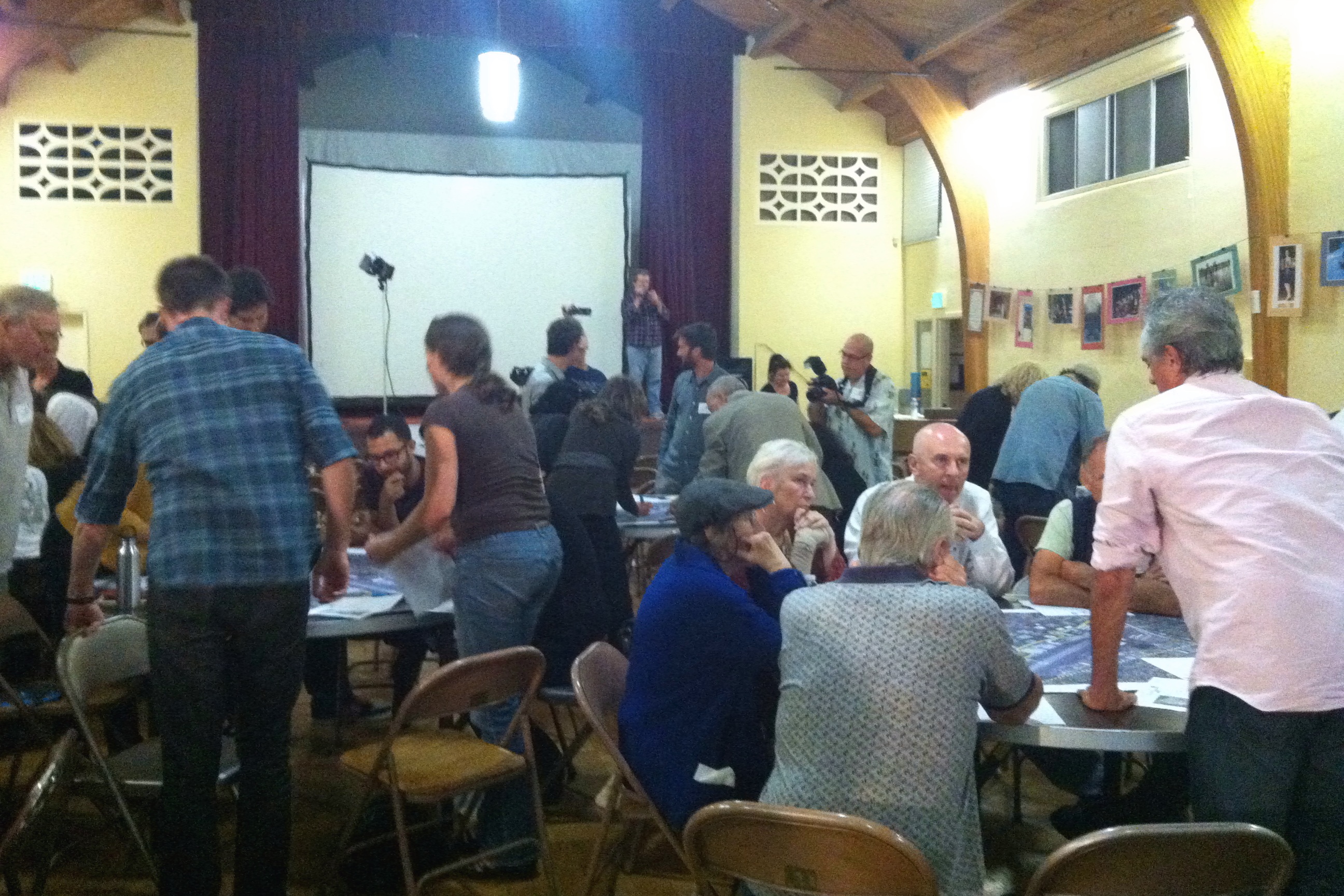
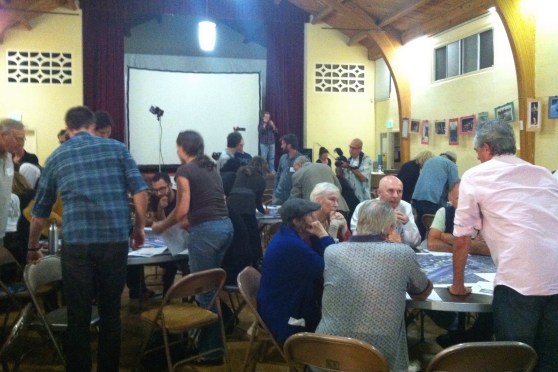
Rios’ presentation ignited the imaginations of the public, who then went to work in ten small groups and came up with ideas that showed the power and logic of collective action.

It was a lot of fun.

I was proud to have a part to play at the workshop, which was to give a curtain-raiser for Rios — a talk that explained why Airport2Park has been formed now and why now is the time to plan for the green future of the airport site. Rather than rewrite it for the blog, here is my talk:

Let’s Build a Park – Why Now is the Time

I’m going to make a few remarks to put what we are doing tonight in historical context, because we are at an historical moment. We at Airport2Park have called this a once-in-a-generation opportunity, but it’s really more like a once-in-a-century opportunity, because it was nearly a century ago that the City of Santa Monica began acquiring the land at the airport with money raised with a parks bond.

At that time, an airport — basically a dirt strip then — was considered park-like, but that hasn’t been the case for a long time. Donald Douglas may well have been the most important person in the history of Santa Monica, but if so, he became that by turning the airport into one of the world’s biggest industrial plants, part of the arsenal of democracy that won World War II.
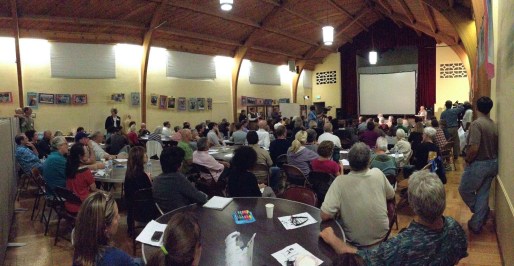
photo 2

Photo courtesy Mike Salazar

By the ’60s, however, when the City denied Douglas’ request to condemn residences to expand the runway so that he could build jets there, the residents of Santa Monica and city officials had recognized that the airport was no longer a good fit.

Things got worse when the FAA required the airport to serve jets. In response to that, in 1981 the City Council voted to close the airport. The FAA fought back in court, and the City, the FAA, and the pilots entered into the famous, or infamous, 1984 Settlement Agreement.

The 1984 agreement is clear: the City covenanted not to close the airport prior to July 1, 2015. Given this provision, it’s plain that all parties to the agreement believed at the time that the City had the right to close the airport. Speaking for myself, I got involved in local politics about 20 years ago, and all I can say is that everyone I met said that the airport was going to close in 2015.

It was also during this time that organizations like Concerned Residents Against Airport Pollution got started – they brought to everyone’s attention the negative impacts of the airport.
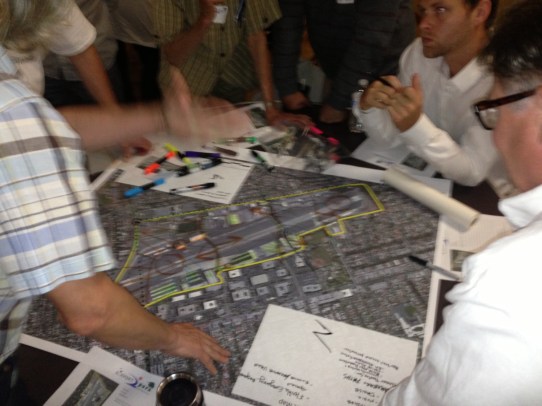
photo 5

Photo credit: Mike Salazar

The 1984 Agreement gave all aviation users 30 years to earn back a return on their investments and make arrangements to leave the airport. The aviation users often defend the airport by saying that nearby residents knowingly bought homes near an airport, but it’s they who have been on notice, for more than 30 years, that the airport would close.

Notwithstanding the clear language of the 1984 Agreement, a few years ago the FAA began claiming that under a provision of a 1948 agreement, the “Instrument of Transfer,” under which the federal government returned the airport to the City after leasing it from the City during the War, the City was obligated to operate the airport in perpetuity. I want to be clear that we at Airport2Park – and also the folks in City Hall – don’t accept the enforceability of this clause, and we don’t believe that anyone in 1984 believed that the clause was enforceable. But I won’t go into that legal analysis now; it would take a long time and we have work to do.

But it is important to note that based on research and documents uncovered by the groups working to close the airport, it is apparent that even assuming that the Instrument of Transfer is enforceable, it would not apply to that part of the airport, called the “Quitclaim Parcel,” that includes the westernmost two thousand feet of the five thousand feet of the current runway. Meaning that this part of the runway could be closed, but a functioning smaller runway would be left to satisfy the Instrument of Transfer if it is enforceable.

Last April Marsha Moutrie, the Santa Monica City Attorney, told the City Council that she thought this approach – using the Quitclaim Parcel – to sidestep any FAA claims based on the Instrument of Transfer was promising, and the council directed her to investigate further and report back in March 2014. At the same meeting, the council members expressed views in favor of converting this city-owned asset into a park if all or part of the airport can be closed.
Marcia Hanscom-1

Photo credit: Marcia Hanscom

We are now presented with exciting opportunities, but they may run in stages. The first stage is that the City can reclaim the Quitclaim Parcel July 1, 2015, the same date that all the leases for aviation uses at the airport expire and can be terminated. Without challenging the FAA on the Instrument of Transfer, the Quitclaim Parcel could then be turned into a park, and the runway could be reduced to less than three thousand feet.

We believe that ultimately, with a less than 3000-foot runway, which could not service jets, and without aviation services, the airport would have to close, and the whole of the runway and adjacent areas could be turned into a mile-long park.

After the City Council’s meeting in April, we formed Airport2Park.org to gather support for building a great park at the airport site, and we started planning this workshop over the summer. Surveys by Community Against Santa Monica Airport Traffic have already shown overwhelming local support for a park, but we need to create a movement to make this happen. We’re gratified by the support we’ve already received from the Sierra Club and the Friends of Sunset Park neighborhood group, and we expect more endorsements to follow.

The interests behind the airport, including the aviation industry and the FAA, a captive agency if there ever was one, will fight closure of the airport with every tool they have. But keep in mind — the FAA always says that it will not allow airports to close, but hundreds have closed in past decades.

Unfortunately, we know that the supporters of the airport will use fear as a fundamental tactic. What is scarier than anything else? . . . Well, it’s always the unknown. What the airport supporters say is, “don’t close the airport, because you don’t know what will take its place.” The politicians, they say, will allow big developments there that will be worse than the airport.

Our movement to build a park at the airport is designed to present a credible and a beautiful alternative to the airport, a positive message that everyone can support whether they live under the flight path or simply want a park to hike or cycle in, or one where they and their kids can play sports, or one where nature can be restored. A park would be a healthful, sustainable, environmentally safe and economically sound investment in Santa Monica’s future.

Tonight we’re taking a major step in that direction. Later on this evening we’re going to ask you to brainstorm about what a park could be, what it could mean. After that, we’re going to ask you to create a movement – at the city level, the county level, the state level, and yes, the federal level – to make this happen.

Tonight, let’s inspire ourselves, and hopefully others, as to what we can build for generations – for centuries – to come. And let’s have fun doing it.

Thanks.

And thanks for reading.
It’s About Building a Park

In anticipation of Thursday night’s workshop on turning Santa Monica Airport into a park I had intended to write another post about how building a park there would be the best legacy we current Santa Monicans could leave for the future. It was going to a joyful piece. The apparent death, however, of Mark Benjamin and his son Luke in Sunday evening’s crash has drained me of anything in the category of joy.

I knew Mark; not well, not personally, but with as much affection and regard as one can have for a person one knows not personally, but politically. Not that any dealings I ever had with Mark were political in the usual (negative) sense of the word, but they were political in the positive sense that they had to do with community.

In 1999 I served with Mark on an oversight committee for a school bond. Suffice it to say that having the head of a major construction firm on an oversight committee for a construction bond meant that at least someone knew what was going on. Another fond memory is of the pride Mark, who was Jewish, took from the fact that the Archdiocese in L.A. chose his company, Morley Builders, to build the cathedral downtown. It was wasn’t just the ecumenical angle, which Mark got a kick out of, but he said it was humbling to be charged with building something that was expected to last for centuries.

Mark and Luke will be missed by everyone involved in community affairs here, and we can only hope that their family and friends ultimately find solace in the memories they left behind.

• • •

As for turning the airport into a park, while the crash is sure to affect the controversy about closing the airport, it has little to do with whether the airport should be turned into a park. Even if airplanes never crashed, Santa Monica should do everything it can to close the airport and build a park. For that matter, even if planes were quiet and didn’t pollute, Santa Monica should build a park.

Why? Well, it’s true that building a park would solve the negatives associated with the airport, but building a park is not about closing the airport. It’s about building a park. Specifically, it’s about building a park on land that the public owns, in a place where there are not enough parks.

People who use or benefit from the airport make many arguments against the park, all framed in negative terms. This is understandable; it is difficult to make a positive argument for the airport, given how few people it serves (and given its negative impacts).

One of the negative anti-park arguments is that because the airport is located on the border with Los Angeles, a park will serve non-Santa Monicans. This argument fails on four counts.

First, as it stands now, the airport serves few residents of Santa Monica. When pilots and others appear at meetings to argue for the airport, few can identify themselves as Santa Monicans. As it happens, Santa Monica is subsidizing, to the tune of more than $1 million per year, a facility that mostly serves non-residents. On any given day, more Santa Monicans use the soccer fields that the City built in the ’90s on the “non-aviation” land it regained control of under the 1984 agreement with the FAA, or use the various cultural and educational facilities at the airport, than use the airport as an airport.

Second, for its entire history Santa Monica has happily been a destination for visitors, who come to use the beach and our other attractions. Being a regional, even international, center for recreation is part of Santa Monica’s identity and character, and a beautiful park will be consistent with that history.

Third, the argument ignores the fact that we residents of Santa Monica don’t lock ourselves into the city’s limits; we freely use regional attractions all around us, including parks and cultural facilities like museums and concert halls. We know we are part of something big. We share and they share.

Fourth, there is every reason to believe that because of the importance of the new park to the region, Santa Monica would not need to bear all the costs of building the park. Regional funding should be available. Keep in mind that the most costly item in the capital costs of building a park has already been paid for – the land itself, which was purchased in the ’20s with money raised from a parks bond. Airport2Park.org, which is sponsoring the workshop Thursday evening, intends to explore financing possibilities at a future event.

Thanks for reading.

Fear, and Fear Itself — More on the Santa Monica Airport

I don’t know Sunset Park resident Beverly Palmer, but she is my new hero. Ms. Palmer spoke at the City Council hearing Tuesday night on the airport, and she told the council that “fear should not govern [its] actions.”

This was in response to what might charitably be called “institutional cautiousness” in the staff report for the hearing, which discouraged any big ideas for the future reuse of the airport land by invoking fear of various “collateral consequences.” What these might be were “difficult to predict,” but nonetheless included “very likely increased density and traffic.” And if people might counter that by proposing a low density use, such as a park, then it was the fear that there wouldn’t be enough money to build it because Santa Monicans wouldn’t want to pay for a park near Los Angeles, and then that would mean development, and then that would mean . . . .  You get the idea.

It was Ms. Palmer’s remarks that prompted Mayor Pam O’Connor, when she concluded debate Tuesday night, to remind everyone that the airport land is owned and controlled by us, the residents of Santa Monica, and that we have the power to make good decisions (subject, of course, to the 800-pound gorilla known as the Federal Aviation Administration).

The FAA. I won’t make any predictions about what the FAA will or can do, but my knees aren’t shaking either. The staff report says that the “FAA condones no closures and allows or suffers them only on very rare occasions,” but this sentence came two lines after staff noted that the number of “public use landing facilities in the country” had declined from 7,192 in 1969 to 5,178 in 2009. Apparently “very rare occasions” for the FAA means more than 2000 times in 40 years.

But there were two kinds of fear on display Tuesday night: fake fear, or, as FDR might have called it, “fear itself,” and real fear, genuine fear, and I want to say something about the latter.

There were real people there Tuesday night fearful of losing their jobs and businesses, and it does not diminish my desire to turn the airport into a park to acknowledge their fears. Other than to say — call it a bromide but it’s true — that the individuals involved have high levels of skills and that they will be able to move on, I have nothing concrete to say to encourage them. I do want the airport to close and its aviation businesses to move elsewhere and it would be hypocritical for me to say anything different.

Call me heartless, but it’s important to put what they fear into historical and economic context. Fifty years ago Douglas Aircraft employed tens of thousands of workers at the airport, but the City declined to expand the airport and its runway, which would have meant people losing their homes. Douglas and thousands of jobs moved to Long Beach. Santa Monica lost its largest employer and the company that was in many ways crucial to the city’s identity for decades. The attempt now to close the airport is the continuation of a process that goes back more than half a century.

Moreover, and I hope I’m not being too History 101 about it, but in every modern society like ours, change happens and people’s lives get disrupted.

This is particularly true about business. A few years ago Broadway Deli closed after 20 years on the Promenade: the owners’ lease expired and they couldn’t pay the higher rents the property owner wanted. They lost their business — in fact they were victims of the success they themselves had helped foster downtown — and their workers lost their jobs.

But the success of the Promenade is a good thing, higher rents notwithstanding.

Just last week I heard from a young videogame designer friend who lives here that the company he worked for in Santa Monica, Sony, was moving to Playa Vista because they needed to expand and couldn’t find enough space here. My friend was looking at a much worse commute, and I felt sorry for him, but at the same time, does Santa Monica need more office parks?

The Clock Tower Building downtown just sold to an Italian firm that owns and operates historic buildings like the Flatiron Building in New York. According to the L.A. Times, the rents in the glamorous building are the highest in the region. It’s a great story of the value of historic renovation and the value of urban revival, but for me it was bittersweet. My office was in the building in less swanky days, from after the earthquake in 1994 until 2001. That’s when the property owners kicked all the tenants out so that they could start their historic rehab.

Back then it wasn’t so hard to find office space in Santa Monica, and I found a new place (but not one with an 11th-floor ocean view!). It worked out okay for me, but I keep thinking about this young couple from Ethiopia who ran an espresso bar on the ground floor. I wonder where they ended up.

Change is often bad and there are many reasons to fear it, but fear is not an emotion that’s helpful when you’re trying to think clearly and make change better.

Thanks for reading.

A Generational Opportunity: Turn Santa Monica Airport into a Big Park

Tuesday night the Santa Monica City Council will spend an entire meeting considering the future of the Santa Monica Municipal Airport. It’s a topic that deserves the council’s undivided attention. (And gives me an opportunity to take a break from writing about housing policy.)

I’ve lived in the flight path since I moved to Santa Monica in 1983, and over the years I have made my share of calls to the airport to complain about noisy aircraft. My view, however, has always been that even if airplanes didn’t pollute, even if they never crashed, even if they didn’t make any noise, Santa Monica should do everything it can to close the airport.

The reason is that the airport’s 227 acres are a public asset that is too valuable to be used for private purposes, namely for aviation.

How valuable? At $200 a square foot, a conservative number for land in Santa Monica, the airport land is worth about two billion dollars.

But for the public, two billion dollars is not even close to the land’s true value. Even if Santa Monica had ten billion dollars, it could never again assemble a property this size to buy. The land is part of the legacy of the city, belonging to all of us, and it needs to become a public benefit.

We need to turn the mile-long runway, or as much of it as the City can liberate from the Federal Aviation Administration, and the rest of the open space at the airport, into a park.

Look at a map of the Westside; when it comes to open space, what do you see? The biggest green splotches are golf courses, most of which are private. Santa Monica is chronically under-parked, and the airport land is the last remaining potential site for a great park.

It’s time that this public asset benefit the public.

I hope you have seen the graphics created by the Sunset Park Anti-Airport group, showing conceptually what a park could look like both at a first stage, after the City closes the “Quitclaim” parcel that includes the westernmost 2000 feet of the runway, or what an expanded park could look like if the City can ultimately close the entire airport.

The possibilities are fantastic.

But can we build the park and pay for its operations?

Those who want to maintain the status quo say that we can’t return the park to public use unless we re-privatize it, by using development to pay for the public uses. And I have to report — with considerable disappointment — that the staff report for Tuesday night’s council meeting echoes this position, assuming, with no evidence, that any development would have to be dense and that Santa Monicans would not be likely to support a park that was adjacent to Los Angeles and would serve many from outside Santa Monica.

These arguments, based on fanning dark fears of the future, are wrong. The voters of Santa Monica, based on their track record of supporting schools and libraries, will support a parks bond to build the park. Given the regional importance of the park, regional funds should also be available.

As for operations, based on the increased income the City can achieve by repurposing existing buildings at the airport, and the increased property values and taxes that replacing the airport with a park will lead to, there should be adequate new income for operations.

I found the staff report’s prediction that Santa Monicans would not be likely to support a park because non-Santa Monicans would also use it to be so out-of-touch with the history of Santa Monica as to be insulting. Does any city in Southern California have more of a history of sharing itself with its neighbors than Santa Monica?

All of this needs professional analysis. City Council should direct staff to gather the facts and do the analysis with open minds — but with the goal of finding the solution that serves the public best.

The most egregious aspect of the fear-mongers campaign against change at the airport is that it dismisses the capacity of citizens and their government to make good decisions. The City of Santa Monica owns the airport land free and clear — it’s not like we have a mortgage to pay off. We are free to make good decisions. Fearfully sticking with the status quo would not be one of them.

Back in 1981 the City Council voted to close the airport — that goal has been city policy for a long time. A big park is the best use of the land. This is a once-in-a-generation opportunity. Even once-in-a-century. It can be done.

Thanks for reading.