The two posts I wrote last week about building a great park to replace Santa Monica Airport were gloomy, focusing as they did on problems with the planning process. Such issues, though, should not diminish the joy we should be experiencing now. (Joy about converting SMO into a park; there’s a lot of pain going around about everything else, and I urge my fellow Santa Monicans to attend the No Kings rally here (or one elsewhere) on Saturday.)
We Santa Monicans have within our power the possibility of building a large and wonderful park, one that’s big enough to both nurture nature and furnish wide opportunities for recreation and community, in the middle of the “Plains of Id” (to borrow Reyner Banham’s moniker for the urban L.A. flats from his classic book, Los Angeles: An Architecture of Four Ecologies).
The L.A. flats, including Santa Monica, have few parks because under the Spanish/Mexican land grant system little land was publicly owned. Then, after Yankees arrived and married into the landowning families, the ranchos were subdivided into towns and other settlements. As a result, public spaces are few and far between.
We owe a great debt to the residents of Santa Monica who, 99 years ago, voted to tax themselves to buy land for a park, land that is now conservatively valued at $2 billion and which at that price could never be obtained for public use again. When the airport closes at the end of 2028, this land will be returned to the public after being privatized for 80 years.
We can build a great park, but we need to be smart about it. Above all, we need to keep the public confident that we will succeed. To do that, we need to manage both resources and expectations.
There are three factors that will determine how we will build the park: land, money, and time. The three need to be coordinated, but for now I’ll treat them one-by-one.
Land. Here’s a map of the site from the Site Inventory prepared for the current planning process.
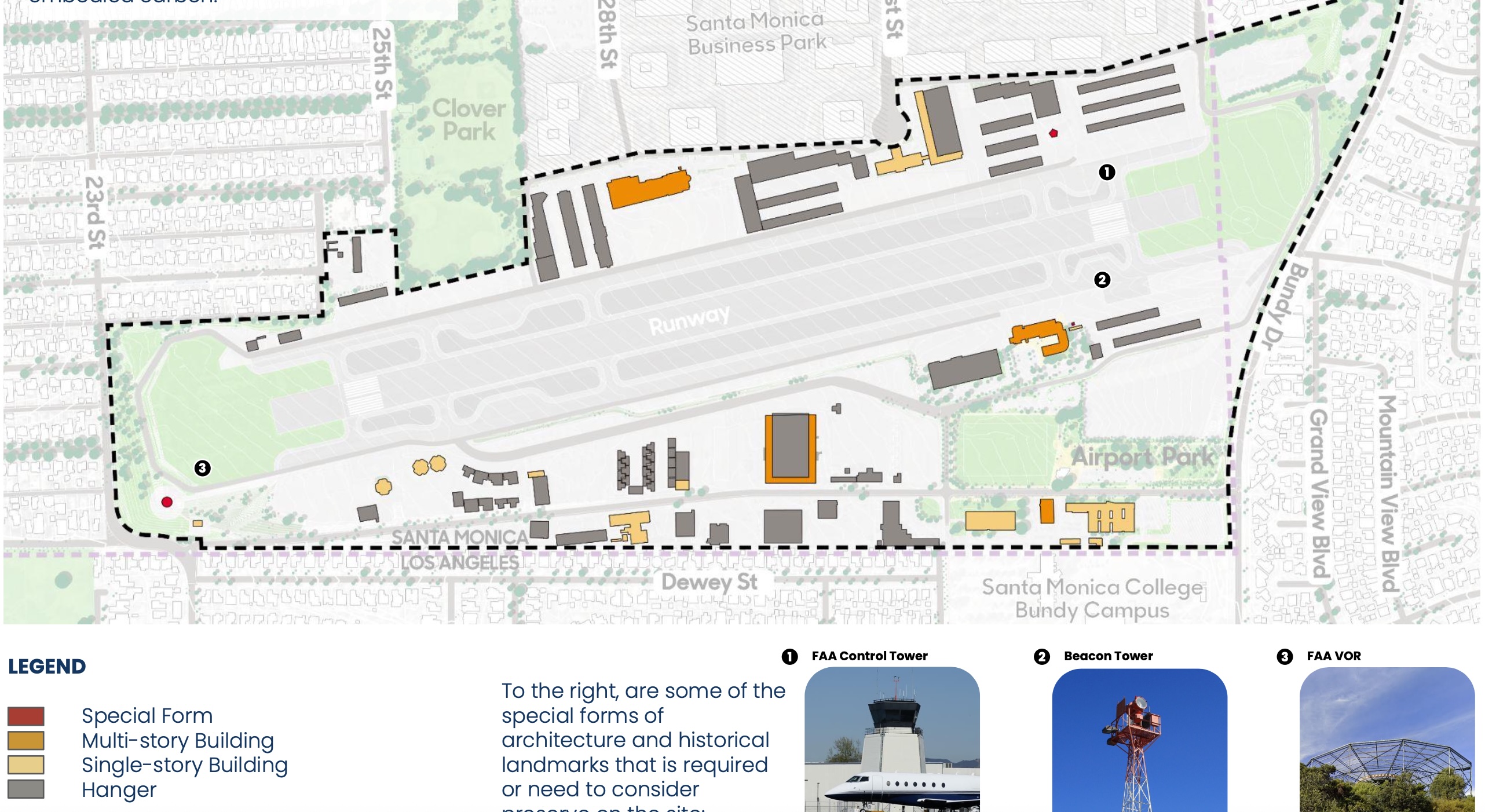
If you are going to build a park on this site, and you don’t have an unlimited budget, the logical place to start is the runway, along with the tie-down areas where planes are parked. Why? Because these areas are big and flat and empty, and easily connected to the existing Clover and Airport Parks.

Once any environmental issues have been evaluated and remediated, the runway and tie-down areas will be the easiest and least expensive parts of the site to develop. Already at each end of the runway 750 feet of tarmac have been removed.
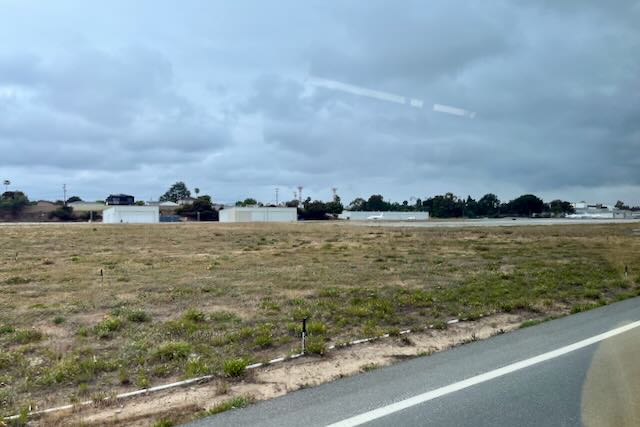
It seems obvious (to me at least) that the starting place for planning the park should be the runway. However, the three scenarios produced by the planning process all show fully-developed parks on the whole site. No plan like those in the three scenarios will be built all at once, or even in the near future after airport closure in 2029. The problem with dreaming about the whole park is that trying to imagine how all of the park amenities would be paid for is driving the planning process, turning much of the site into “revenue-generating” uses.
The process should start the other way around, with what might be possible to build in stages. The planning should start with the easiest land to build on.
A lot of park amenities can be built on flat land, and for not a lot of money. Sports fields, for instance. They don’t need to be fancy, with artificial turf (which has its own environmental issues). If there are enough fields (in combination with those at the existing parks), the use of them can be staggered so that grass will have a chance to recover between seasons of use. Grass fields, as opposed to artificial turf, don’t need to be fenced off, and can be used casually, like for picnics and running around, when not being used for games. Temporary irrigation systems can be used until permanent irrigation can be installed.
Open meadows, and hiking and biking paths and trails can also be built inexpensively on flat land. Think about a bike path, which might even accommodate shuttle buses, that could use a strip of existing tarmac to connect the Santa Monica College Bundy campus and Airport Avenue with Ocean Park Boulevard.
And let’s not forget the (inexpensive) park amenity that might be what Santa Monica’s apartment-dwellers need most: picnic tables.
Trees can be planted to provide shade.
To save money upfront, we can use portable toilets before we install the plumbing for permanent facilities, and we can invite in food trucks and pop-ups before we build cafés. (Cafés can be permitted under Measure LC if City Council amends the City’s zoning on parks. Meanwhile, let’s return a restaurant to where Typhoon was.)
While we are building a park on the runway and tie-down areas with re-wilded open spaces and meadows, sports fields, hiking and bike paths, picnic tables, and the like, we can start planning more ambitious amenities for the rest of the land, or for the next iteration of the runway land.
And we can use that time to line up the money for doing so.
Oh, yes, time and money. I’ll get to them in upcoming posts.
Thanks for reading.
 The Healthy City Local
Great ideas, Frank. Another cost-saving idea might be to use pieces of the old concrete runway for landscaping, retainers and other purposes, maybe even invite artist submissions for sculptural elements with the material. Seems like it would be a sustainable strategy to reuse resources already at the location and a fitting reminder of the site’s history. Of course the concrete could also get crushed and reused for roadbed and other purposes.
Pingback: The second factor in building a great park at Santa Monica Airport: money | The Healthy City Local
Frank – thanks, once again for a thoughtful and reasoned take on the great park. Your comments make me think about “Tactical Urbanism” – the idea of trying quick and cheap ideas to see their impact and value.
Your article hints at the value of this approach – try some stuff, don’t spend crazy amounts of $$, and then see how it works for the community. All the while longer term planning can continue.
Last week I was in Boston at the American Institute of Architects conference, and Pete Buttigieg in a keynote spoke about using Tactial Urbanism in South Bend when he was Mayor, and the value it brought by demonstrating things the could be prototyped and easily implemented, and the value they brought by getting the sometimes reluctant community to see real impacts and be able to react and give further input.
I think that’s what your are proposing, and it merits further discussion and thought.
Thanks, Craig. Yes, this is exactly what I’m talking about. I’d forgot about “tactical urbanism.”
Brilliant article, Frank, getting down to the reality of the situation – and bringing us hope. Thank you.